


S355J0 is a European standard (EN 10025-2) non-alloy structural steel, known for its minimum yield strength of 355 MPa, good weldability, and toughness at 0°C, indicated by the 'J0' (0°C impact test). It's a low-carbon manganese steel, suitable for general construction, bridges, and machinery in mild climates, often supplied normalized or untreated, and is similar to ASTM A572 Grade 50.
Key Characteristics:
Strength: Minimum yield strength of 355 MPa.
Impact Resistance: Tested to provide at least 27 Joules at 0°C (indicated by 'J0').
Composition: Low carbon (max 0.20%) and manganese content, making it easily weldable.
Condition: Often supplied normalized or untreated for good machinability and formability.
Applications:
General construction and structural engineering.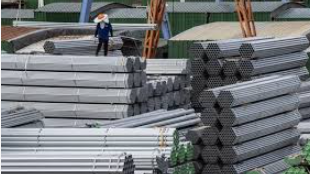
Bridges, ships, and power plant equipment.
Lifting and transport machinery.
Structures requiring good weldability and strength in mild (above 0°C) conditions.
Equivalents:
ASTM A572 Grade 50
DIN St52-3
JIS SM490

The price of S355J0 steel is not fixed; it fluctuates based on a complex mix of global, regional, and transaction-specific factors. Understanding these can help in budgeting and procurement.
Here's a breakdown of the key influencing factors, from macro to micro:
1. Macro & Global Market Factors (The "Base Price" Drivers)
These set the overall price floor for all steel products.
Raw Material Costs: The prices of iron ore, coking coal, and scrap metal are the most fundamental drivers. A surge in iron ore prices directly increases the cost of producing new steel.
Global Supply and Demand: Strong demand from major economies (e.g., China, the US, EU construction booms) pushes prices up. Conversely, a global slowdown or overproduction can lead to price drops.
Energy Prices: Steel production, especially in blast furnaces, is extremely energy-intensive. High prices for natural gas and electricity significantly raise manufacturing costs.
Freight and Logistics: The cost of shipping raw materials to mills and finished products to market. High container shipping rates or bulk freight costs add to the final price.
Trade Policies and Tariffs: Import duties, quotas, and anti-dumping measures (e.g., the EU's safeguards on steel imports) protect regional markets and can keep domestic prices higher than the world market price.
2. Product-Specific & Quality Factors (The "S355J0 Premium")
These explain why S355J0 is priced differently from, say, a basic S235 steel or a higher-grade S690.
Alloying Elements & Production Process: Achieving the higher strength (355 MPa yield) and guaranteed toughness (J0) requires tighter control of chemistry (Manganese, etc.) and rolling processes, which adds cost compared to lower grades.
Mandatory Testing: The Charpy V-notch impact test at 0°C is a required quality assurance step for J0, adding testing and certification costs not incurred for non-impact-tested steels.
Market Position: S355J0 is a high-volume, commodity-grade structural steel. Its high availability generally makes it more competitively priced than niche, low-volume special steels.
3. Purchase & Transaction Factors (Your Final Quote)
These variables cause prices to differ between buyers and orders.
Order Volume: Larger tonnage orders (e.g., truckloads or shiploads) benefit from significant economies of scale and lower per-tonne costs compared to small, "off-the-shelf" purchases.
Product Form and Dimensions: Price varies by form:
Plate vs. Sections (Beams, Columns) vs. Hollow Sections. Complex rolling for sections often costs more.
Thickness/Cutting: Non-standard thicknesses or very thick plates may carry a premium. Pre-cutting to size adds processing costs.
Delivery Condition: Standard "as-rolled" S355J0 is the baseline. If you require +N (normalized rolled) for improved properties, the price increases.
Certification Level: A standard mill certificate (2.2) is included. Requesting a more stringent 3.1 inspection certificate (with independent verification) adds cost.
Geographic Location & Supplier: Prices differ by region due to local market competition, mill proximity (affecting transport costs), and whether you buy from a mill directly, a major stockholder/service center, or a small local merchant.
Payment Terms & Contract Type: Spot market prices are volatile. Long-term fixed-price contracts provide stability but may be higher initially. Payment terms (e.g., net 30 days) also influence risk and price.
1. What is S355J0 steel?
S355J0 is a non-alloy structural steel grade per EN 10025-2, with a minimum yield strength of 355 MPa and guaranteed impact toughness at 0°C.
2. What does the 'J0' in S355J0 mean?
The 'J0' indicates Charpy V-notch impact testing at 0°C, ensuring a minimum absorbed energy of 27 Joules for reliable performance in cold conditions.
3. What are the main applications of S355J0?
It is commonly used in bridges, offshore structures, building frames, and heavy machinery in temperate climates where temperatures may drop to freezing.
4. What is the difference between S355JR and S355J0?
S355JR is impact tested at +20°C, while S355J0 is tested at 0°C, making J0 suitable for applications exposed to near-freezing temperatures.
5. What is the yield strength of S355J0?
The minimum yield strength is 355 MPa for thicknesses up to 16 mm, with decreasing values for thicker sections per EN 10025-2.
6. Can S355J0 be welded?
Yes, S355J0 has good weldability, but proper procedures-including potential preheating for thick sections or cold environments-should be followed.
7. Is S355J0 equivalent to ASTM A572 Grade 50?
Not directly. While strength is similar, S355J0 includes mandatory impact toughness at 0°C, which is not required in standard A572 Grade 50.
8. What is the chemical composition of S355J0?
It typically contains max 0.24% Carbon, max 1.60% Manganese, and controlled phosphorus/sulfur (e.g., P ≤ 0.035%, S ≤ 0.035%).
9. Is S355J0 corrosion resistant?
No, it is not corrosion-resistant and requires protective coatings like painting or galvanizing for outdoor use.
10. How does S355J0 compare to S355J2?
S355J0 is impact tested at 0°C, while S355J2 is tested at -20°C, making J2 suitable for even colder (sub-zero) environments.
11. What are the mechanical properties of S355J0?
Key properties include yield strength ≥355 MPa (t≤16mm), tensile strength 470-630 MPa, elongation ≥20-22%, and 27J impact energy at 0°C.
12. Is S355J0 suitable for low-temperature service below 0°C?
No, S355J0 is certified only for 0°C. For sustained service below freezing, grades like S355J2 (-20°C) or S355K2 (-20°C with higher impact energy) should be used.
Full specification and details are available on request. The above information is provided for guidance purposes only. For specific design requirements please contact our technical sales staff.
