


A992 structural H-beam is a high-strength low-alloy (HSLA) steel manufactured to ASTM A992/A992M standards, designed specifically for wide-flange structural applications.
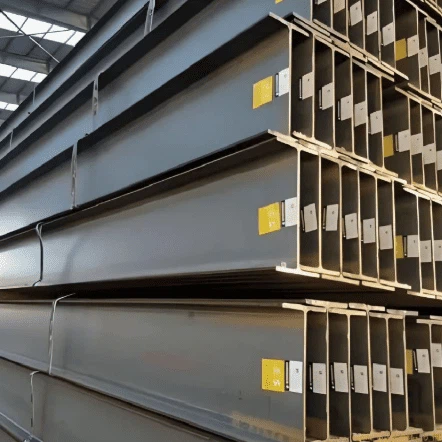
Compared to traditional A36 H-beam and A572 GR50 H-beam, A992 H-beams offer superior strength, weldability, seismic performance, and consistent material properties, making them more economical for critical load-bearing structures.
Key Characteristics of A992 H-Beams
| H-Beam Section | Description | Applications |
|---|---|---|
| W14x109 | Lightweight wide-flange section, moderate span and load, good bending resistance | Secondary beams, medium-span structures |
| W14x120 | Slightly larger section, increased web and flange thickness, balanced performance | Higher-load scenarios, industrial frameworks |
| W14x132 | Heaviest and strongest section, maximum bending and shear resistance | Main beams, high-rise buildings, seismic frames, heavy-load bridges |

Typical Applications of A992 H-Beam
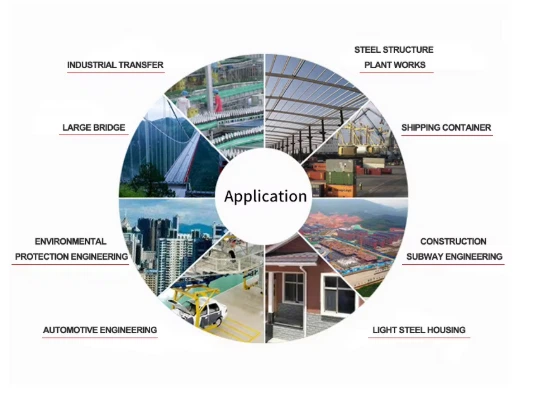
High-Rise Buildings: Primary beams, columns, and seismic frame members-especially W14x132 for main structural support.
Bridge Engineering: Main beams or cross beams requiring high fatigue resistance and long-span capability.
Industrial Facilities: Support platforms for heavy machinery or large factory structures.
A992 H-Beam vs Other H-Beam Materials
| Comparison | A992 H-Beam | A36 H-Beam | A572 GR50 H-Beam | S355 H-Beam (EN) |
|---|---|---|---|---|
| Yield Strength | 50–65 ksi (≈345–450 MPa) | 36 ksi (≈250 MPa) | ≥50 ksi (≈345 MPa) | 355 MPa |
| Tensile Strength | 65–80 ksi (≈450–550 MPa) | 58–80 ksi | 65 ksi | Similar to A992 |
| Weldability | Excellent | Good | Very good | Good |
| Ductility / Seismic Performance | High | Moderate | Good | Moderate |
| Consistency | Narrow and controlled | Wider range | Slightly variable | Varies by batch |
| Typical Use | High-load beams, seismic structures | General construction | Replacement for high-load beams | European structural frameworks |
Summary: Compared to A36, A992 H-beams provide higher strength for heavy-load or seismic applications. Compared to A572 GR50, A992 offers more consistent performance and better earthquake resistance. Compared to S355, A992 is specifically optimized for wide-flange steel applications in modern construction.
Recommended A992 H-Beam Sections
| Section | Weight | Depth | Flange Width | Web Thickness | Flange Thickness | Application Focus |
|---|---|---|---|---|---|---|
| W14x109 | Medium | 14 in | Wide | Moderate | Moderate | Secondary beams, medium spans |
| W14x120 | Balanced | 14 in | Wide | Slightly thicker | Slightly thicker | Higher-load structures, industrial use |
| W14x132 | Heavy | 14 in | Wide | Thick | Thick | Main beams, high-rise, seismic frames |
Note: Custom sections and cut-to-length lengths are available to meet specific project requirements.
A992 H-beams in sections like W14x109, W14x120, and W14x132 provide high-performance wide-flange steel solutions suitable for modern buildings, bridges, and heavy industrial structures, making them a preferred choice for engineers and designers seeking strength, ductility, and cost-effective structural materials.
Q1: What is ASTM A992 H-Beam and how does it differ from A36 H-Beam?
ASTM A992 H-Beam is a high-strength, low-alloy structural steel beam commonly used in building frames and bridges. Compared to A36 H-Beam, which has a yield strength of 250 MPa, A992 offers a higher yield strength of 345 MPa, improved toughness, and better weldability for modern structural applications.
Q2: What is the chemical composition of ASTM A992 H-Beam?
The typical chemical composition of A992 includes carbon ≤ 0.23%, manganese 0.50–1.50%, phosphorus ≤ 0.035%, sulfur ≤ 0.045%, and silicon ≤ 0.40%. A992 also includes microalloying elements such as vanadium and niobium to improve strength and toughness. Compared to A36, the lower carbon content and microalloying enhance weldability and reduce brittleness.
Q3: What are the mechanical properties of ASTM A992 H-Beam?
A992 H-Beams have a minimum yield strength of 345 MPa (50 ksi) and tensile strength between 450–620 MPa. The minimum elongation in 200 mm is 18%, and Charpy impact toughness is improved for low-temperature applications. In comparison, A36 beams are less strong but slightly more ductile, making them suitable for non-critical structural members.
Q4: What sizes and dimensional tolerances are available for ASTM A992 H-Beam?
A992 H-Beams are available in sizes from W8x10 to W44x335 (or similar, depending on the mill). Standard tolerances include ±3% for flange and web thickness and ±6 mm for beam depth. The tolerances are comparable to A36 but ensure consistency for high-strength applications where precise load distribution is critical.
Q5: Can ASTM A992 H-Beam be welded and fabricated easily?
Yes. A992 H-Beams are designed for high weldability with standard methods (SMAW, GMAW, FCAW) without preheating under normal conditions. Microalloying and low carbon content reduce the risk of cracking during welding. Bending and drilling are also feasible, though tight radius bends should follow ASTM guidelines.
Q6: What testing is performed on ASTM A992 H-Beams?
Standard tests include tensile testing, bend tests, chemical composition verification, and visual inspection. Mill Test Reports (MTRs) provide documentation. Charpy impact tests may be required for cold regions. Compared to A36, A992 requires stricter verification of mechanical properties due to higher strength requirements.
Q7: What are typical applications for ASTM A992 H-Beams?
A992 H-Beams are widely used in steel-framed buildings, long-span bridges, industrial facilities, and high-rise structures. A36 beams may still be used in secondary framing or low-load applications, but A992 is preferred where higher strength-to-weight ratio and toughness are critical.
Q8: How is corrosion protection handled for ASTM A992 H-Beams?
A992 beams are supplied in mill finish, with optional galvanization or painting for corrosive environments. Surface quality and straightness are important for welding and bolting. Corrosion protection methods are similar to A36, but A992 beams often require additional attention due to their use in exposed or high-rise structures.
Q9: What is the standard length and delivery method for ASTM A992 H-Beams?
Standard lengths are typically 6–12 meters, with custom lengths available. Beams are bundled for transport and inspected for straightness. Dimensional accuracy is important to ensure proper assembly and load-bearing performance.
Q10: Can ASTM A992 H-Beams be used in extreme temperatures?
A992 H-Beams are suitable for normal and moderately low temperatures. Impact toughness makes them safer for colder climates compared to A36. For very low or high-temperature environments, engineers may need additional verification or consider other specialized steel grades.