


SA 387 Gr 11 refers to an ASME SA-387/ASTM A387 Grade 11 alloy steel plate, a chromium-molybdenum (Cr-Mo) steel designed for elevated temperature service in pressure vessels, offering excellent strength, corrosion resistance (especially in sour gas), and oxidation resistance, commonly used in oil, gas, and power generation industries. It contains approximately 1-1.5% Chromium and 0.45-0.65% Molybdenum, with Class 1 and Class 2 variants indicating different heat treatments for enhanced properties.
SA 387 Gr 11 Class 1 refers to a specific type of Chromium-Molybdenum alloy steel plate (ASTM A387), designated for use in welded pressure vessels and boilers operating at elevated temperatures, featuring about 1.25% Chromium and 0.5% Molybdenum.

SA 387 Gr 11 Class 2 is a chromium-molybdenum alloy steel plate, specified by ASME (SA) and ASTM (A) standards, designed for elevated temperature service in pressure vessels, boilers, and heat exchangers, offering good strength, oxidation resistance, and weldability.
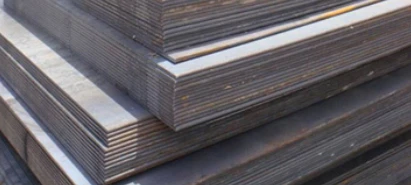
SA 387 Grade 11 Composition
| Element | Heat Analysis (HA) | Product Analysis (PA) |
|---|---|---|
| Carbon (C) | 0.05 – 0.17% | 0.04 – 0.17% |
| Manganese (Mn) | 0.40 – 0.65% | 0.35 – 0.73% |
| Phosphorus (P) | Max 0.035% | Max 0.035% |
| Sulfur (S) | Max 0.035% | Max 0.035% |
| Silicon (Si) | 0.50 – 0.80% | 0.44 – 0.86% |
| Chromium (Cr) | 1.00 – 1.50% | 0.94 – 1.56% |
| Molybdenum (Mo) | 0.45 – 0.65% | 0.45 – 0.70% |
Key Differences: Class 1 vs. Class 2
Same Chemistry: Both classes are essentially the same alloy steel with the specified Cr-Mo content.
Mechanical Properties: The "Class" designation primarily dictates mechanical properties, with Class 2 having higher tensile strength and yield strength than Class 1, while Class 1 has greater elongation.
Common Applications
Oil & Gas: Pressure vessels, piping, and equipment in refineries, especially for sour gas services due to corrosion resistance.
Power Generation: Boilers, heat exchangers, and components operating at high temperatures and pressures.
Chemical Processing: Equipment in chemical plants where elevated temperatures are common.
If you have project requirements for SA 387 Gr 11 Class 1 and SA 387 Gr 11 Class 2 , we welcome your inquiry. GNEE maintains a large inventory of commonly used high strength steel grades for your selection.For detailed mechanical properties, chemical composition, and technical data, as well as free samples, please contact our factory immediately. We offer competitive prices, stable quality, and professional service. Email:beam@gneesteelgroup.com.
1.What is grade 11 steel?
SA 387 Grade 11 is a pressure vessel grade steel popular for use in high-temperature assignments based on its high tolerance to high temperatures.
2.What is a 387 gr 11 cl 2 equivalent to?
Sa 387 Gr 11 Equivalent Material is the ASME SA387 in the US markets with the European Union having modules in 13CrMoSi5-5 grade. The Sa 387 Gr 11 Cl 2 Equivalent Material is the SA387-11-2 of the ASME and ASTM standard.
3.What is SA 387 GR. 11 CL. 2 material?
SA 387 GR. 11 CL. 2 Plate is a heat-resistant and corrosion-resistant steel plate that is resistant to high temperatures, stress and creep. sa 387 gr 11 cl 2 material also has good impact strength and weldability.