


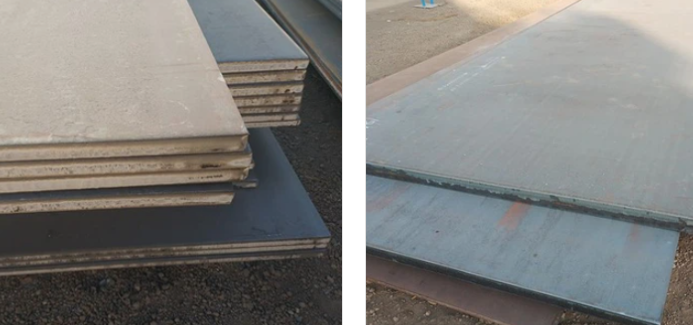
SA283 Grade C is a structural quality, low to intermediate tensile strength carbon steel plate used for general applications like structural components, tanks, and equipment, known for being easily weldable and machinable, with mechanical properties including a minimum yield strength of 30 ksi (205 MPa) and tensile strength of 55-75 ksi (380-515 MPa). It's an ASME/ASTM standard (A283/A283M) for structural use, distinct from pressure vessel steels, and is supplied as-rolled, offering good formability for various fabrications.
Key Characteristics:
Type: Structural Carbon Steel Plate.
Applications: General structural purposes, low-pressure tanks, building construction, equipment fabrication.
Strength: Low to intermediate tensile strength.
Weldability: Good, generally considered soft and easy to weld.

The minimum yield strength of SA283 Grade C is 30,000 psi (205 MPa).
This is the key property that defines the "C" grade within the ASTM A283 / ASME SA283 specification for low-carbon structural steel plates. It represents the stress at which the steel will begin to deform permanently.
Important Context:
Grade Comparison: This strength sits in the middle of the A283 grade range:
Grade A: 24,000 psi (165 MPa)
Grade B: 27,000 psi (185 MPa)
Grade C: 30,000 psi (205 MPa)
Grade D: 33,000 psi (230 MPa)
Associated Tensile Strength: The minimum tensile strength for SA283 Grade C is 55,000 psi (380 MPa).
Design Use: Engineers use the minimum yield strength (30 ksi / 205 MPa) for safe design calculations. Actual yield strength from a mill test certificate will typically be higher.
Application Scope: This moderate strength, combined with excellent weldability and formability due to low carbon content, makes SA283 Grade C suitable for general fabrication, storage tanks, ductwork, and light structural components-but not for pressure vessel shells or high-stress applications.
In summary, 30,000 psi (205 MPa) is the guaranteed minimum yield strength you can specify for design when using SA283 Grade C steel plate.
Mechanical properties of carbon steel SA 283 Grade C:
| Yield strength (Mpa) | Tensile strength (Mpa) | Elongation ≥, % |
| 205 | 380-515 | 22 |
The most typical use of carbon steel SA 283 Grade C is in heavy industry and oil plants for built steel tanks and vessels. BBN steel supply carbon steel SA 283 Grade C steel plates, SA 283 Grade C flat bars, SA 283 Grade C angle steel and SA283 Grade C angle steel. Along with delivery, the EN 10204 3.1 or EN 10204 3.2 MTC is also issued for you.
1. What Is SA283 Grade C?
SA283 Grade C is a low-carbon, general-purpose structural steel plate in the ASTM A283 standard, commonly used for low-stress structural applications like tanks, bins, and building frames where welding and forming are required.
2. What Is The Yield Strength Of SA283 Grade C?
The minimum yield strength of SA283 Grade C is 30,000 psi (205 MPa), making it suitable for applications with moderate structural loads.
3. What Is The Difference Between SA283 Grade A, B, C, And D?
The primary difference is increasing strength: Grade A (24 ksi min yield), Grade B (27 ksi), Grade C (30 ksi), and Grade D (33 ksi). Higher grades offer more strength but slightly less formability.
4. Is SA283 Grade C Weldable?
Yes, SA283 Grade C has excellent weldability due to its low carbon content, making it suitable for most common welding methods like SMAW, GMAW, and SAW without requiring complex procedures.
5. What Is SA283 Grade C Equivalent To In Europe?
The closest European equivalent is S235JR (EN 10025-2) based on comparable yield strength (~235 MPa nominal) and general application. Note that S235JR has mandatory impact toughness.
6. Where Is SA283 Grade C Commonly Used?
It is used in fabricating storage tanks, water towers, ductwork, building frames, agricultural equipment, and other general structural components not subjected to high stress or pressure.
7. Can SA283 Grade C Be Galvanized?
Yes, its low-carbon, low-alloy composition makes it an excellent candidate for hot-dip galvanizing, commonly used for outdoor structural components requiring corrosion protection.
8. What Is The Chemical Composition Of SA283 Grade C?
Typical composition includes Carbon (max 0.24%), Manganese (max 0.90%), Phosphorus (max 0.035%), and Sulfur (max 0.04%), ensuring good weldability and formability.
9. Is SA283 Grade C A Pressure Vessel Steel?
No, it is not rated for pressure-retaining service. For pressure vessels, materials like SA516 Grade 60 or 70 (with notch toughness requirements) are specifically designed and coded for that purpose.
10. What Is The Difference Between SA283 And A283?
There is no technical difference. A283 is the ASTM material standard, while SA283 is the ASME Boiler and Pressure Vessel Code adoption of the same standard, requiring ASME-compliant certification for code-bound components.
Full specification and details are available on request. The above information is provided for guidance purposes only. For specific design requirements please contact our technical sales staff.
