


15MO3 is a low-alloy steel primarily composed of iron, carbon, and molybdenum. It has good heat resistance and creep strength, widely used in boiler and pressure vessel manufacturing for high-temperature environments up to around 530°C.
Equivalent Grades
| STANDARD | WERKSTOFF NR. | UNS | JIS | EN | BS | GOST |
|---|---|---|---|---|---|---|
| 15MO3 | 1.5415 | – | JIS G3115 | EN 10028-2 | BS 1501 | – |
15Mo3 Plates Specifications
Thickness : 6mm to 100mm
Width : 1,500mm to 2,500mm
Length : 6,000mm to 12,000mm
Production : Hot-Rolled (HR) / Cold-Rolled (CR)
Heat Treatment : N, Q+T
Surface Paint : EP, PE, HDP, SMP, PVDF
Chemical Composition of 15Mo3 Steel Plates
| Grade | C. max | Mn. | S. | N | Cu | Si. | P. | Cr. | Ni. | Mo. |
|---|---|---|---|---|---|---|---|---|---|---|
| 15Mo3 | 0.12- 0.2 | 0.40- 0.90 | 0.01 | 0.012 | 0.30 | 0.35 | 0.025 | 0.30 | 0.30 | 0.25- 0.35 |
Mechanical Properties Of 15Mo3 Plates & Sheets
| Grade | Tensile Strength (Mpa) |
Yield Strength (Mpa) |
Elongation in 100-150 mm(%) | Elongation in 16 mm(%) |
Max Thickness (mm) |
|---|---|---|---|---|---|
| 15Mo3 | 440-590 | 220-275 | 19 | 24 | 250 |
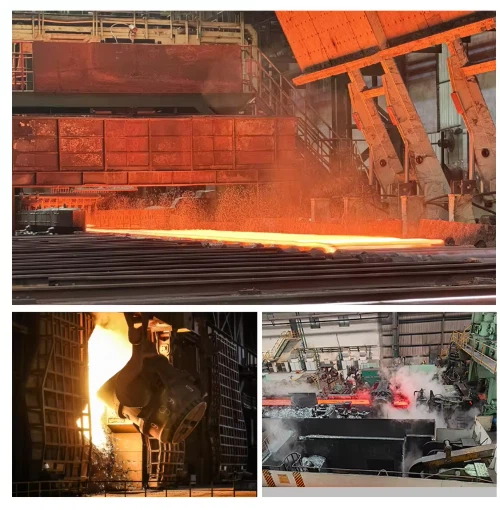 Manufacturing Process
• Controlled melting and alloying:
The steel is produced using electric arc furnaces or basic oxygen furnaces, where precise amounts of carbon, molybdenum, and other elements are added to achieve the correct chemical composition. Advanced refining techniques such as ladle metallurgy are employed to reduce impurities and improve the overall cleanliness of the steel, which is essential for enhancing toughness and creep resistance.
• Continuous casting:
After refining, the molten steel is continuously cast into slabs, blooms, or billets. This method ensures a more uniform microstructure, reduces segregation, and improves the consistency of mechanical properties across the material. Continuous casting also enhances productivity and reduces the formation of internal defects.
• Precision hot rolling:
The cast material is reheated to a carefully controlled temperature and then hot rolled into plates, sheets, or tubular products. Hot rolling refines the grain structure, improves strength, and imparts the required dimensions. Temperature management during rolling is critical to avoid grain coarsening and to ensure the material maintains its high‑temperature performance.
• Optimized heat treatment:
The steel typically undergoes normalizing followed by tempering to achieve the desired balance of strength and toughness. Normalizing refines the microstructure, while tempering reduces hardness and improves ductility. This combination of treatments ensures the steel can withstand long‑term exposure to high temperatures and pressure.
• Rigorous inspection and quality control:
Throughout the manufacturing process, the material is subjected to various non‑destructive tests, including ultrasonic, radiographic, and magnetic particle inspection. These tests help detect any internal or surface defects, ensuring that the final product meets the stringent quality standards required for critical applications such as boilers and pressure vessels.
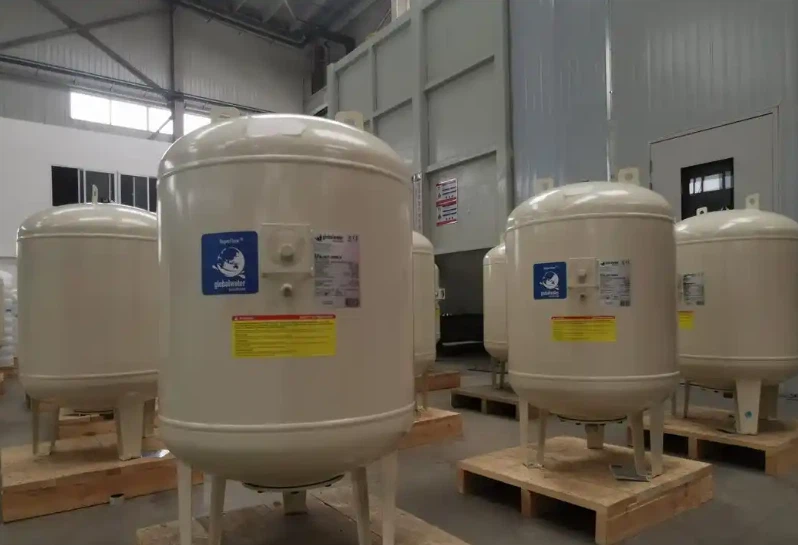 applications
• Boiler and pressure vessel fabrication:
The material is commonly employed in constructing boilers, steam generators, and pressure vessels that operate at elevated temperatures. Its creep resistance ensures structural integrity even under continuous thermal stress, which is essential for safe and reliable operation in power generation and industrial processing.
• Petrochemical and refinery equipment:
It is used for pipes, heat exchangers, and reactor components in refineries and chemical plants. These systems often involve high temperatures and corrosive fluids, and the steel's stability helps prevent failure and maintain process efficiency.
• Power generation industry:
In thermal power plants, it is utilized for superheater tubes, headers, and other boiler parts that are exposed to high‑temperature steam. The material's performance under prolonged heat makes it a preferred choice for ensuring long service life and reducing maintenance needs.
• General high‑temperature engineering:
It also finds application in various industrial furnaces, heat treatment equipment, and piping systems where consistent performance at elevated temperatures is required. Its good weldability allows for flexible fabrication, supporting its use in custom engineering solutions.
Why Choose Us :
You can get the perfect material according to your requirement at the least possible price.
We also offer Reworks, FOB, CFR, CIF, and door to door delivery prices. We suggest you to do deal for shipping which will be quite economical.
The materials we provide are completely verifiable, right from raw material test certificate to the final dimensional statement.(Reports will show on requirement)
We guarantee to give a response within 24hours(usually in the same hour)
You can get stock alternatives, mill deliveries with minimizing manufacturing time.
We are fully dedicated to our customers. If it will not possible to meet your requirements after examining all options, we will not mislead you by making false promises which will create good customer relations.
Full specification and details are available on request. The above information is provided for guidance purposes only. For specific design requirements please contact our technical sales staff.
What is the yield strength of 15MO3 at high temperatures?
At 500°C, 15MO3's yield strength is approximately 100-120 MPa, which is lower than its room-temperature yield strength but still sufficient to withstand loads in high-temperature service scenarios like boilers and pressure vessels.
What surface treatments can be applied to 15MO3?
Common surface treatments include painting, galvanizing, and thermal spraying. These treatments enhance its corrosion resistance, especially when used in humid or slightly corrosive environments, extending the component's service life.
What is the fatigue strength of 15MO3?
The fatigue strength of 15MO3 at room temperature is about 200-250 MPa (for 10⁷ cycles). This property is important for components subjected to cyclic loads, such as steam turbine components in power plants.
Can 15MO3 be used in marine environments?
It is not recommended for long-term use in marine environments. Seawater's high salt content causes severe corrosion to 15MO3. Special marine-grade steels or additional anti-corrosion coatings are required for marine applications.
What is the grain size of 15MO3 after normalizing?
After normalizing, 15MO3 typically has a grain size of ASTM 5-8. Fine and uniform grains improve the material's toughness, strength, and creep resistance, ensuring stable performance in high-temperature environments.
What is the phosphorus content limit in 15MO3?
The phosphorus (P) content in 15MO3 is limited to ≤0.035% (by weight). Phosphorus is an impurity that can reduce the material's toughness and cause cold brittleness, so strict control is required.
What is the sulfur content limit in 15MO3?
The sulfur (S) content in 15MO3 must be ≤0.035% (by weight). Sulfur forms brittle sulfide inclusions, which reduce the material's ductility and weldability, hence the strict limit in manufacturing standards.
What is the application of 15MO3 in power plants?
In power plants, 15MO3 is used to make boiler water walls, superheater tubes, and steam headers. These components endure high-temperature steam and pressure, relying on its excellent heat resistance and creep strength for safe operation.
How to store 15MO3 materials?
15MO3 should be stored in a dry, well-ventilated warehouse to avoid moisture and corrosion. It should be separated from corrosive substances, and the surface should be protected with anti-rust oil or packaging to prevent oxidation.
What are the quality inspection items for 15MO3?
Quality inspection includes chemical composition analysis (e.g.,光谱 analysis), mechanical property testing (tensile, impact, hardness), non-destructive testing (ultrasonic, radiographic), and microstructure examination to ensure compliance with standards.