


What is the difference between S275J0 and S275J2 and SS275JR?
The difference between JR, J0, and J2 in steel grades (like S235JR, S355J0) refers to the temperature at which the steel's toughness is tested using the Charpy impact test, with 'J' indicating the test and 'R', '0', or '2' representing the temperature: JR is tested at room temperature (around 20°C), J0 at 0°C, and J2 at -20°C, with all typically requiring 27 Joules of energy for fracture, making J2 tougher for colder conditions than J0, and JR the standard for general use.Here is a detailed comparison of S275JR, S275J0, and S275J2 based on Chemical Composition and Mechanical Properties, presented in table format as per the EN 10025-2 standard.
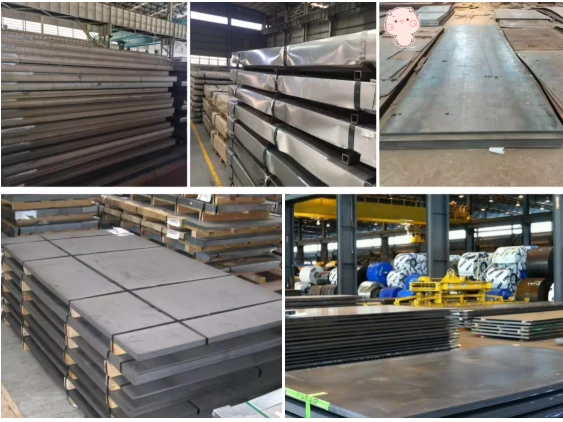
What is S275JR material?
S275JR is a non-alloy structural steel grade per EN 10025-2. It is a rimmed steel where "R" indicates impact testing at +20°C with minimum energy of ≥27 J. It has a yield strength of ≥275 MPa and is a cost-effective choice for static applications in moderate climates where low-temperature toughness is not required.
What is S275J0 material?
S275J0 is a killed steel per EN 10025-2, with improved homogeneity due to full deoxidation. The "J0" indicates it is impact tested at 0°C with ≥27 J minimum. It offers the same ≥275 MPa yield strength as S275JR but is suitable for general structures in temperate regions where temperatures may approach freezing.
What is S275J02 material?
S275J2 is also a killed steel under EN 10025-2, but is specified for tougher conditions. The "J2" means it is impact tested at -20°C with ≥27 J minimum, guaranteeing good toughness in cold climates. With the same ≥275 MPa yield, it is the preferred grade for critical or dynamically loaded structures in cold environments.
1. Chemical Composition Comparison (Maximum Values, %)
The primary chemical difference is in the deoxidation practice, not the element limits. All three grades share nearly identical maximum chemical compositions.
| Element | S275JR | S275J0 | S275J2 | Note |
|---|---|---|---|---|
| Carbon (C) | ≤ 0.21 | ≤ 0.20 | ≤ 0.20 | Slightly lower max C in J0/J2 for better weldability. |
| Manganese (Mn) | ≤ 1.50 | ≤ 1.50 | ≤ 1.50 | Identical limit. |
| Phosphorus (P) | ≤ 0.035 | ≤ 0.035 | ≤ 0.035 | Identical. Harmful impurity, kept low. |
| Sulfur (S) | ≤ 0.035 | ≤ 0.035 | ≤ 0.035 | Identical. Harmful impurity, kept low. |
| Silicon (Si) | ≤ 0.035 (for rimming) | ≤ 0.55 | ≤ 0.55 | Key Difference: Low Si in JR due to rimming process. Higher Si in J0/J2 as a deoxidizer. |
| Nitrogen (N) | ≤ 0.012 | ≤ 0.012 | ≤ 0.012 | Identical. Controlled for toughness. |
| Aluminum (Altot) | Not required | ≥ 0.020 (or other min.) | ≥ 0.020 (or other min.) | Crucial Difference: J0/J2 require min. Al to ensure "killed" steel. JR has no such requirement. |
2. Mechanical Properties Comparison about S275J0 and S275J2 and SS275JR (for thickness ≤ 16 mm)
All three share the same strength requirements. The critical difference is in guaranteed impact toughness.
| Property | S275JR | S275J0 | S275J2 | Note |
|---|---|---|---|---|
| Yield Strength (ReH) | ≥ 275 MPa | ≥ 275 MPa | ≥ 275 MPa | Identical minimum requirement. |
| Tensile Strength (Rm) | 410 - 560 MPa | 410 - 560 MPa | 410 - 560 MPa | Identical range. |
| Elongation (A₅) | ≥ 23 % | ≥ 23 % | ≥ 23 % | Identical minimum ductility. |
| Impact Toughness (KV) | ≥ 27 J at +20°C | ≥ 27 J at 0°C | ≥ 27 J at -20°C | THE KEY DIFFERENCE. Defines application temperature range. |
| Deoxidation Practice | Rimmed (R) | Killed (J) | Killed (J) | Defines internal homogeneity and consistency. |
Summary Table: Selection Guide
| Grade | Deoxidation | Key Chemical Trait | Key Mechanical Trait | Best Used For |
|---|---|---|---|---|
| S275JR | Rimmed | Low Si, No required Al | Toughness at +20°C only | Static, non-critical structures in warm, controlled climates. Most economical. |
| S275J0 | Killed | Higher Si, Min. Al required | Toughness at 0°C | General structures in temperate climates with occasional freezing. Balanced choice. |
| S275J2 | Killed | Higher Si, Min. Al required | Toughness at -20°C | Critical structures in cold climates or with dynamic loads. Safest choice for toughness. |
Conclusion: For a designer, the choice is not about strength, but about the service environment and required level of quality assurance. S275J2 provides the highest guarantee against brittle fracture in cold or dynamic conditions, while S275JR is a cost-effective option for benign, static environments. S275J0 bridges the gap for general use.
1. What is the meaning of "J0" in S275J0?
The "J0" indicates the steel is fully killed (deoxidized) and has a specified impact toughness of at least 27 joules when tested at 0°C. The "J" denotes killed steel with guaranteed impact value, and the "0" specifies the test temperature.
2. What is the main difference between S275J0 and S275J2?
The key difference is the impact test temperature: S275J0 is tested at 0°C, while S275J2 is tested at -20°C. This makes S275J2 suitable for colder service environments than S275J0.
3. Is S275J0 suitable for winter construction?
S275J0 is generally suitable for mild winter conditions where temperatures rarely drop below freezing. For consistent sub-zero temperatures, S275J2 or S275J2+N (normalized) would be better choices due to their lower temperature toughness.
4. What is the yield strength of S275J0?
S275J0 has a minimum yield strength of 275 MPa for thicknesses up to 16 mm, identical to other S275 grades. The strength decreases gradually with increasing material thickness as specified in EN 10025-2.
5. Can S275J0 be welded easily?
Yes, S275J0 offers good weldability similar to other S275 killed steels, with a carbon content typically below 0.20% and a homogeneous microstructure that responds well to common welding processes without pre-heating for most applications.
6. Where is S275J0 typically used?
It's commonly used in general structural applications in temperate climates, such as building frames, industrial platforms, and machinery supports where impact loading at moderate temperatures is a consideration.
Full specification and details are available on request. The above information is provided for guidance purposes only. For specific design requirements please contact our technical sales staff.
