


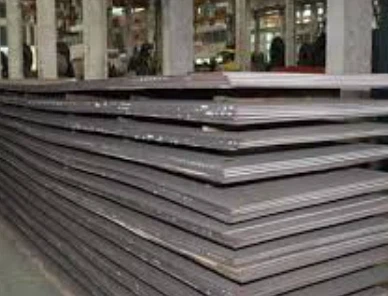
SA 387 Grade 12 Class 1 is a chromium-molybdenum alloy steel plate specified under ASME SA387, designed for elevated-temperature service in pressure vessels and boilers.
Specifications for ASME SA387 Grade 12 Alloy Steel Plates
| Designation | Nominal Chromium Content (%) |
Nominal Molybdenum Content (%) |
| SA387 Grade 12 | 1.00% | 0.50% |
Chemical Requirements for ASME SA387 Grade 12 Alloy Steel Plates
| Element | Chemical Composition (%) | |
| ASME SA387 Grade 12 | ||
| Carbon: | Heat Analysis: | 0.05 - 0.17 |
| Product Analysis: | 0.04 - 0.17 | |
| Manganese: | Heat Analysis: | 0.40 - 0.65 |
| Product Analysis: | 0.35 - 0.73 | |
| Phosphorus: | Heat Analysis: | 0.035 |
| Product Analysis: | 0.035 | |
| Sulphur (max): | Heat Analysis: | 0.035 |
| Product Analysis: | 0.035 | |
| Silicon: | Heat Analysis: | 0.15 - 0.40 |
| Product Analysis: | 0.13 - 0.45 | |
| Chromium: | Heat Analysis: | 0.80 - 1.15 |
| Product Analysis: | 0.74 - 1.21 | |
| Molybdenum: | Heat Analysis: | 0.45 - 0.60 |
| Product Analysis: | 0.40 - 0.65 |
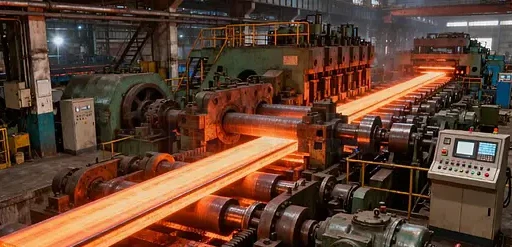
Key Processing Steps
Melting & Rolling:
The steel must be killed steel to ensure uniform composition, and it is rolled into plate form.
Normalizing:
This is a critical step. The steel plate is heated to a specific temperature (approximately 840–900°C for Grade 12) and then air-cooled to eliminate internal stresses and refine the grain structure.
Quenching (for specific cases only):
Quenching may be performed to achieve a harder microstructure, but for Class 1, normalizing is typically the primary heat treatment.
Tempering:
Tempering is usually required after normalizing. The plate is heated to a lower temperature (approximately 600–700°C for Grade 12) and then air-cooled to reduce hardness, improve toughness, and stabilize the microstructure.
Inspection:
Mechanical tests such as tensile, impact, and hardness tests are conducted, along with non-destructive testing such as ultrasonic inspection, to ensure compliance with ASME/ASTM standards.
Main Application Scenarios
Oil & Gas Industry: It is extensively applied in the fabrication of reactors (including hydrotreating and hydrocracking reactors), large-capacity storage tanks for crude oil and refined products, and high-pressure piping systems. Notably, it performs exceptionally well in sour service environments containing hydrogen sulfide (H₂S) and other corrosive impurities, resisting sulfide stress cracking and hydrogen embrittlement to ensure long-term safe operation of upstream, midstream, and downstream oil & gas facilities.
Petrochemical Industry: A staple material for process equipment such as catalytic reformers, alkylation units, and esterification reactors. It is also widely used in pressure vessels (e.g., tower vessels, autoclaves) and heat exchangers (shell-and-tube, plate-type) that handle high-temperature, high-pressure hydrocarbon streams and reactive intermediates. Its excellent weldability and structural stability make it suitable for complex process loops with frequent temperature and pressure fluctuations.
Power Generation: Critical for key components in thermal power and nuclear power plants, including boiler drums, water wall tubes, superheaters, and reheaters. It can withstand continuous high temperatures (up to 550℃) and high-pressure steam conditions, maintaining mechanical strength and resisting oxidation to support efficient power generation and ensure the reliability of steam turbine systems.
Chemical Industry: Ideal for manufacturing pressure vessels used in chemical synthesis, separation units (such as distillation columns and separators), and process piping networks. It adapts to a wide range of aggressive media, including weak acids, alkalis, and organic solvents, and can endure the harsh operating conditions of chemical production processes (high pressure, cyclic temperature changes), minimizing equipment failure risks and extending service life.
Other High-End Equipment: Applied in aerospace ground test equipment, deep-sea pressure-bearing structures of marine engineering, and special metallurgical equipment, relying on its excellent mechanical properties to ensure stable operation of equipment under extreme conditions.
Core Advantages
Excellent High-Temperature Resistance: It maintains good mechanical strength and structural stability at high temperatures (up to 550℃), without obvious performance degradation, which is crucial for equipment operating in high-temperature working conditions such as boilers and reactors.
Strong Corrosion Resistance: The material has good resistance to corrosion from reducing media (such as hydrogen sulfide) and weak acid-base media, effectively extending the service life of equipment in petrochemical and coal chemical harsh environments.
Superior Weldability: It has good weld forming performance, and the welded joints have high strength and toughness after welding. There is no obvious weld brittleness, which simplifies the manufacturing process of large-scale welded equipment and ensures structural integrity.
High Mechanical Strength: It has high tensile strength, yield strength, and impact toughness, enabling it to bear large pressure loads and mechanical vibrations, and is not prone to deformation or fracture, ensuring the safety and reliability of pressure-bearing equipment.
Good Heat Treatment Performance: It can obtain optimized tissue structure and performance through normalizing, tempering, and other heat treatment processes, adapting to different operational requirements of various equipment and improving the overall performance of the material.
Wide Standard Adaptability: Complies with international standards such as ASTM, with stable material quality and uniform performance. It is recognized globally, facilitating the international procurement and application of equipment and reducing technical risks.
If you have project requirements for SA 387 Grade 12 Class 1, we welcome your inquiry. GNEE maintains a large inventory of commonly used high strength steel grades for your selection.For detailed mechanical properties, chemical composition, and technical data, as well as free samples, please contact our factory immediately. We offer competitive prices, stable quality, and professional service. Email:beam@gneesteelgroup.com.
What is the availability of SA 387 Grade 12 Class 1 in different countries?
It is widely available from major steel producers worldwide, with suppliers in North America, Europe, Asia, and other regions meeting ASME standards.
What is the lead time for SA 387 Grade 12 Class 1 plates?
Lead times for SA 387 Grade 12 Class 1 plates vary significantly by supplier, stock availability, quantity, and specific processing, but expect general quotes from a few days for stock items (after processing) to several weeks or months for mill orders.
What is the cost comparison between SA 387 Grade 12 Class 1 and other Cr-Mo grades?
It is generally less expensive than higher-alloy Cr-Mo grades (e.g., 2.25Cr-1Mo, 9Cr-1Mo-V), but more expensive than plain carbon steels.
What is the storage requirement for SA 387 Grade 12 Class 1 plates?
Plates should be stored in a dry, covered area to prevent corrosion, with proper separation from other materials to avoid contamination.
What is the handling requirement for SA 387 Grade 12 Class 1 plates?
Care should be taken to avoid impact damage and surface abrasion, and plates should be lifted using appropriate slings and lifting devices.
What is the documentation required for SA 387 Grade 12 Class 1 material?
Documentation for SA 387 Grade 12 Class 1 material centers on the Mill Test Certificate (MTC), verifying compliance with ASTM/ASME standards, detailing chemical composition (Carbon, Mn, Cr, Mo), mechanical properties (tensile strength, yield strength, elongation), heat treatment, and traceability, often alongside supplementary test reports for impact or NDT if required by the buyer.
What is the traceability requirement for SA 387 Grade 12 Class 1?
Each plate is usually marked with heat number, grade, thickness, and other identifiers to ensure full traceability from production to installation.
What is the certification requirement for SA 387 Grade 12 Class 1?
For SA 387 Grade 12 Class 1 steel, certification requires comprehensive testing (tensile, impact, chemical analysis) and documentation, primarily a Mill Test Certificate (MTC) conforming to ASTM A387/ASME SA387 standards, confirming mechanical properties (Tensile: 380-550 MPa; Yield: >205 MPa; Elongation: 18-22%), specified Cr/Mo content (Cr: 0.8-1.15%, Mo: 0.45-0.60%), and adherence to heat treatment & processing requirements, often with third-party inspections available.
What is the inspection and maintenance requirement for SA 387 Grade 12 Class 1 equipment?
Regular inspections may include visual checks, thickness measurements, ultrasonic testing, and sometimes stress-rupture or creep monitoring to ensure continued integrity.
What is the effect of cyclic loading on SA 387 Grade 12 Class 1?
Cyclic loading on SA 387 Grade 12 Class 1 (a low-alloy Cr-Mo steel for pressure vessels) primarily causes fatigue failure, especially at elevated temperatures, leading to reduced stiffness, shape changes, and eventual cracking due to accumulated plastic strain, though specific behavior depends on stress/strain ranges (low-cycle vs. high-cycle) and operational temperature, often requiring specialized ASME codes for design to ensure sufficient fatigue life.
What is the effect of corrosion fatigue on SA 387 Grade 12 Class 1?
In corrosive environments, corrosion fatigue can reduce the fatigue life, so proper material selection, corrosion protection, and maintenance are important.
What is the typical application temperature range for SA 387 Grade 12 Class 1 in refineries?
It is commonly used in refinery heaters, reformers, and other equipment operating between 600–900°F (315–482°C).