


What factors influence the price of SA537 Class 1 ?
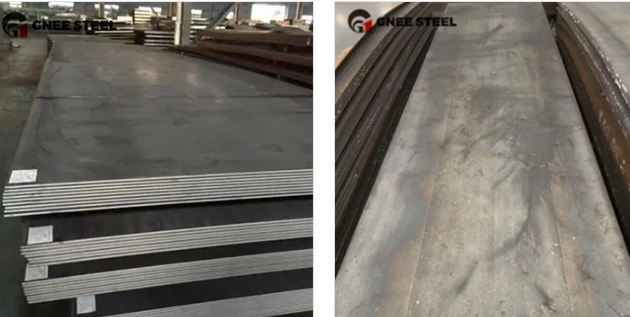
SA537 Class 1 refers to ASTM A537/ASME SA537 Class 1 steel plates, a heat-treated, normalized carbon-manganese-silicon steel specifically designed for fusion-welded boilers, pressure vessels, and storage tanks, offering high strength, toughness, and good weldability for applications in the oil, gas, and petrochemical industries. Key characteristics include its normalized condition, improved yield/tensile strength over standard grades, and suitability for moderate temperatures and pressures, with potential Charpy V-notch testing for low-temperature toughness.
The price of SA537 Class 1 steel plate is influenced by a mix of market, manufacturing, and procurement factors. While it is a carbon-manganese-silicon steel (not a high-alloy grade like Cr-Mo steels), its heat-treated nature and specific applications create unique cost drivers.
1. Market & Raw Material Factors
Carbon Steel Market Trends: As a carbon/low-alloy steel, its price is closely tied to global iron ore, scrap steel, and energy costs. Commodity market volatility directly impacts the base price.
Demand Cycles: Demand from pressure vessel, storage tank, and offshore construction sectors drives competition. Booms in LNG, petrochemical, or renewable energy infrastructure can spike prices.
Trade Policies: Tariffs (e.g., Section 232 in the U.S.), anti-dumping duties, or import quotas in key markets affect supply chains and landed costs.
2. Product & Manufacturing Factors
Plate Dimensions:
Thickness: Thicker plates (>50 mm) require more controlled rolling and extended heat treatment, increasing cost.
Width/Length: Non-standard sizes may need custom rolling or cutting, adding premiums.
Heat Treatment (Key Cost Driver): SA537 Class 1 requires normalizing (or normalizing & tempering). This involves reheating plates to high temperatures (~900°C) in furnaces, which consumes significant energy and time, adding a fixed processing surcharge.
Order Quantity: Larger volumes (e.g., full truckloads or mill heat lots) secure volume discounts. Small orders or cut pieces incur higher handling and processing fees.
Mill Source & Certification: Plates from reputable mills (e.g., in the U.S., EU, Japan, or certified Indian/Korean mills) with ASME/ASTM certification command a premium over generic material.
3. Procurement & Logistics Factors
Testing & Certification:
Standard Mill Test Reports (MTRs) are included.
Additional testing-such as Charpy V-notch impact tests at low temperatures (-60°F/-51°C typical), ultrasonic testing (UT), or third-party inspection-adds cost.
Processing Services: Value-added services like precision cutting, beveling, shot blasting, or priming increase the final price.
Delivery & Location:
Freight costs for heavy plates are significant.
Urgent/Ex-stock delivery carries a premium over standard mill lead times (typically 6–12 weeks).
Geographic proximity to mills or ports affects logistics costs.
Currency Fluctuations: Transactions in USD or EUR expose buyers in other currencies to exchange rate risks.
4. Comparison with Similar Grades
| Factor | SA537 Class 1 vs. SA516 Gr 70 | SA537 Class 1 vs. SA537 Class 2 |
|---|---|---|
| Heat Treatment | Normalized (SA537 Cl 1) vs. as-rolled (SA516). Normalizing adds cost but improves toughness. | Normalized (Cl 1) vs. Quenched & Tempered (Cl 2). Q&T (Cl 2) is more energy-intensive, making it more expensive. |
| Key Advantage | Better low-temperature toughness and uniformity. | Class 1 is more economical than Class 2 for moderate strength requirements. |
Summary: Key Price Influencers for SA537 Class 1
Normalizing heat treatment (energy and furnace time).
Plate thickness (thicker = higher cost).
Order volume (small batches cost more per ton).
Additional testing (impact tests, UT).
Mill reputation and certification (ASME stamp).
Delivery urgency and logistics.
Procurement Tips
Specify Clearly: Define thickness, dimensions, heat treatment (normalized or N&T), and any supplementary testing in the purchase order.
Plan for Lead Time: Normalizing requires furnace scheduling-place orders early to avoid rush charges.
Compare Total Cost: Include testing, processing, and freight when evaluating quotes.
Consider Alternatives: For non-critical applications, SA516 Grade 70 (as-rolled) may be a cheaper option if low-temperature toughness is not required.
1.What is SA537 Class 1?
SA537 Class 1 is a specification for heat-treated carbon-manganese-silicon steel plates, primarily used for welded pressure vessels, offering good notch toughness at lower temperatures.
2.What is the difference between SA537 Class 1 and Class 2?
The main difference is in heat treatment and strength. Class 1 is supplied in the normalized or stress-relieved condition with lower strength, while Class 2 is quenched and tempered, offering higher strength levels.
3.What are the mechanical properties of SA537 Class 1?
For plates up to 2.5 inches thick, typical properties include a minimum tensile strength of 70-90 ksi (485-620 MPa) and a minimum yield strength of 50 ksi (345 MPa).
4.What is the chemical composition of SA537 Class 1?
It is a carbon-manganese-silicon steel with typical maximums of 0.24% Carbon, 1.35% Manganese, and 0.15-0.50% Silicon, along with controlled phosphorus and sulfur.
5.Is SA537 Class 1 a carbon steel or alloy steel?
It is technically classified as a high-strength carbon steel, often referred to as a carbon-manganese-silicon steel, but its properties are achieved through heat treatment rather than high alloy content.
6.What is the Charpy impact requirement for SA537 Class 1?
SA537 Class 1 typically requires Charpy V-Notch impact testing at -50°F (-46°C) with minimum average energy absorption of 25 ft-lbs (34 J) for plates over 0.75 inches thick.
7.Where is SA537 Class 1 commonly used?
It is widely used for pressure vessels, storage tanks, and structural applications in industries like oil and gas, construction, and mining, especially where good low-temperature toughness is needed.
8.Can SA537 Class 1 be welded easily?
Yes, it has good weldability. However, proper procedures should be followed, including potential preheat for thicker sections, and using compatible low-hydrogen electrodes to avoid cracking.
9.What is the heat treatment for SA537 Class 1 plates?
SA537 Class 1 plates are supplied in either the normalized or stress-relieved condition, as specified by the purchaser, to achieve the required mechanical properties.
10.Is SA537 Class 1 suitable for low-temperature service?
Yes, due to its normalized heat treatment and composition, SA537 Class 1 offers good notch toughness and is commonly used for applications down to -50°F (-46°C) and lower, depending on thickness and impact test results.
Full specification and details are available on request. The above information is provided for guidance purposes only. For specific design requirements please contact our technical sales staff.
