


How does SA537 Class 1 compare to SA516 Grade 70?
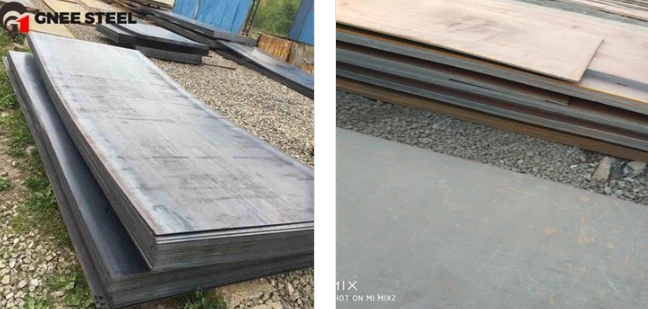
SA537 Class 1 is a heat-treated (normalized or normalized and tempered) carbon-manganese-silicon steel plate with a minimum yield strength of 50 ksi (345 MPa), designed primarily for low-temperature pressure vessel applications where excellent toughness and impact resistance at temperatures as low as -60°F (-51°C) are critical.
SA516 Grade 70 is a commonly used carbon steel plate for pressure vessels, typically supplied in the as-rolled or normalized condition with a minimum yield strength of 38 ksi (260 MPa), offering a cost-effective solution for general-purpose tanks and vessels operating at ambient or moderate temperatures without stringent low-temperature toughness requirements.
SA537 Class 1 and SA516 Grade 70 are two of the most common carbon-manganese steel plates for pressure vessels and structural applications. The choice between them hinges on toughness requirements, heat treatment, and cost.
Quick-Reference Comparison Table
| Feature | SA537 Class 1 | SA516 Grade 70 |
|---|---|---|
| Standard | ASTM A537 | ASTM A516 |
| Key Differentiator | Heat-treated for toughness | As-rolled or normalized (Grade 70 usually as-rolled) |
| Typical Condition | Normalized (N) or Normalized & Tempered (N&T) | As-rolled (AR) or Normalized (N) if specified |
| Yield Strength (Min, ≤1.5") | 50 ksi (345 MPa) | 38 ksi (260 MPa) |
| Tensile Strength | 70–90 ksi (485–620 MPa) | 70–90 ksi (485–620 MPa) |
| Low-Temperature Toughness | Excellent – Often supplied with Charpy impact testing at -60°F (-51°C) or lower as standard. | Moderate – Impact testing typically at +32°F (0°C) unless specified lower (e.g., Gr 70H for -50°F). |
| Primary Application | Low-temperature pressure vessels, cryogenic storage, offshore structures, high-toughness critical zones. | General pressure vessels, boiler drums, storage tanks for ambient/moderate temperatures. |
| Weldability | Excellent (due to normalized microstructure and lower carbon equivalent). | Good, but may require more care with as-rolled material (risk of HAZ brittleness). |
| Cost | Higher due to mandatory heat treatment. | Lower (as-rolled is cheaper to produce). |
| Availability | Less common; longer lead times due to heat treatment. | Widely available from stock. |
Detailed Breakdown
1. Mechanical Properties & Heat Treatment
SA537 Class 1:
Mandatory heat treatment (normalized or N&T). This refines the grain structure, ensuring uniform properties and superior toughness at low temperatures.
Higher minimum yield strength (50 ksi vs. 38 ksi for SA516 Gr 70), allowing for thinner vessel walls in some designs.
SA516 Grade 70:
Typically supplied as-rolled (cheaper), but can be ordered normalized for improved properties.
Lower yield strength means thicker sections may be required for the same design pressure.
2. Toughness & Low-Temperature Performance
SA537 Class 1:
Designed for low-temperature service (e.g., LNG tanks, ammonia storage, Arctic vessels).
Charpy V-notch impact testing often included by default at temperatures as low as -60°F (-51°C).
SA516 Grade 70:
Standard grade is adequate for ambient to moderate temperatures.
For low temperatures, specify SA516 Grade 70H (guaranteed impact properties down to -50°F/-45°C) or order normalized with supplemental impact testing.
3. Cost & Procurement
SA537 Class 1:
~15–30% more expensive than SA516 Gr 70 due to heat treatment and testing.
Longer lead times (4–12 weeks) because plates require furnace scheduling.
SA516 Grade 70:
Cost-effective for non-cryogenic applications.
Often available ex-stock from service centers.
4. When to Choose Which?
| Choose SA537 Class 1 when: | Choose SA516 Grade 70 when: |
|---|---|
| • Design temperature below -20°F (-29°C). | • Operating temperature above 32°F (0°C). |
| • High toughness/fracture critical zones (e.g., nozzle reinforcements, knuckles). | • Cost sensitivity is high (e.g., large tanks, non-critical vessels). |
| • Thinner walls are desired (higher yield strength). | • Rapid delivery is needed (as-rolled stock availability). |
| • Code requires normalized plates for thick sections (e.g., ASME VIII-1 UCS-66). | • Supplementary impact testing (Grade 70H) meets low-temperature needs. |
Code & Specification Notes
ASME BPVC Section II: Both are accepted materials.
Impact Testing:
SA537 Class 1 is inherently suited for low-temperature applications per ASME VIII-1.
SA516 Grade 70 may require additional testing and normalization to meet low-temperature mandates.
Equivalents:
SA537 Class 1 is similar to EN 10028-3 P355N/NL1 (normalized fine-grain).
SA516 Grade 70 is similar to EN 10028-2 P355GH (pressure vessel steel).
Summary
SA537 Class 1 is a premium, toughness-optimized plate for low-temperature/critical service, with higher strength and mandatory heat treatment.
SA516 Grade 70 is the economical workhorse for general pressure vessels at ambient temperatures, available as-rolled or normalized.
Key Takeaway: If your design involves low temperatures, cyclic loading, or critical integrity concerns, the extra cost of SA537 Class 1 is justified. For standard pressure vessels operating at ambient temperatures, SA516 Grade 70 offers the best value. Always consult your design code and involve a materials engineer for critical applications.
1.What is SA537 Class 1?
SA537 Class 1 is a specification for heat-treated carbon-manganese-silicon steel plates, primarily used for welded pressure vessels, offering good notch toughness at lower temperatures.
2.What is the difference between SA537 Class 1 and Class 2?
The main difference is in heat treatment and strength. Class 1 is supplied in the normalized or stress-relieved condition with lower strength, while Class 2 is quenched and tempered, offering higher strength levels.
3.What are the mechanical properties of SA537 Class 1?
For plates up to 2.5 inches thick, typical properties include a minimum tensile strength of 70-90 ksi (485-620 MPa) and a minimum yield strength of 50 ksi (345 MPa).
4.What is the chemical composition of SA537 Class 1?
It is a carbon-manganese-silicon steel with typical maximums of 0.24% Carbon, 1.35% Manganese, and 0.15-0.50% Silicon, along with controlled phosphorus and sulfur.
5.Is SA537 Class 1 a carbon steel or alloy steel?
It is technically classified as a high-strength carbon steel, often referred to as a carbon-manganese-silicon steel, but its properties are achieved through heat treatment rather than high alloy content.
6.What is the Charpy impact requirement for SA537 Class 1?
SA537 Class 1 typically requires Charpy V-Notch impact testing at -50°F (-46°C) with minimum average energy absorption of 25 ft-lbs (34 J) for plates over 0.75 inches thick.
7.Where is SA537 Class 1 commonly used?
It is widely used for pressure vessels, storage tanks, and structural applications in industries like oil and gas, construction, and mining, especially where good low-temperature toughness is needed.
8.Can SA537 Class 1 be welded easily?
Yes, it has good weldability. However, proper procedures should be followed, including potential preheat for thicker sections, and using compatible low-hydrogen electrodes to avoid cracking.
9.What is the heat treatment for SA537 Class 1 plates?
SA537 Class 1 plates are supplied in either the normalized or stress-relieved condition, as specified by the purchaser, to achieve the required mechanical properties.
10.Is SA537 Class 1 suitable for low-temperature service?
Yes, due to its normalized heat treatment and composition, SA537 Class 1 offers good notch toughness and is commonly used for applications down to -50°F (-46°C) and lower, depending on thickness and impact test results.
Full specification and details are available on request. The above information is provided for guidance purposes only. For specific design requirements please contact our technical sales staff.
