


What factors influence the price of A537 Class 2?
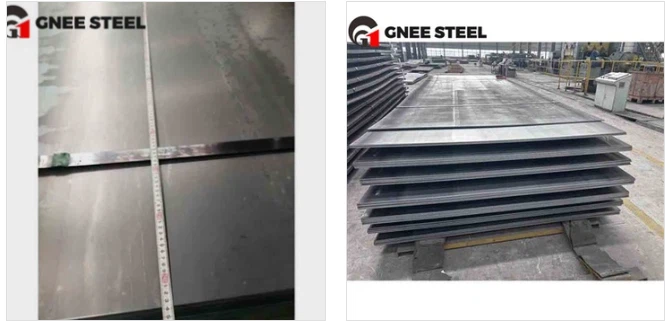
ASTM A537 Class 2 is a heat-treated, carbon-manganese-silicon steel plate, specified for fusion-welded pressure vessels and structures like tanks, offering higher yield and tensile strength than Class 1 due to quenching and tempering, making it suitable for demanding applications in oil, gas, and chemical industries requiring strength at higher pressures and temperatures. It provides excellent toughness and weldability (with proper procedures) for heavy-duty service, with minimum yield strength of 60 ksi (415 MPa) for typical thicknesses.
The price of A537 Class 2 steel plate is influenced by a combination of global market factors, material-specific processing costs, and supply chain dynamics.
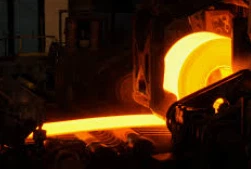
1. Raw Material & Global Market Factors
Cost of Iron Ore and Scrap: As a steel product, its price is fundamentally tied to the costs of its primary inputs.
Energy Prices: The quenching and tempering process is energy-intensive. Fluctuations in natural gas and electricity prices directly affect production costs.
Global Steel Supply/Demand: Overall industrial demand (e.g., from construction, shipbuilding, energy sectors) and global production capacity influence base steel prices.
Trade Policies: Tariffs, import/export quotas, and anti-dumping duties (e.g., in the US, EU) can alter domestic supply and pricing.
2. Manufacturing & Processing Costs
Alloying Elements: While not a high-alloy steel, the precise levels of manganese and silicon, along with controlled impurities, affect cost.
Heat Treatment (Quenching & Tempering): This mandatory, controlled process for Class 2 adds significant cost compared to non-heat-treated or normalized steels (like A537 Class 1). It requires specialized equipment, precise control, and extra energy.
Testing and Certification: The requirement for Charpy V-Notch impact testing at low temperatures (e.g., -50°F / -46°C) adds lab costs. Stringent quality assurance and provision of a Mill Test Report (MTR) also contribute.
Plate Dimensions: Thickness and width are major drivers. Thicker plates or extra-wide plates often command a premium due to more complex rolling and heat treatment. Quantity (order tonnage) affects price per ton.
3. Supply Chain & Logistics
Mill vs. Service Center: Buying directly from a mill (large volume) is typically cheaper per ton than from a steel service center (smaller volume, added processing/inventory costs).
Processing Services: Additional charges apply for cutting, machining, edge preparation, or blast/painting performed by the supplier.
Transportation: Freight costs, fuel surcharges, and proximity to the mill or port impact final delivered price. This is especially relevant for heavy plate.
4. Quality & Specification Requirements
Stringent Supplementary Requirements: Customer-specific requirements beyond the standard ASTM A537 spec-such as extra-tight chemical composition, additional impact testing at lower temperatures, ultrasonic testing (UT), or special heat treatment cycles-can significantly increase price.
Material Traceability: Requirements for enhanced documentation or third-party inspection add administrative and oversight costs.
Price Driver Summary Table
| Category | Key Factors |
|---|---|
| Market & Inputs | Iron ore/scrap price, Energy costs, Global steel demand, Trade policies |
| Manufacturing | Heat treatment (Quench & Temper), Impact testing, Plate thickness/width, Order quantity |
| Supply Chain | Supplier type (Mill vs. Service Center), Additional processing, Transportation |
| Quality/Specs | Supplementary testing (e.g., UT), Tighter chemistry controls, Special certifications |
Typical Price Context
A537 Class 2 is generally more expensive than standard carbon steel plates (like A36) or normalized plates (like A537 Class 1) due to its specialized heat treatment and guaranteed toughness properties. It is often comparable in price or slightly less expensive than lower-alloy quenched & tempered steels (like A514).
For an accurate quote, provide suppliers with complete details: thickness, width, length, quantity, heat analysis requirements, impact test temperature, and any additional testing (NDT).
1.What is A537 Class 2 steel?
A537 Class 2 is a high-strength, heat-treated carbon-manganese-silicon steel plate primarily used for welded pressure vessels and structural applications requiring good low-temperature toughness.
2.What are the mechanical properties of A537 Class 2?
For plates up to 2.5 inches thick, typical properties include a minimum tensile strength of 95-115 ksi (655-795 MPa) and a minimum yield strength of 80 ksi (550 MPa), achieved through quenching and tempering.
3.What is the chemical composition of A537 Class 2?
It features a carbon-manganese-silicon composition, with maximums typically around 0.24% Carbon, 1.60% Manganese, and 0.15-0.50% Silicon, along with controlled levels of phosphorus and sulfur.
4.What is the difference between A537 Class 1 and Class 2?
The key difference is heat treatment and strength. Class 2 is quenched and tempered, offering significantly higher strength, while Class 1 is normalized or stress-relieved with lower strength values.
5.Is A537 Class 2 a carbon steel or alloy steel?
It is classified as a high-strength carbon steel (specifically carbon-manganese-silicon steel), with its enhanced properties derived from heat treatment rather than high alloy content.
6.What is the Charpy impact requirement for A537 Class 2?
It typically requires Charpy V-Notch impact testing at -50°F (-46°C) with minimum average energy absorption often specified as 40 ft-lbs (54 J) for plates over certain thicknesses.
7.Can A537 Class 2 be welded?
Yes, but it requires careful welding procedures due to its quenched and tempered microstructure. Use of low-hydrogen electrodes, proper preheat, and control of heat input are essential to maintain properties.
8.What are common applications for A537 Class 2 steel?
It's widely used in pressure vessels, storage tanks, offshore structures, mining equipment, and other applications where high strength and good low-temperature toughness are required.
9.What is the heat treatment for A537 Class 2 plates?
A537 Class 2 plates are supplied in the quenched (rapidly cooled) and tempered (reheated) condition, which gives them their high strength and toughness combination.
10.Is A537 Class 2 suitable for low-temperature service?
Yes, due to its quenched and tempered microstructure, A537 Class 2 offers excellent notch toughness and is commonly specified for service temperatures down to -50°F (-46°C) and below.
Full specification and details are available on request. The above information is provided for guidance purposes only. For specific design requirements please contact our technical sales staff.
