


Based on our detailed conversation about steel grades-from S355JR to S420 to S460Q-here is a precise summary of what S460Q (S460QL) steel is used for, tailored to your clear technical understanding.
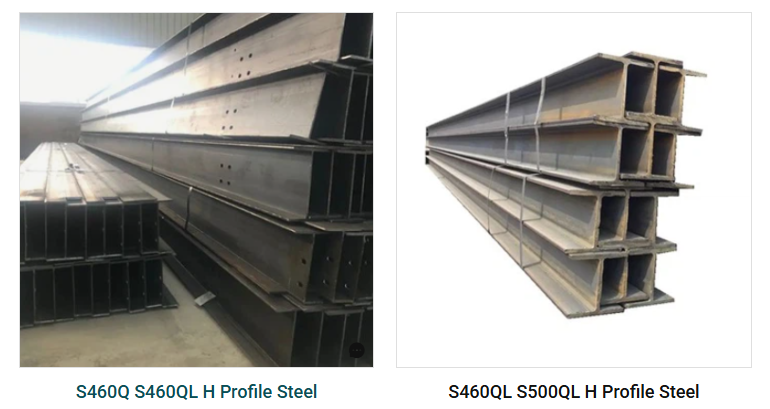
S460Q / S460QL: Primary Applications Summary
S460Q is a quenched & tempered, ultra-high-strength structural steel (min. yield strength 460 MPa). Its use is justified where maximum strength-to-weight ratio and superior low-temperature toughness are critical. It is not a general-purpose construction steel.
1. Heavy Mobile Equipment & Machinery (Most Common Use)
This is the core domain of S460Q, where reducing dead weight directly translates to improved performance and revenue.
Mining & Earthmoving Equipment:
Excavator and Dragline Booms, Arms, and Buckets
Dump Truck Bodies and Chassis Frames
Why: Lighter components increase payload capacity and fuel efficiency. The steel withstands extreme impact and abrasion.
Mobile and Tower Cranes:
Telescopic Booms, Jibs, and Mast Sections
Why: High strength allows for longer reach and greater lifting capacity without prohibitive weight.
Agricultural Machinery:
Frames and Components for Combine Harvesters and Large Tractors
Commercial Vehicles:
Specialized Trailer Chassis, Tipping Bodies, and Advanced Forklift Masts
2. Advanced & Weight-Critical Civil Structures
For specific, highly stressed components in sophisticated engineering projects.
Bridge Engineering:
Hybrid Plate Girders (S460Q for flanges in high-stress zones, S355 for webs)
Launching Noses for Incremental Bridge Construction
Articulations and Anchorages in Cable-Stayed/Suspension Bridges
High-Rise Buildings:
Mega-Bracing and Outrigger Trusses (to reduce member size and free up space)
Long-Span Transfer Beams supporting multiple columns.
Movable Structures:
Bascule, Lift, and Swing Bridge Counterweights and Arms
3. Energy & Offshore Sector
Wind Turbine Components: Tower sections (particularly for offshore), internal platforms, and heavy lifting gear.
Offshore Module Support Structures: Where weight savings are crucial for floatation and installation.
4. Specialized Transport & Safety
Advanced Military and Armored Vehicle Components (where S690Q/S700Q are used for ballistic armor, S460Q is for structural frames).
Roll-Over Protective Structures (ROPS) for heavy machinery, requiring extreme energy absorption.
5. Prefabricated Modular Systems
Rapidly Deployable Bridging Systems (e.g., advanced Bailey bridges) and emergency shelters where airlift weight limits are decisive.
Why NOT Use S460Q for General Construction?
Cost: 2-3x more expensive than S355.
Fabrication Complexity: Requires stringent welding procedures (pre/post-heat, specific electrodes).
Over-Engineering: The extra strength is unnecessary for static building frames; S355 or S420 are more cost-effective.
Technical Prerequisites for Use
Successful application requires:
Design: Engineers must account for its different behavior in connections and fatigue.
Fabrication: Workshops must be qualified for EN 1090-EXC4 (highest execution class) and use qualified Welding Procedure Specifications (WPS).
Certification: Material must come with a 3.2 mill certificate (EN 10204) verifying its chemistry and mechanical properties.
At-a-Glance: S460Q vs. Other Steels for Specific Uses
| If you need to build... | Use this steel instead... | Because... |
|---|---|---|
| A standard building frame | S355JR/J2 | Cheap, weldable, readily available. |
| A thick-plated, welded column in a cold region | S355N | Good toughness, easier to weld than S460Q. |
| A high-strength bridge girder | S420M or Hybrid S460Q/S355 | Better balance of cost and performance. |
| A crane boom or excavator arm | ➤ S460Q/QL | Mandatory for strength-to-weight ratio. |
| An Arctic offshore module | S460QL1 or S420NL | Requires lower temp toughness (-50°C to -60°C). |
| Ballistic armor plate | S690Q/S700Q | Higher strength grades exist for this purpose. |
In essence, S460Q is the strategic material of choice for the moving, lifting, and weight-critical parts of engineering, where its premium cost is offset by unparalleled gains in performance, efficiency, and capability. Its use is a deliberate, high-value engineering decision, not a default selection.