


The differences among SM490A, SM490B, and SM490C are not in strength, but in their quality levels, specifically in toughness guarantees, chemical control, and intended applications. All three have the same minimum tensile (≥490 MPa) and yield (≥325 MPa) strength.
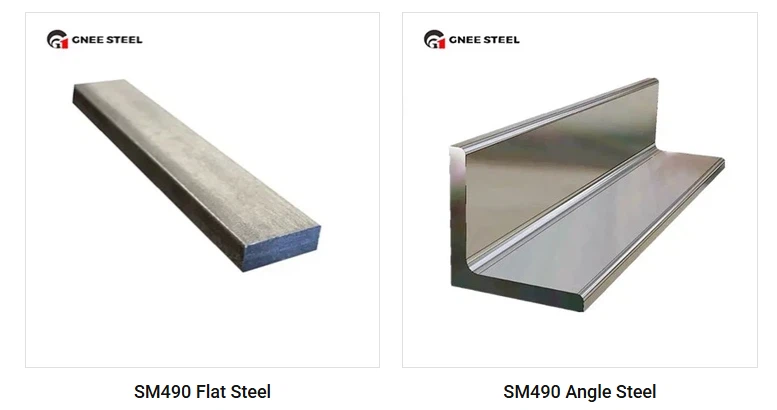
Here is a clear, concise breakdown of the main differences:
Core Difference Summary Table
| Feature | SM490A | SM490B | SM490C |
|---|---|---|---|
| Charpy Impact Test | Not Required (No guarantee) | Required (Transverse) ≥ 27 J at 0°C |
Required (Longitudinal) ≥ 47 J at 0°C |
| Primary Purpose | General structures without toughness requirements. | General welded structures requiring basic toughness at low temperatures. | Critical welded structures requiring higher toughness and better weldability. |
| Chemical Composition Control | Least strict. Meets standard ranges. | Standard control. | Strictest control. Tighter limits on C, Si, Mn, P, S to ensure lower Carbon Equivalent (Ceq) for better weldability. |
| Tensile Strength Range | 490–610 MPa | Same (490–610 MPa) | Tighter Range: 490–605 MPa |
| Yield Strength | ≥ 325 MPa | Same (≥ 325 MPa) | Same (≥ 325 MPa) |
| Elongation | ≥ 17% (t≥16mm) | Same (≥ 17%) | Higher: ≥ 19% (t≥16mm) |
| Typical Applications | Non-critical indoor frames, secondary members with static loads. | Bridges, buildings, general construction in temperate/cold regions. | Seismic frames, important bridges, offshore modules, power plants – where dynamic loads and brittle fracture risk exist. |
| Relative Cost | Lowest | Moderate | Highest |
Detailed Explanation of Key Differences
1. Impact Toughness (The Most Critical Difference)
This is the primary factor for selection.
SM490A: No impact test required. Its toughness is unknown and unreliable for any environment where shock, dynamic loading, or low temperatures are factors. Not suitable for low-temperature service.
SM490B: Guarantees a minimum absorbed energy of 27 Joules at 0°C using transverse specimens (taken across the rolling direction). This provides a baseline resistance to brittle fracture, making it suitable for most general construction in climates with cold winters.
SM490C: Guarantees a higher minimum absorbed energy of 47 Joules at 0°C using longitudinal specimens (taken parallel to the rolling direction, which typically show higher toughness values). This provides a much greater safety margin against crack initiation and propagation in critical joints and high-stress areas.
2. Chemical Composition & Weldability
SM490A/B: Have standard chemical ranges.
SM490C: Has stricter upper limits for carbon (C), phosphorus (P), and sulfur (S). This results in a lower maximum Carbon Equivalent (Ceq) value.
Why it matters: A lower Ceq means significantly better weldability. It reduces the risk of hardening and cracking in the Heat-Affected Zone (HAZ), which is crucial for critical structures subjected to fatigue or seismic loads.
3. Mechanical Property Consistency
SM490C has tighter control over tensile strength range and higher minimum elongation, indicating better ductility and material uniformity. This consistency is vital for predictable performance in critical applications.
Engineering Selection Guide
Choose SM490A when:
The structure is indoors in a climate-controlled environment.
Loads are static.
The design code or client specification explicitly permits its use (rare for modern, significant structures).
Choose SM490B when:
The structure is outdoors (e.g., bridges, building frames).
The Minimum Design Metal Temperature (MDMT) is down to approximately -10°C.
It is the default grade specified for general welded construction in many regional codes.
Choose SM490C when:
The structure is critical (e.g., seismic-resistant frames, major bridge components).
The MDMT is lower (down to approx. -20°C) or the dynamic/fatigue loading is high.
Weld quality and HAZ toughness are paramount.
The project specifications or stringent design codes (e.g., for offshore, power generation) mandate it.
Important Note on Equivalent Grades
In many international projects, SM490B and SM490C are directly cross-referenced to European S355J2 and S355K2 grades, or Chinese Q355C and Q355D grades, respectively, based on similar impact test temperatures.
Conclusion: The progression from A to B to C represents a significant increase in quality, guaranteed toughness, and suitability for demanding service. For any structural application with dynamic loads or low-temperature exposure, SM490A is essentially obsolete and should not be used. The choice between B and C is a fundamental engineering decision based on fracture safety requirements.