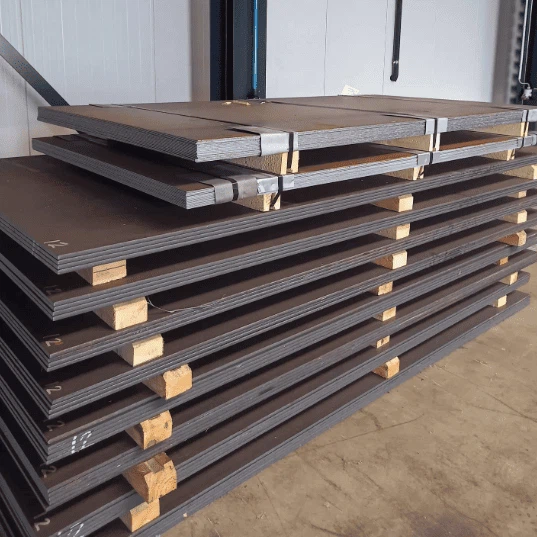
SM400C steel plate is a high-toughness, welded structural steel grade under the JIS G3106 standard, designed for use in low-temperature or heavy-load applications.
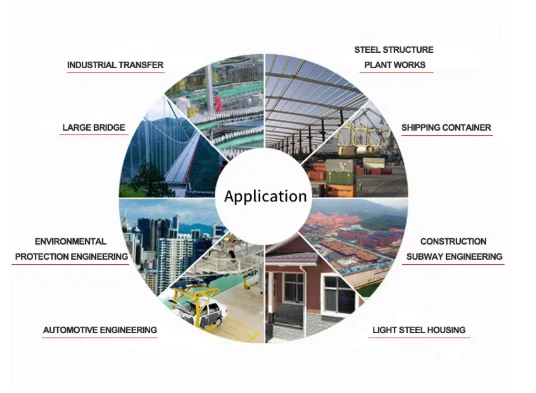
It offers a minimum yield strength of 245 MPa, tensile strength of 400–510 MPa, and guaranteed impact toughness at -20°C, making it ideal for bridges, offshore platforms, industrial machinery, and civil infrastructure projects.
The steel's low carbon content and controlled alloying elements give it excellent weldability, ductility, and formability, allowing efficient cutting, bending, drilling, and fabrication during construction or machinery manufacturing. Its consistent mechanical properties and toughness make SM400C a reliable, cost-effective choice for harsh environmental conditions.
Production Size: Thickness: 4mm- 400mm; Width: 1000mm- 4000mm; Length: 4000mm- 12000mm.
Production ability:10000 Tons Per Month.
Production Way: Hot Rolled,
Techanical Details:
Heat Treatment: Normalized, Quenched, Tempered, HIC, Impact Test,..( Optional if not provided in rules)
Chemical Composition( %):
|
Grade/ Material |
Element |
Composition( Max-A, Min-I) |
|
JIS G 3106 SM400C |
C |
A:0.18 |
|
Mn |
A:1.40 |
|
|
Si |
A:0.35 |
|
|
P |
A:0.035 |
|
|
S |
A:0.035 |
Mechanical Properties( Mpa)
|
Grade/ Material |
Tensile Test |
MPa |
|
JIS G 3106 SM400C |
Tensile Strength |
400-510 |
|
Yield Strength |
I:245 |
|
|
Elongation |
I:23% |
|
|
Impact Test( if any) |
-- |
Manufacturing and Forging Process of SM400C Steel Plate
Melting & Casting
SM400C steel is produced in an electric arc furnace (EAF) or basic oxygen furnace (BOF), where raw iron and scrap steel are melted. Alloying elements such as manganese and silicon are added to achieve the desired chemical composition. The molten steel is then cast into slabs or billets.
Heating / Reheating
The cast slabs are heated to 1,100–1,250°C in a furnace to prepare for hot rolling. This ensures uniform temperature and improved ductility for forging.
Hot Rolling / Forging
The heated slabs are passed through rolling mills multiple times to achieve the desired thickness, width, and mechanical properties. In some cases, specialized forging may be applied to produce thicker plates or improved grain structure for enhanced toughness.
Cooling & Normalizing
After rolling, the plates are cooled under controlled conditions or normalized to refine grain size and improve mechanical performance, including yield strength and impact toughness.
Finishing & Inspection
Plates are cut to size, straightened, and surface-finished. Quality checks include chemical composition, mechanical testing (tensile, yield, elongation), and impact tests at -20°C for SM400C.
Final Packaging & Delivery
The finished plates are bundled and protected for transportation, ensuring the material maintains its mechanical integrity and surface quality upon arrival at the construction or fabrication site.