The difference between HEA140 h-beam and HEB140 h-beam steel
Section size
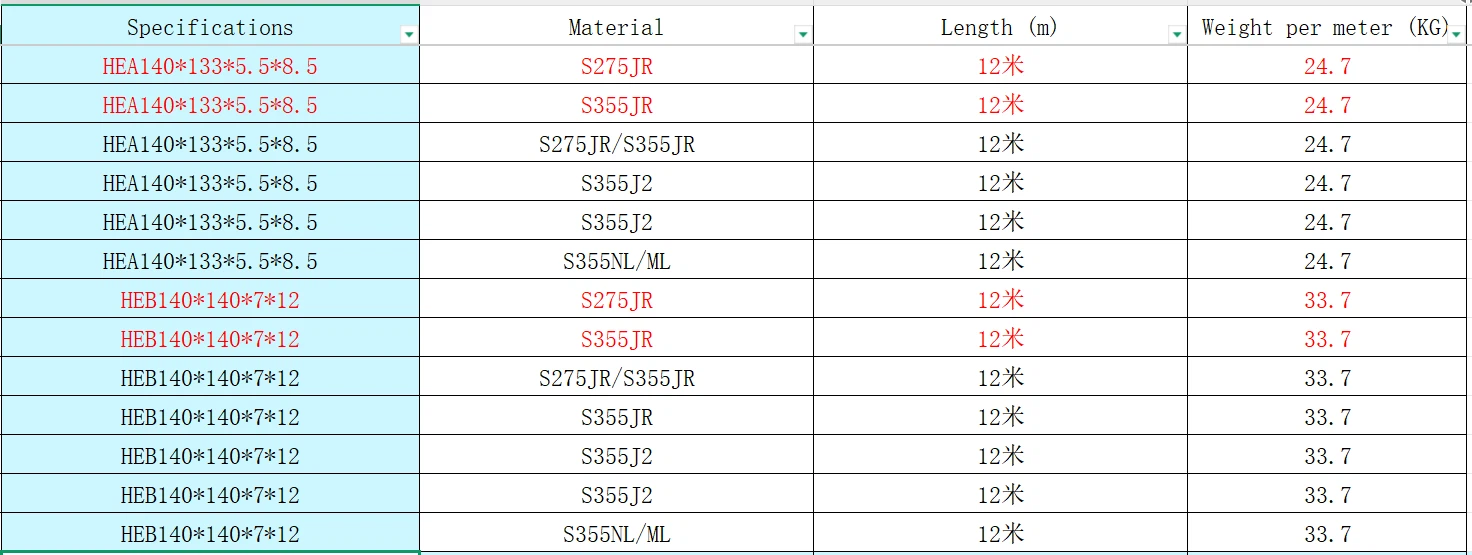
HEA140: It is a narrow flange H-beam with the size of 133×140×5.5×8.5 (unit: mm), that is, the height is 140mm, the flange width is 133mm, the web thickness is 5.5mm, and the flange thickness is 8.5mm.
HEB140: It is a mid-flange H-beam with a wider flange than HEA140. The specific size is usually 140×140×6×9 (unit: mm). The height is also 140mm, but the flange width reaches 140mm, the web thickness is 6mm, and the flange thickness is 9mm.
Weight
HEA140 h type beam: The weight per meter is about 24.7kg, which is relatively light and more convenient during transportation and installation.
HEB140 h type steel beam: Due to its larger cross-sectional size, its weight per meter is heavier than that of HEA140, usually around 27.2kg, and it can provide stronger structural support.
Mechanical properties
Bearing capacity: Due to its wider flange, thicker web and greater overall weight, HEB140 h section steel beams have a higher bearing capacity than HEA140 h shaped beams, and can withstand greater loads and bending moments, making them suitable for occasions with higher requirements for structural strength and stability.
Bending and torsion resistance: The wider flange and reasonable cross-sectional shape make HEB140 h shaped iron beam superior to HEA140 h shaped steel beam in bending and torsion resistance, making it more suitable for use in structures with torsion or subjected to large bending stress.
Application scenarios
HEA140 h beam material: It is suitable for general building structures that have certain requirements for structural weight and are not particularly demanding in terms of bearing capacity, such as secondary beams of small buildings, secondary components in light steel structures, non-load-bearing partition walls, etc. Because of its relatively light weight, it can reduce the burden on the foundation when used in some structures that are sensitive to their own weight.
HEB140 h-beam steel structure: It is often used in important structural parts that require high bearing capacity and structural stability, such as the main beams of large industrial buildings, frame beams of high-rise buildings, and supporting structures of bridges. It can withstand greater loads and complex stress states to ensure the safety and reliability of the structure.