


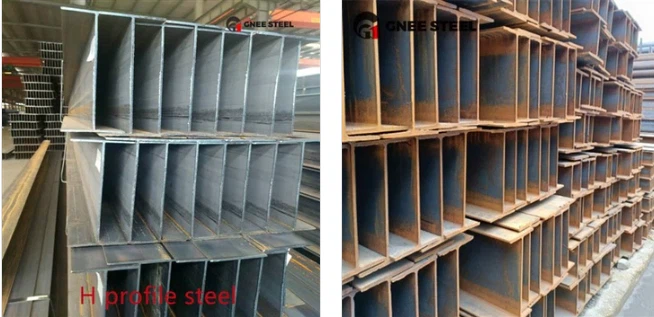
S275J0 is a European standard (EN 10025-2) non-alloy structural steel known for its good weldability, strength (minimum 275 MPa yield), and impact toughness down to 0°C, indicated by the "J0". It's a versatile hot-rolled material used in construction, bridges, machinery, and general engineering, offering a balance of performance and fabrication ease, often supplied normalized for construction applications.
Key Characteristics
Standard: EN 10025-2 (European standard).
Type: Non-alloy structural steel.
Strength: Minimum yield strength of 275 MPa (megapascals).
Impact Test: Requires a Charpy impact test of at least 27 Joules at 0°C (zero degrees Celsius).
Weldability: Readily weldable, making it suitable for various construction needs.
Applications: Buildings, bridges, general construction, engineering machinery (excavators, cranes), and other structural components.
Designations
S: Structural Steel.
275: Minimum Yield Strength (MPa).
J0: Impact test at 0°C.
Common Forms & Conditions
Supplied as plates, sheets, sections, bars, and rods.
Often delivered in the normalized or untreated condition for construction, but can also be quenched and tempered.
Chemical composition
| Variant | Cast | Weldability | C % | Mn % | P % | S % | Cu % | N % | |
|---|---|---|---|---|---|---|---|---|---|
| SB1312 | CC | CEV max | Min | - | - | - | - | - | - |
| Pcm max | Max | 0.17 | 1.40 | 0.040 | 0.040 | - | 0.0120 | ||
| S235JR EN10025-2 (ref) | Std | CEV 0.35max | Min | - | - | - | - | - | - |
| Pcm 0.25max | Max | 0.17 | 1.40 | 0.035 | 0.035 | 0.55 | 0.0120 |
S235JR: C max 0,20 % for sizes over 40 mm. Only CEV required in standard
Mechanical Properties
| Variant | Condition | Format | Dimension [mm] | Yield strength min [MPa] | Tensile strength [MPa] | Elongation A5 [%] | Impact (ISO-V) strengthmin |
|---|---|---|---|---|---|---|---|
| Rp0.2 * Reh, ** Rel | |||||||
| S235JR EN10025-2 (ref) | +AR | All formats | < 16 | 235* | 360-510 | 26 | 20 °C 27 J (long) |
| All formats | 16.1 < 40 | 225* | 360-510 | 26 | 20 °C 27 J (long) | ||
| All formats | 40.1 < 63 | 215* | 360-510 | 25 | 20 °C 27 J (long) | ||
| All formats | 63.1 < 100 | 215* | 360-510 | 24 | 20 °C 27 J (long) | ||
| All formats | 100.1 < 150 | 195* | 350-500 | 22 | 20 °C 27 J (long) | ||
| All formats | 150.1 < 200 | 185* | 340-490 | 21 | 20 °C 27 J (long) | ||
Transformation temperatures
| Temperature °C | |
|---|---|
| MS | 485 |
| AC1 | 725 |
| AC3 | 863 |
Other properties (typical values)
| Youngs module (GPa) | Poisson´s ratio (-) | Shear module (GPa) | Density (kg/m3) |
|---|---|---|---|
| 210 | 0.3 | 80 | 7800 |
| Average CTE 20-300°C (µm/m°K) | Specific heat capacity 50/100°C (J/kg°K) | Thermal conductivity Ambient temperature (W/m°K) | Electrical resistivityAmbient temperature (µΩm) |
| 12 | 460 - 480 | 40 - 45 | 0.20 - 0.25 |
Yield Strength
| Yield Strength (≥ N/mm2); Dia. (d) mm | |||||||
| Steel Series | Steel Grade (Material Number) | d≤16 | 16< d ≤40 | 40< d ≤100 | 100< d ≤150 | 150< d ≤200 | 200< d ≤250 |
| S235 | S235JR (1.0038) | 235 | 225 | 215 | 195 | 185 | 175 |
Tensile Strength
| Tensile Strength (≥ N/mm2) | |||||
| Steel Series | Steel Grade (Material Number) | d<3 | 3 ≤ d ≤ 100 | 100 < d ≤ 150 | 150 < d ≤ 250 |
| S235 | S235JR (1.0038) | 360-510 | 360-510 | 350-500 | 340-490 |
1MPa = 1N/mm2
Elongation
| Elongation (≥%); Thickness (d) mm | ||||||
| Steel Series | Steel Grade | 3≤ d≤40 | 40< d ≤63 | 63< d ≤100 | 100 < d ≤ 150 | 150 < d ≤ 250 |
| S235 | S235JR | 26 | 25 | 24 | 22 | 21 |
EN S235JR steel grade equivalent table:
| EN | ASTM | DIN | JIS | GBT |
| S235JR | A36 | ST37-2 | SS400 | Q235B |
1. What is S275J0 steel?
S275J0 is a non-alloy structural steel grade per EN 10025-2, with a minimum yield strength of 275 MPa and guaranteed impact toughness at 0°C.
2. What does the 'J0' in S275J0 mean?
The 'J0' indicates Charpy V-notch impact testing at 0°C, ensuring a minimum absorbed energy of 27 Joules for use in cold environments.
3. What is the difference between S275JR and S275J0?
S275JR is impact tested at +20°C, while S275J0 is tested at 0°C, making J0 suitable for structures exposed to near-freezing temperatures.
4. What are the main applications of S275J0?
It is used in structural components for bridges, buildings, and outdoor infrastructure in temperate climates where temperatures may drop to 0°C.
5. What is the yield strength of S275J0?
The minimum yield strength is 275 MPa for thicknesses up to 16 mm, with decreasing values for thicker sections as per the standard.
6. Can S275J0 be welded?
Yes, S275J0 has good weldability. However, preheating or controlled procedures may be recommended for thicker sections or welding in cold conditions.
7. Is S275J0 equivalent to ASTM A572 Grade 50?
Not directly. While both have similar yield strength (~345 MPa for A572 Gr 50 vs. 275 MPa for S275J0), A572 Grade 50 has higher strength and different toughness requirements.
8. What is the chemical composition of S275J0?
It typically contains max 0.21% Carbon, max 1.50% Manganese, and controlled levels of phosphorus and sulfur (e.g., P ≤ 0.035%, S ≤ 0.035%).
9. Is S275J0 corrosion resistant?
No, S275J0 is not corrosion-resistant and requires protective coatings like painting or galvanizing for outdoor exposure.
10. What is the difference between S275J0 and S355J0?
S355J0 has a higher minimum yield strength (355 MPa) but similar impact toughness at 0°C, making it stronger for cold-weather applications.
Full specification and details are available on request. The above information is provided for guidance purposes only. For specific design requirements please contact our technical sales staff.
