


S275JR carbon steel beams are widely used in modern structural engineering due to their higher strength, reliable toughness, and excellent fabrication performance.
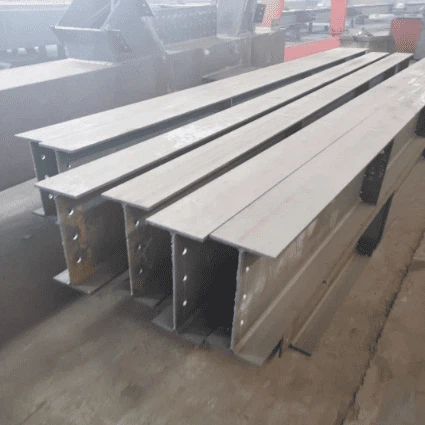
S275JR carbon steel beams
As a key grade under EN 10025-2, S275JR is often compared with ASTM A36 mild steel. While they share similar applications, S275JR is not strictly equivalent to A36-and in many cases, it is the better choice.
If your project requires improved load-bearing capacity and more consistent mechanical performance, understanding the differences between these two materials is essential.
Technical Overview of S275JR Carbon Steel Beam
S275JR is a non-alloy structural steel with moderate carbon content, designed for enhanced strength and structural reliability.
Chemical Composition of S275JR
| Element | Content (%) |
|---|---|
| Carbon (C) | ≤ 0.21 |
| Manganese (Mn) | ≤ 1.50 |
| Silicon (Si) | ≤ 0.35 |
| Phosphorus (P) | ≤ 0.035 |
| Sulfur (S) | ≤ 0.035 |
The controlled carbon level ensures that S275JR maintains excellent weldability while achieving higher strength compared to standard mild steels.
Mechanical Properties of S275JR
| Property | Value |
|---|---|
| Yield Strength | ≥ 275 MPa |
| Tensile Strength | 410–560 MPa |
| Impact Energy | 27J at 20°C (JR grade) |
S275JR is not just a material upgrade-it is a structural optimization solution that enhances safety margins without significantly increasing cost.
Key Comparison S275JR and ASTM A36
Although both are widely used structural steels, their performance levels differ.
Comparison Table
| Property | ASTM A36 | S275JR |
|---|---|---|
| Standard | ASTM (USA) | EN 10025-2 (Europe) |
| Yield Strength | ≥ 250 MPa | ≥ 275 MPa |
| Tensile Strength | 400–550 MPa | 410–560 MPa |
| Impact Test | Not mandatory | Required (27J @ 20°C) |
| Weldability | Excellent | Excellent |
In real engineering scenarios, S275JR beams often replace A36 when higher performance is required without switching to high-strength steel grades.
Structural Advantages of S275JR Beams
S275JR beams (H-beams, I-beams, and universal beams) are designed to deliver better efficiency in structural systems.
Key Benefits
- Higher Strength-to-Weight Ratio: Reduces overall steel consumption
- Improved Stability: Better resistance to bending and deformation
- Fabrication Efficiency: Easy cutting, welding, and drilling
- Cost Optimization: Higher performance without significant price increase
Modern steel structures increasingly favor S275JR because it allows engineers to design lighter yet stronger frameworks.
Application of S275JR Carbon Steel Beams
S275JR beams are used across a wide range of industries:
Construction & Buildings
- Steel frame structures
- Commercial and residential buildings
- Warehouses and factories
Infrastructure
- Bridges and transport systems
- Highway structural supports
Industrial & Energy Projects
- Power plants
- Oil and gas facilities
- Equipment support frames
From urban infrastructure to heavy industrial environments, S275JR beams provide consistent and reliable structural performance.
Processing And Surface Treatment
To meet diverse project requirements, S275JR beams can be customized through various processing methods.
Processing Capabilities
| Process | Description |
|---|---|
| CNC Cutting | Accurate sizing and shaping |
| Drilling | Bolt-ready fabrication |
| Welding | High compatibility |
Surface Treatment Options
| Treatment | Benefit |
|---|---|
| Shot Blasting | Removes mill scale |
| Priming | Basic corrosion protection |
| Hot-Dip Galvanizing | 30–50 years corrosion resistance |
For outdoor and marine applications, galvanizing is highly recommended to extend service life and reduce maintenance costs.
Why choose the S275JR carbon steel beams
When sourcing S275JR carbon steel beams, buyers should consider more than just price.
Quality Assurance
Mill Test Certificate (MTC)
EN 10025-2 compliance
Third-party inspection (SGS / BV)
Logistics & Packaging
Bundled steel beams for safe transport
Anti-rust protection during shipping
Container optimization to prevent deformation
Market Insight
Global steel prices are influenced by iron ore costs and infrastructure demand. Currently, medium-strength structural steels like S275JR are seeing increasing demand due to their balance of performance and cost.
Choosing a reliable supplier ensures not only product quality but also stable delivery timelines and reduced procurement risks.
S275JR carbon steel beams are not merely an alternative to ASTM A36-they are a performance upgrade. With higher yield strength, mandatory impact testing, and better structural reliability, S275JR is the preferred choice for modern engineering projects.
If your project demands stronger, safer, and more efficient structural materials, S275JR beams are the ideal solution.
Contact now to get S275JR H Profile Quote

What is S235 grade steel?
S235 grade steel is a readily weldable low carbon manganese steel with good impact resistance (including in sub-zero temperatures).
Are A36 and S275JR the same?
Both yield strength and tensile strength of S275JR carbon steel is higher than that of mild steel ASTM A36. So S275JR carbon steel can bear heavier load than mild steel ASTM A36. In other word, mild steel ASTM A36 is not equivalent to S275JR carbon steel.
What is equivalent to S235JR material?
ASTM A36: ASTM A36 is an American standard carbon structural steel specification, which is often used in structural applications. It is closest to S235JR in terms of chemical composition.
What is the difference between S235JR and S275JR steel?
S235JR has a minimum yield strength of 235 MPa, while S275JR has a minimum yield strength of 275 MPa. This means that S275JR is stronger than S235JR and is typically used for more demanding applications, such as heavy machinery, high-rise buildings, and large structures.