


NM400 wear resistant plate is a high-strength abrasion resistant steel plate widely used in mining machinery, coal handling systems, and construction equipment.
Due to its high hardness (370–430 HBW) and alloy composition, NM400 steel welding requires strict technical control to avoid defects such as cold cracking, hydrogen embrittlement, and thermal deformation.

NM400 wear resistant plate
As a professional supplier, we provide optimized processing recommendations to ensure the structural integrity and long service life of NM400 steel plate and related grades including NM360, NM450, NM500, and NM600.
Strategic Selection of Welding Materials
The choice of electrode is the first line of defense against cracking. For NM400 steel, it is essential to use low-hydrogen or ultra-low-hydrogen electrodes with high crack resistance. These materials reduce the diffusible hydrogen content in the weld metal, which is the primary cause of delayed cold cracking in wear-resistant steels.
Optimized Groove Design
When joining two NM400 wear resistant plates of unequal thickness, stress concentration is a significant risk. To ensure a smooth transition of the weld seam and reduce residual stress, we implement a specific groove geometry:
Groove Specification: 6×35° (Depth x Angle).
Purpose: This design facilitates full penetration while minimizing the volume of weld metal required, thereby reducing heat input.
Preheating & Post-Weld Heat Treatment of NM400
Thermal control is essential in NM400 welding procedure to protect the heat-affected zone (HAZ).
| Process | Recommendation | Benefit |
|---|---|---|
| Preheating | 100°C – 200°C | Prevents cold cracking |
| Interpass Temp | ≤ 250°C | Avoids softening |
| Post-heating | Slow cooling / insulation | Reduces residual stress |
Preheating slows cooling, allowing hydrogen to escape and preventing brittle martensite formation in NM400 wear resistant plate.
Precision Positioning and Fixturing
- To prevent deformation and ensure a smooth butt joint, the positioning of the nm400 steel plates must be exact:
- Gap Setting: Maintain a uniform 1mm gap between the two plates.
- Fixing: Use heavy-duty welding fixtures to press the workpiece firmly onto the platform.
- Sequence: Position welding should be performed immediately after preheating to maintain the thermal balance of the joint.
Implementation of Short-Pass Jump Welding
To slow down the cooling rate and prevent localized overheating (which causes deformation), we utilize a "short-pass jump welding" technique. Instead of one continuous bead, the weld is completed in segments:
- Segment Length: 150mm – 200mm per pass.
- Technique: Weld one section, then move to a different part of the seam (jumping), allowing the previous section to distribute its heat. This repeated heating in a short time keeps the HAZ ductile.
NM Series Wear Resistant Steel Comparison
Understanding the full NM series abrasion resistant steel plate range helps optimize material selection:
| Grade | Hardness (HBW) | Yield Strength | Typical Applications |
|---|---|---|---|
| NM360 | ≥ 330 | ≥ 800 MPa | Light wear parts, chutes |
| NM400 | 370 – 430 | ≥ 1000 MPa | Buckets, crushers, dump trucks |
| NM450 | 420 – 480 | ≥ 1200 MPa | Heavy mining equipment |
| NM500 | ≥ 470 | ≥ 1250 MPa | High-impact liners |
| NM600 | ≥ 570 | - | Extreme abrasion conditions |
NM400 wear resistant plate offers the best balance between weldability and wear resistance.
NM400 Wear Resistant Plate Welding
To achieve the best results with my product, follow this process flow:
- Clean the joint: Remove rust, oil, and water within 30mm of the groove.
- Bake the electrodes: Ensure electrodes are dried according to manufacturer instructions (usually 350°C for 1 hour).
- Control Heat Input: Use low current and high welding speed to keep the heat-affected zone narrow.
- Strictly follow the 150-200mm jump welding rule to mitigate the high internal stresses inherent in nm400 steel.
Welding NM400 wear resistant plate requires a controlled approach to manage hardness, hydrogen content, and heat input. By selecting proper welding materials, applying preheating, and using advanced techniques like short-pass jump welding, you can effectively eliminate defects and ensure long-term durability.
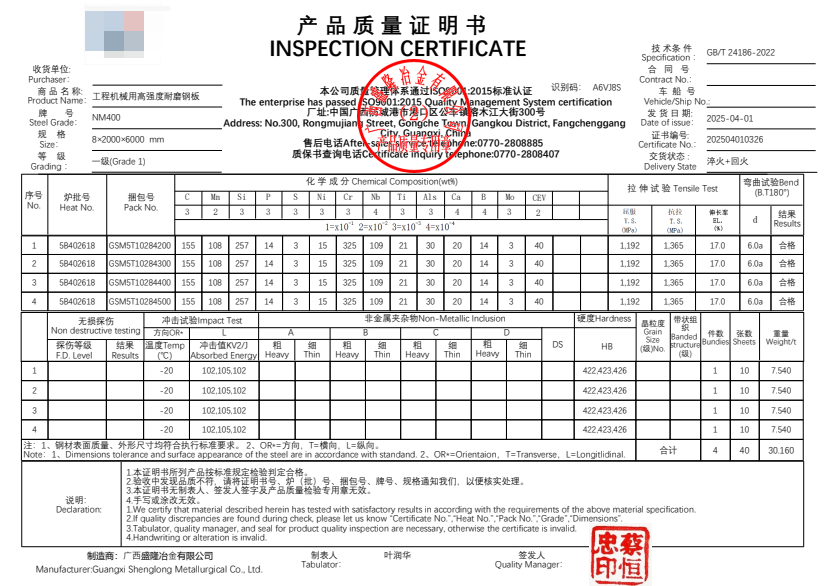
If you are working with NM400 wear resistant plate or other abrasion resistant steel plates, our technical team can provide professional guidance on welding procedures, material selection, and fabrication solutions. We supply high-quality NM400 steel plate with stable hardness, full certification, and global delivery support.
Contact us today to get expert advice, fast quotations, and customized solutions. Let us help you achieve stronger welds, longer service life, and better performance with your NM400 steel applications.
Contact now to get NM400 steel plate Quote

Is NM400 the same as Hardox 400?
No. they are comparable in nominal hardness band (~400 HBW) but Hardox® 400 is a branded product with controlled chemistry, guaranteed toughness and detailed mill documentation from SSAB. NM400 is a Chinese standard grade with similar hardness but variable mill-to-mill properties. Always specify required testing and acceptance criteria, not only grade name.
Can NM400 be welded to structural steels?
Yes with matched filler and appropriate preheat/thermal control. Avoid high heat input and verify consumables with the supplier's welding instructions.
How do I select between NM400 and a harder NM450 / NM500?
Choose by wear mode: for abrasive sliding wear NM400 often suffices; for extremely abrasive, long-life needs select NM450/NM500 but expect increased cost and reduced formability.
Is NM400 suitable for bucket liners and dump bodies?
Yes. widely used for these applications; ensure weldability and thickness suit the application.
Can NM400 be flame cut and drilled?
Yes; use standard industrial cutting methods but be mindful of hardened surface causing additional tool wear.
How should NM400 be stored and handled?
Store flat on timber, avoid edge damage, keep clean and protected to avoid contamination of welding surfaces.