


How does SA387 Grade 11 Class 2 differ from Class 1?
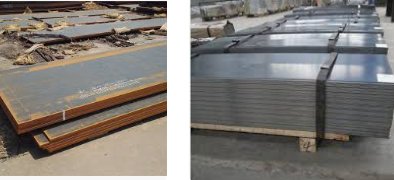
SA387 Grade 11 Class 1
SA387 Grade 11 Class 1 is an annealed chromium-molybdenum (1¼Cr-½Mo) alloy steel plate designed for high-temperature pressure vessels, supplied in a softened condition to provide maximum ductility and formability for complex fabrication before its final service properties are developed through post-weld heat treatment.
SA387 Grade 11 Class 2
SA387 Grade 11 Class 2 is a normalized and tempered chromium-molybdenum (1¼Cr-½Mo) alloy steel plate for welded pressure vessels, offering higher as-delivered strength than Class 1 for design efficiency while maintaining the same excellent resistance to high-temperature hydrogen attack and creep after mandatory post-weld heat treatment.
The difference between SA387 Grade 11 Class 2 and Class 1 lies entirely in their heat treatment condition and resulting mechanical properties-not in chemical composition. Both share the same 1.25% Chromium and 0.5% Molybdenum chemistry, but are supplied in different states to serve distinct roles in pressure vessel fabrication.
| Feature | SA387 Grade 11 Class 1 | SA387 Grade 11 Class 2 |
|---|---|---|
| Heat Treatment | Annealed (Furnace cooled for softness) | Normalized & Tempered (N&T) |
| Core Purpose | Optimized for maximum ductility & formability. | Optimized for higher as-supplied strength. |
| Microstructure | Soft ferrite-pearlite (coarse, equilibrium) | Stronger bainite/tempered bainite (refined) |
| Tensile Strength | 415 - 585 MPa (60 - 85 ksi) | 485 - 620 MPa (70 - 90 ksi) |
| Yield Strength (min.) | 205 MPa (30 ksi) | 275 MPa (40 ksi) |
| Key Mech. Difference | Lower strength, higher ductility. | ~34% higher yield strength. |
| Fabrication Impact | Excellent for severe cold forming (deep dishing, tight-radius rolling). Less risk of cracking. | Suitable for moderate forming. Higher strength may require more care during cold work. |
| Design Allowable Stress (ASME) | Identical to Class 2 at all temperatures. | Identical to Class 1 at all temperatures. |
| Post-Weld Heat Treatment (PWHT) | Mandatory. PWHT tempers the material, raising its final strength. | Mandatory. PWHT must be controlled to avoid over-tempering. |
The Engineering Philosophy Behind the Two Classes
Class 1 is the "Fabricator's Choice": It is supplied soft and ductile so it can be easily shaped into complex components (e.g., thick, dished heads, forged nozzles). The designer trades initial strength for ease of manufacturing, knowing the final PWHT will develop the required service properties.
Class 2 is the "Designer's/Standard Choice": It is supplied stronger, allowing the engineer to use higher allowable stresses in initial design calculations, which can lead to thinner, lighter walls. It is the most common and readily available stock condition for general vessel fabrication.
Critical Technical Note: Convergence After PWHT
Despite their different starting points, the high-temperature performance becomes equivalent after proper fabrication and PWHT. The ASME Boiler and Pressure Vessel Code (Section II, Part D) assigns identical maximum allowable stress values to both Class 1 and Class 2 at all temperatures. This is because:
Both undergo a final PWHT.
The high-temperature creep strength is governed by the alloy composition (1.25Cr-0.5Mo), which is identical.
How to Choose?
Choose Class 1 if your vessel design includes complex, heavily cold-formed components.
Choose Class 2 for standard vessel designs where higher as-supplied strength is beneficial and forming is routine.
In essence:
Class 1 is optimized for the workshop (formability), while Class 2 is optimized for the drawing board (strength). After proper PWHT, both perform identically in high-temperature hydrogen service.
1. What is SA387 Grade 11 Class 2?
SA387 Grade 11 Class 2 is a normalized and tempered chromium-molybdenum (1¼Cr-½Mo) alloy steel plate designed for high-temperature pressure vessels, offering higher strength than Class 1 while maintaining good weldability and creep resistance in refinery service.
2. What are the mechanical properties of SA387 Grade 11 Class 2?
In its normalized and tempered condition, SA387 Grade 11 Class 2 provides a tensile strength of 485–620 MPa (70–90 ksi) and a minimum yield strength of 275 MPa (40 ksi), making it suitable for high-stress, elevated-temperature designs.
3. How does SA387 Grade 11 Class 2 differ from Class 1?
Class 2 is normalized and tempered for higher as-supplied strength, while Class 1 is annealed for maximum formability; both share the same chemical composition but are selected based on fabrication needs and design stress requirements.
4. What is the maximum service temperature for SA387 Grade 11 Class 2?
SA387 Grade 11 Class 2 is typically used in continuous service up to about 595 °C (1100 °F), where its chromium and molybdenum content provides effective resistance to oxidation and hydrogen attack.
5. What are common applications for SA387 Grade 11 Class 2 plates?
This grade is widely used in hydrotreaters, hydrocrackers, heat exchangers, and other high-temperature pressure vessels in petrochemical refineries and power-generation facilities.
6. What welding procedures are required for SA387 Grade 11 Class 2?
Welding requires low-hydrogen electrodes, preheating (150–205 °C / 300–400 °F), and mandatory post-weld heat treatment (PWHT) around 620–690 °C (1150–1275 °F) to prevent cracking and restore corrosion resistance.
7. What is the equivalent European grade for SA387 Grade 11 Class 2?
The closest European equivalent is 13CrMo4-5 (1.7335) under EN 10028-2, which has similar composition and is commonly supplied in a normalized and tempered condition.
8. How does SA387 Grade 11 Class 2 compare to Grade 22?
Grade 11 (1.25Cr-0.5Mo) offers lower high-temperature strength and hydrogen resistance than Grade 22 (2.25Cr-1Mo), making it a cost-effective choice for moderate‑severity service in refining and chemical processes.
9. What are the Charpy impact requirements for SA387 Grade 11 Class 2?
Charpy V‑notch impact testing is often specified by purchasers; common requirements are 20 J (15 ft‑lb) minimum average at temperatures between +10 °F and –20 °F (–12 °C to –29 °C) for pressure‑vessel applications.
10. What is the difference between SA387 Grade 11 Class 2 and AISI 4130?
While both are Cr‑Mo steels, SA387 Grade 11 Class 2 is a plate product for code pressure vessels with strict toughness and testing rules, whereas AISI 4130 is a general‑purpose structural/bar alloy with different property ranges and applications.
Full specification and details are available on request. The above information is provided for guidance purposes only. For specific design requirements please contact our technical sales staff.
