


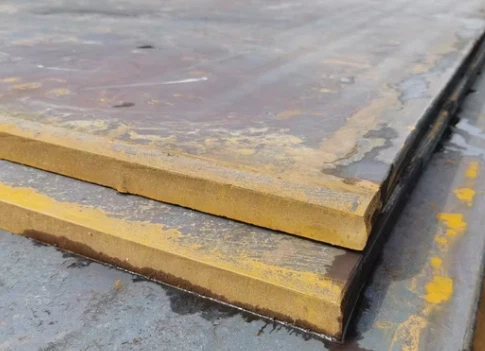
15 MO3 is a kind of alloy steel that belongs to the group of creep-resistant molybdenum steels. It is mainly used in the manufacture of pressure vessels, boilers, and pipes that operate at elevated temperatures. This material contains a small amount of molybdenum, which improves its strength and ability to resist deformation under long-term heat and pressure. The steel also has good weldability and can be processed using standard methods. Its properties make it suitable for applications in power plants, chemical refineries, and other industrial environments where reliable performance at high temperatures is required.
Specification of 15Mo3 Steel Plate
| Specification | ASTM A204 / ASME SA204 |
| Grade | 15MO3 |
| Width | 1500mm to 3500mm |
| Thickness | 6mm to 100mm |
| Length | 3000mm to 18000mm |
| Finish | Cold rolled sheet (CR), Hot rolled plate (HR), 2D, 2B, SATIN (Met with Plastic Coated), BA NO(8) |
| Hardness | Hard, Soft, Quarter Hard, Half Hard, Spring Hard etc. |
Comparision of steel grades
| 15Mo3 DIN 17155 Number:1.5415 | Comparision of steel grades | |
| BS 1501 | 1503 - 243 B | |
| NFA 36-205 | 15 D3 | |
| EN 10028-2 | 16 Mo 3 | |
| UNI 5869 | 15 Mo 3 | |
| ASTM | A 204 Gr. B | |
| UNE 36087 | 16 Mo 3 | |
| JIS G3115 | - | |
Chemical Composition
| Grade | Mn | Mo | C | S | Cu | N | Si | Cr | P | Ni |
|---|---|---|---|---|---|---|---|---|---|---|
| 15MO3 | 0.40- 0.90 | 0.25- 0.35 |
0.12-0.2 | 0.01 | 0.30 | 0.012 | 0.35 | 0.30 | 0.025 | 0.30 |
Mechanical Properties
| Grade | Yield Strength(Mpa) | Tensile Strength(Mpa) | Elongation in 16 mm(%) | Elongation in 100-150 mm(%) | Max Thickness(mm) |
|---|---|---|---|---|---|
| 15Mo3 | 220-275 | 440-590 | 24 | 19 | 250 |
applications
• Boiler and pressure vessel fabrication:
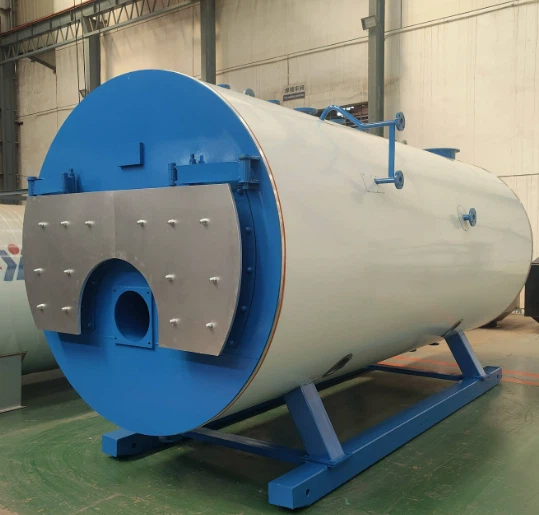
The material is commonly employed in constructing boilers, steam generators, and pressure vessels that operate at elevated temperatures. Its creep resistance ensures structural integrity even under continuous thermal stress, which is essential for safe and reliable operation in power generation and industrial processing.
• Petrochemical and refinery equipment:
It is used for pipes, heat exchangers, and reactor components in refineries and chemical plants. These systems often involve high temperatures and corrosive fluids, and the steel's stability helps prevent failure and maintain process efficiency.
• Power generation industry:
In thermal power plants, it is utilized for superheater tubes, headers, and other boiler parts that are exposed to high‑temperature steam. The material's performance under prolonged heat makes it a preferred choice for ensuring long service life and reducing maintenance needs.
• General high‑temperature engineering:
It also finds application in various industrial furnaces, heat treatment equipment, and piping systems where consistent performance at elevated temperatures is required. Its good weldability allows for flexible fabrication, supporting its use in custom engineering solutions.
application conditions
• Elevated temperature service:
The steel is designed for long‑term operation at high temperatures, often in environments where continuous heat exposure would cause ordinary steels to weaken or deform. Its ability to resist creep makes it suitable for components that face prolonged thermal stress.
• High pressure environments:
It is commonly used in pressure‑containing equipment where internal pressures are substantial. The material maintains its structural integrity under such conditions, which is essential for preventing failure in boilers, vessels, and piping systems.
• Continuous or cyclic thermal loading:
Applications involving repeated heating and cooling cycles also benefit from this steel's stability. It can withstand thermal fatigue better than many standard carbon steels, making it appropriate for systems that experience regular temperature fluctuations.
• Moderate corrosion exposure:
While not highly corrosion‑resistant, the material performs adequately in environments with mild corrosive elements, such as some industrial process fluids. It is often used with additional protection, such as coatings or liners, when more aggressive corrosion is present.
• Welded construction environments:
The steel is frequently applied in situations that require extensive welding. Its good weldability allows it to be used in fabrications where joints must maintain strength at high temperatures, supporting its use in large‑scale equipment assembly.
Contact us at beam@gneesteelgroup.com for pricing, technical support, or customized solutions. We are always ready to support your project.
What is 15MO3?
15MO3 is a low-alloy steel primarily composed of iron, carbon, and molybdenum. It has good heat resistance and creep strength, widely used in boiler and pressure vessel manufacturing for high-temperature environments up to around 530°C.
What are the main chemical components of 15MO3?
The main components are C (0.12-0.20%), Si (0.10-0.35%), Mn (0.40-0.70%), Mo (0.25-0.35%), P ≤0.035%, S ≤0.035%, and Fe as the balance, meeting EN 10028-2 standards.
What is the maximum service temperature of 15MO3?
15MO3's maximum continuous service temperature is approximately 530°C. Beyond this, its creep resistance and mechanical properties decline significantly, affecting structural stability in high-temperature applications.
Which standards does 15MO3 comply with?
15MO3 mainly complies with EN 10028-2 (European standard for pressure vessel steels) and DIN 17155 (German industrial standard). These standards specify its chemical composition, mechanical properties, and manufacturing requirements.
What are the typical mechanical properties of 15MO3?
Typically, its yield strength is ≥220 MPa, tensile strength 410-540 MPa, elongation ≥24%, and impact energy ≥30 J at room temperature. These properties ensure good load-bearing capacity and toughness.
What is 15MO3 commonly used for?
It is widely used in manufacturing boiler tubes, pressure vessels, heat exchangers, and steam pipes. These components operate in high-temperature, high-pressure environments in power plants, refineries, and chemical industries.
Can 15MO3 be welded?
Yes, 15MO3 is weldable, but preheating (150-250°C) and post-weld heat treatment (PWHT) are required. This reduces welding stress, prevents cold cracks, and maintains the material's heat resistance and toughness after welding.
What is the purpose of molybdenum in 15MO3?
Molybdenum (Mo) is the key alloying element in 15MO3. It improves the material's high-temperature strength, creep resistance, and hardness, while enhancing its resistance to oxidation and corrosion in high-temperature environments.
What heat treatment is 15MO3 subjected to?
Common heat treatments for 15MO3 include normalizing (880-920°C, air cooling) and tempering (600-650°C, air cooling). This refines the grain structure, improves mechanical properties, and ensures stable performance at high temperatures.
Is 15MO3 resistant to corrosion?
15MO3 has moderate corrosion resistance, especially in high-temperature steam and mild corrosive media. However, it is not suitable for strong corrosive environments (e.g., acidic or alkaline solutions) without additional anti-corrosion treatment.