


I-beams and H-beams use very different ratios of web to flange dimensions. Each cross-section has its advantages, making it suitable for different applications.

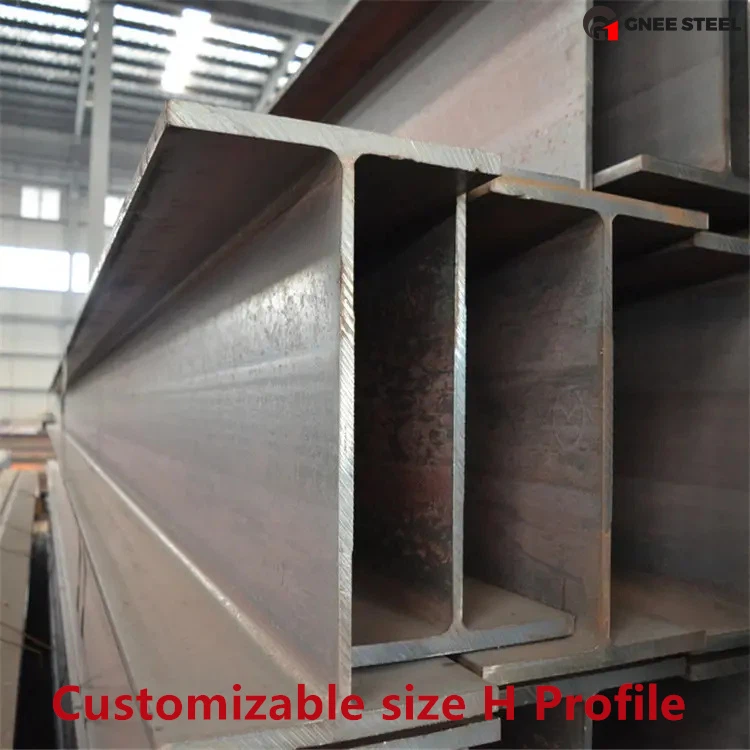
An I-beam (or S-beam, depending on who you ask) has a thin, tall web with a thicker flange that has a slope of 1:10. The flanges are quite narrow compared to the web height, which gives their cross-sectional shape a capital I.

While they do have high strength-to-weight ratio properties and high resistance to bending, they lack torsional strength. They are commonly used in the support frames and columns of elevators, trailers, tramways and cranes.
Similar to H-beams, I-beams are also used in steel buildings and bridges. However, they have lower spans of up to 100 feet, which means additional support columns may be needed.
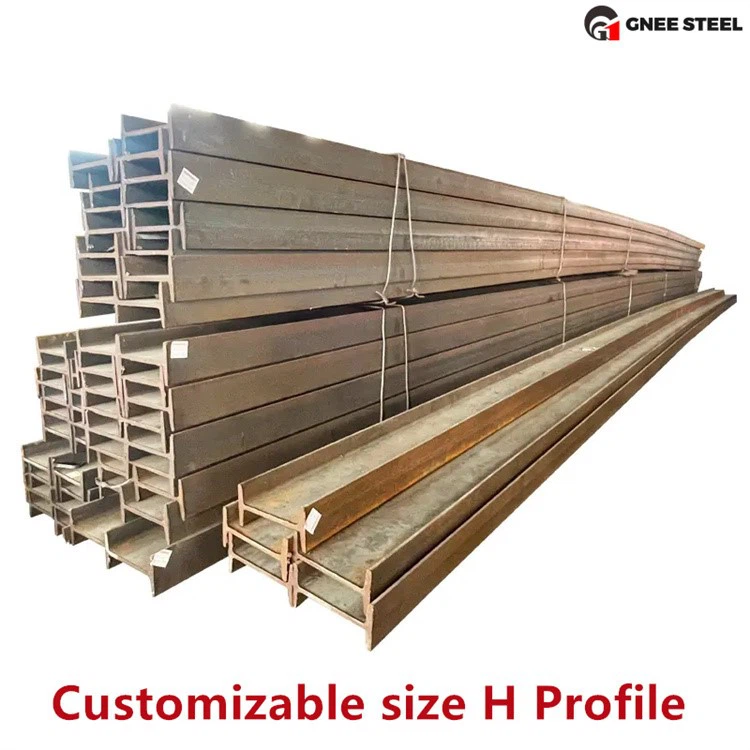
H-beams are stronger than I-beams, making them ideal for extreme environments. In addition to carrying direct and tensile loads, H-beams generally have a lower overall project cost than I-beams because they can span longer distances with fewer support columns.
