


First, whether H-shaped steel is ordinary or light, due to the relatively high and narrow cross-sectional dimensions, the moment of inertia of the two main sleeves of the cross-section is quite different. Therefore, it can generally only be used directly on its web. Components subjected to in-plane bending or composed of lattice-type stress-bearing components. It is not suitable to use axial compression members or members that are perpendicular to the web plane and are bent, which greatly limits its application range.
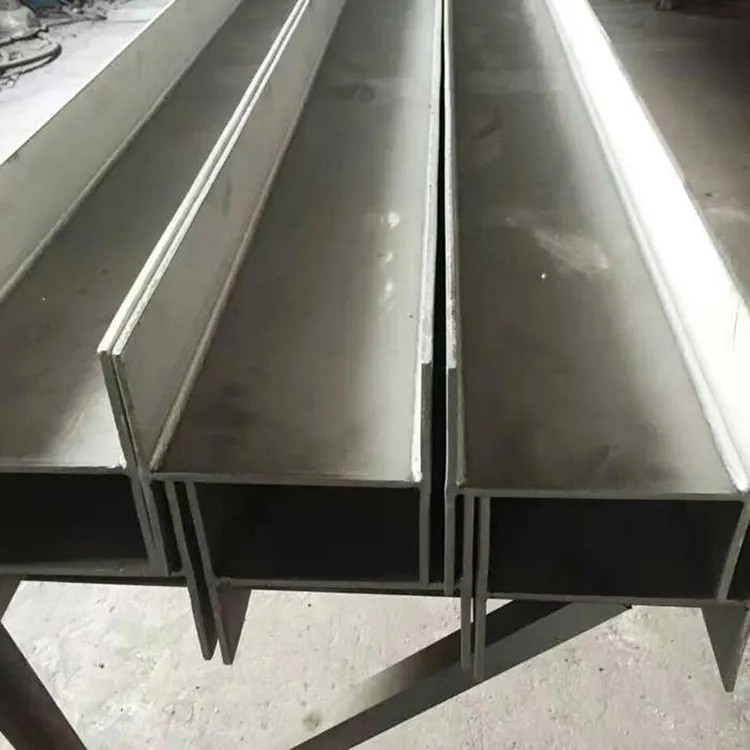
Second, H-shaped steel is an efficient and economical cutting profile (others include cold-formed thin-walled steel, profiled steel plates, etc.). Due to their reasonable cross-sectional shape, they can make the steel more efficient and improve its cutting capacity. Different from the ordinary I-shaped steel, the flange of the H-shaped steel is widened, and the inner and outer surfaces are usually parallel, which makes it easy to use high-strength screws to connect it to other components. Its size constitutes a reasonable series with complete models, which is convenient for design and selection.
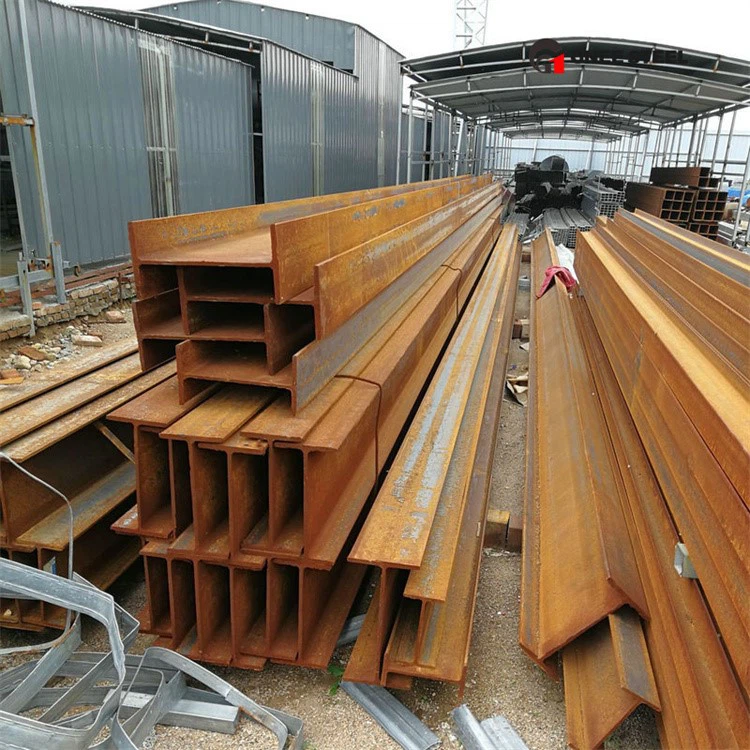
Third, the flanges of H-shaped steel are all of equal thickness, including rolled sections and combined sections composed of three welded plates. I-beams are all rolled sections. Due to poor production technology, the inner edge of the flange has a slope of 1:10. The rolling of H-shaped steel is different from that of ordinary I-beam steel, which only uses one set of horizontal rollers. Because its flange is wide and has no slope (or very small slope), it is necessary to add a set of vertical rollers for rolling at the same time. Therefore, , its rolling process and equipment are more complex than ordinary rolling mills. The maximum height of rolled H-shaped steel that can be produced in China is 800mm. If it exceeds the height,
