


ASTM A516 Grade 70 steel is an industry standard for components that operate in the moderate or low temperature range. Designed for high strength and reliable function under heat and high pressure, A516 Grade 70 is medium carbon alloy with elements of manganese, phosphorus, sulfur, and silicon.
Widely used to supply gas, oil, and petrochemical companies, A516-70 is also regularly employed for bridges, buildings, automotive and truck parts, railroad cars, cargo containers, tote boxes, construction equipment, structural tubing, lighting standards, transmission poles, and more. Metals USA carries A516-70 steel plates in all the most common pattern sizes and thicknesses.
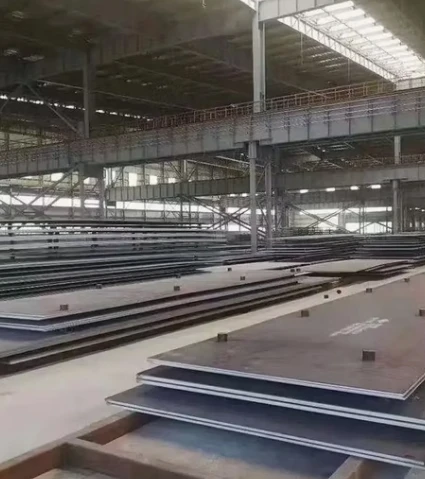
Mechanical Properties of ASTM A516 Grade 70
| Description | Grade 70 |
|---|---|
| Tensile strength (ksi) | 70-90 |
| Tensile strength (MPa) | 485-620 |
| Yield strength (ksi) | 38 |
| Yield strength (MPa) | 260 |
| Elongation in 200mm (min)(%) | 17 |
| Elongation in 50mm (min) (%) | 21 |
| Thickness (max)(mm) | 205 |
Chemical Composition of ASTM A516 Grade 70
| Carbon (C) | % |
| 12.5mm or less 12.5 - 50mm 50 - 100mm 100 - 200mm > 200mm |
0.27 0.28 0.30 0.31 0.31 |
Manganese (Mn) |
% |
| 12.5mm or less • Heat Analysis : • Product Analysis : Over 12.5mm • Heat Analysis : • Product Analysis : |
0.85-1.20 0.79-1.30 0.85-1.20 0.79-1.30 |
Phosphorus (P) |
% |
| (max) | 0.035 |
Sulphur (S) |
% |
| (max) | 0.035 |
Silicon (Si) |
% |
| • Heat Analysis : • Product Analysis : |
0.15-0.40 0.13-0.45 |
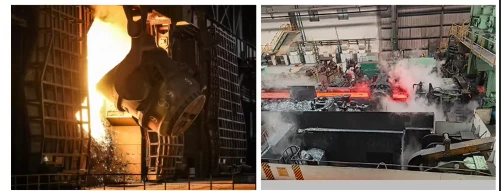
ASTM A516 Grade 70 Fabrication Process Flow
1. Material Procurement & Inspection
Verification: Confirm material compliance with ASTM A516/A20 or ASME SA516/SA20 standards.
Testing: Conduct supplementary tests if required, such as Ultrasonic Examination (UT) per ASTM A435/A578 and Charpy V-Notch (CVN) impact testing.
2. Surface Preparation
Cleaning: Remove mill scale, rust, grease, and moisture using methods like shot blasting or sandblasting to ensure high-quality welds.
Edge Preparation: Beveling and grinding are performed to create precise joint designs (e.g., V-grooves) for welding.
3. Cutting & Forming
Cutting Methods: Utilize Oxy-fuel (flame), Plasma, or Laser cutting depending on plate thickness and precision requirements.
Cold/Hot Forming: Plate rolling or pressing to achieve the desired vessel or component shape. For heavy deformation, intermediate heat treatment may be necessary.
4. Heat Treatment (Pre-fabrication)
Normalizing: Mandatory for plates exceeding 1.5 inches (40 mm) in thickness to refine grain structure.
Parameters: Heat to 900°C – 950°C (1650°F – 1750°F) followed by controlled air cooling.
5. Welding (Joining)
Weldability: High weldability using SMAW, GMAW, GTAW, or SAW processes.
Preheating: Recommended for plates over 1.5 inches (38 mm) thick, typically preheated to 95°C – 200°C (200°F – 400°F) to prevent hydrogen cracking.
Filler Metal: Use low-hydrogen consumables like E7018 or equivalent to match the base metal's tensile strength.
6. Post-Weld Heat Treatment (PWHT)
Stress Relieving: Essential for removing residual stresses in heavy-walled vessels.
Parameters: Heat to 595°C – 675°C (1100°F – 1250°F), holding for approximately 1 hour per inch of thickness.
7. Quality Control & Final Testing
Nondestructive Testing (NDT): Includes Radiographic Testing (RT), Magnetic Particle Testing (MT), or Dye Penetrant Testing (PT) to verify weld integrity.
Hydrostatic Testing: Final pressure test of the completed vessel to ensure safety and leak-free performance under service conditions.
Final Certification: Issue Mill Test Reports (MTR) and compliance documentation.
 applications
1. Oil & Gas Industry
Pressure Vessels: Separators, absorbers, reactors, and scrubbers.
Storage Tanks: Large-scale tanks for LPG, LNG, and crude oil.
Sour Service: HIC-tested plates used for equipment handling H2S(sour gas) environments.
2. Power Generation
Boiler Systems: Steam drums, headers, and high-pressure steam piping.
Heat Transfer: Heat exchanger shells, condensers, and feed-water heaters.
3. Transportation & Logistics
Tank Cars: Specialized railroad cars and road trailers for transporting pressurized gases/chemicals.
Spherical Tanks: Large-scale "Horton Spheres" for urban or industrial fuel storage.
4. General Industrial Fabrication
Heavy Machinery: Crane booms, excavator components, and industrial press frames.
Water Infrastructure: High-pressure penstocks and gates for hydroelectric plants.
5. Low-Temperature Service
Cold-Climate Equipment: Normalized plates used for structural components in Arctic or extreme cold environments due to excellent notch toughness.
If you want to learn more about (A516 Grade 70)GNEE's products, you can send an email to beam@gneesteelgroup.com. We are more than happy to assist you.
What heat treatment is ASTM A516 GR 70 subjected to?
It's usually supplied in normalized, quenched-and-tempered, or as-rolled condition. Normalization enhances uniformity and toughness.
What is the hardness requirement for ASTM A516 GR 70?
No fixed standard hardness, but typical Brinell hardness is 130-180 HB. Welded zones should be checked to avoid excessive hardness.
Can ASTM A516 GR 70 be used for high-pressure vessels?
Yes, for moderate-high pressure. Its strength and toughness meet ASME BPVC requirements, making it ideal for pressure vessels in various industries.
What is the density of ASTM A516 GR 70?
Its density is about 7.85 g/cm³ (0.284 lb/in³), same as standard carbon steels, facilitating weight calculation for equipment design.
How to inspect ASTM A516 GR 70 plates?
Inspections include chemical analysis, mechanical tests (tensile, bend), visual check, ultrasonic testing, and impact tests if required.
Is ASTM A516 GR 70 magnetic?
Yes, it's a ferritic carbon steel, hence magnetic. This property aids in non-destructive testing like magnetic particle inspection.
What is the elongation requirement of ASTM A516 GR 70?
Minimum elongation is 20% for plates ≥ 12.7 mm (0.5 in) thick, ensuring ductility to resist deformation under stress.
Can ASTM A516 GR 70 be cold-formed?
Yes, it has good cold-formability. Proper bending radius and speed are needed; post-forming heat treatment may be required for thick plates.
What certification is needed for ASTM A516 GR 70?
ASME BPVC Section II certification is common. Mill test reports (MTR) confirming chemical composition and mechanical properties are mandatory.