


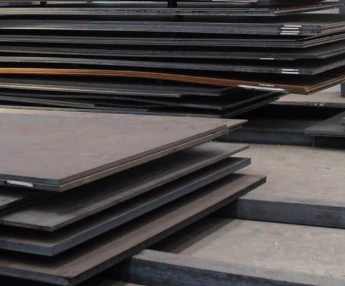
A387 Grade 12 Class 1 is a chromium‑molybdenum alloy steel plate for welded boilers and pressure vessels operating at high temperatures. It is normalized and tempered to provide good strength and toughness, and is widely used in oil, gas, and power generation applications where resistance to creep and oxidation is required.
|
A387 Gr.12 CL.1 Chemical Composition |
|||||||
|
Grade |
The Element Max (%) |
||||||
|
C |
Si |
Mn |
P |
S |
Cr |
Mo |
|
|
A387 Gr.12 Cl.1 |
0.04-0.17 |
0.13-0.45 |
0.35-0.73 |
0.035 |
0.035 |
0.74-1.21 |
0.40-0.65 |
|
Grade |
A387 Gr.12 CL.1 Mechanical Property |
|||
|
Thickness |
Yield |
Tensile |
Elongation |
|
|
A387 Gr.12 Cl.1 |
mm |
Min Mpa |
Mpa |
Min % |
|
t≦50 |
230 |
380-550 |
22 |
|
|
50<t≦200 |
- |
- |
18 |
|
processing
1. Steel Manufacturing Process (Mill Stage)
Melting & Refining: The steel must be killed steel and produced using fine grain practice. Vacuum degassing is often used to minimize impurities like sulfur (S) and phosphorus (P).
Casting: Steel is cast into ingots or continuous slabs.
Hot Rolling: Slabs are heated and rolled to the target thickness.
Heat Treatment (Critical for Class 1): Per ASTM standards, Class 1 plates must be delivered in one of the following conditions:
Annealed.
Normalized and Tempered: The minimum tempering temperature must be 1150°F (620°C).
Accelerated Cooling: If approved, plates can be accelerated cooled from the austenitizing temperature followed by tempering.
2. Component Fabrication (Manufacturer Stage)
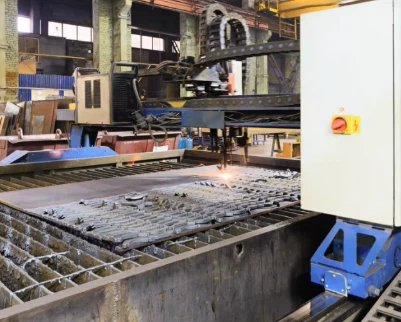
Cutting & Edge Preparation: Plates are typically cut using flame (oxy-fuel) or plasma cutting. Edges must be ground to remove the heat-affected zone and inspected via Dye Penetrant (PT) for cracks.
Forming: Cold or hot forming (bending/rolling) depending on the plate thickness and equipment capacity.
Welding:
Preheating: Preheating is mandatory (typically 150°C - 250°C) to prevent cold cracking.
Consumables: Matching filler metals like E8018-B2 (SMAW) or ER80S-B2 (GMAW/GTAW) are used.
Post-Weld Heat Treatment (PWHT): Essential to relieve stress and improve ductility. The typical PWHT range is 1100°F to 1300°F (595°C to 705°C), with soaking time based on thickness.
3. Inspection & Testing
Mechanical Testing: Verification of Tensile Strength (55–80 ksi [380–550 MPa]) and Yield Strength (minimum 33 ksi [230 MPa]).
Nondestructive Examination (NDE): Ultrasonic Testing (UT) of the plate and Radiographic Testing (RT) or UT of the welds to ensure structural integrity.
 Why Choose Us :
You can get the perfect material according to your requirement at the least possible price.
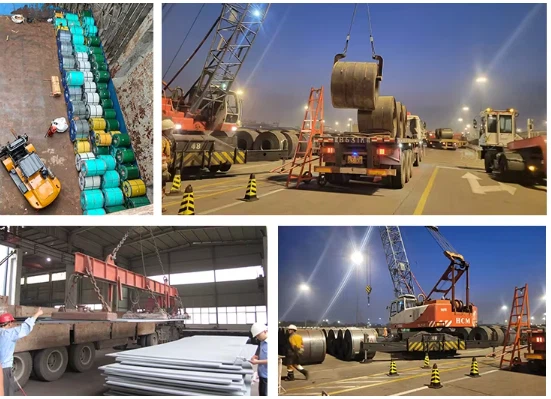
We also offer Reworks, FOB, CFR, CIF, and door to door delivery prices. We suggest you to do deal for shipping which will be quite economical.
The materials we provide are completely verifiable, right from raw material test certificate to the final dimensional statement.(Reports will show on requirement)
We guarantee to give a response within 24hours(usually in the same hour)
You can get stock alternatives, mill deliveries with minimizing manufacturing time.
We are fully dedicated to our customers. If it will not possible to meet your requirements after examining all options, we will not mislead you by making false promises which will create good customer relations.
If you have project requirements for A387 Grade 12 Class 1, we welcome your inquiry. GNEE maintains a large inventory of commonly used high strength steel grades for your selection.For detailed mechanical properties, chemical composition, and technical data, as well as free samples, please contact our factory immediately. We offer competitive prices, stable quality, and professional service. Email:beam@gneesteelgroup.com.
What is ASTM A387 Grade 12 Class 1 steel primarily used for?
ASTM A387 Grade 12 Class 1 is a chromium-molybdenum alloy steel plate designed for pressure vessel and boiler applications. It is commonly used in refineries, petrochemical plants, and power generation facilities where elevated temperatures and corrosive conditions exist. The material offers good creep strength and oxidation resistance, making it suitable for headers, pressure vessels, and heat exchangers operating at moderate to high temperatures. Its heat-treated condition ensures consistent mechanical properties and weldability.
What heat treatment is required for ASTM A387 Grade 12 Class 1?
ASTM A387 Grade 12 Class 1 is typically supplied in the normalized and tempered condition. Normalization involves heating the steel to a temperature of approximately 890–940°C, followed by air cooling, which refines the grain structure and improves strength. Tempering is then performed at 595–650°C to reduce hardness, enhance toughness, and relieve residual stresses. This heat treatment ensures consistent mechanical properties and good weldability for pressure vessel fabrication.
What is the maximum service temperature for ASTM A387 Grade 12 Class 1?
ASTM A387 Grade 12 Class 1 is commonly used in applications with service temperatures up to approximately 593°C. Its chromium-molybdenum alloying provides good oxidation resistance and creep strength at elevated temperatures. However, long-term exposure above this temperature may reduce its mechanical properties and increase the risk of creep deformation. Designers often refer to ASME Boiler and Pressure Vessel Code guidelines to determine the allowable stress values at specific temperatures for safe operation.
What are the common product forms of ASTM A387 Grade 12 Class 1?
ASTM A387 Grade 12 Class 1 is primarily produced as steel plates for pressure vessel fabrication. It is available in various thicknesses and widths to accommodate different design requirements. In some cases, it may also be supplied as forgings or castings for specialized components. The plates are typically cut, formed, and welded to manufacture pressure vessels, heat exchangers, and other high-temperature equipment. The material is also available in quenched and tempered conditions for specific applications.
What are the advantages of using ASTM A387 Grade 12 Class 1 in high-temperature applications?
ASTM A387 Grade 12 Class 1 offers several advantages for high-temperature service, including excellent creep strength, good oxidation resistance, and stable mechanical properties over time. Its chromium-molybdenum alloying helps maintain strength at elevated temperatures, while the normalized and tempered condition provides toughness and ductility. The steel also has good weldability and can be easily fabricated into complex pressure vessel structures. These characteristics make it a reliable choice for refineries and power plants.
What are the limitations of ASTM A387 Grade 12 Class 1?
Despite its many benefits, ASTM A387 Grade 12 Class 1 has some limitations. It may not be suitable for extremely high temperatures above 593°C, where creep deformation becomes a concern. The material can also be susceptible to hydrogen damage in certain corrosive environments, requiring proper heat treatment and corrosion mitigation strategies. Additionally, its higher alloy content compared to carbon steel may result in increased material and fabrication costs. Engineers must carefully evaluate these factors during design.
What is the difference between ASTM A387 Grade 12 Class 1 and Class 2?
ASTM A387 Grade 12 Class 1 and Class 2 have the same chemical composition but differ in heat treatment and mechanical properties. Class 1 is normalized and tempered, providing higher strength and toughness, making it suitable for more demanding pressure vessel applications. Class 2 is usually only normalized, resulting in lower strength but potentially better weldability and formability. Class 1 is preferred for high-temperature and high-pressure service, while Class 2 may be used for less severe conditions or when easier fabrication is required.
What is the thermal conductivity of ASTM A387 Grade 12 Class 1?
The thermal conductivity of ASTM A387 Grade 12 Class 1 decreases with increasing temperature, typically ranging from approximately 45 W/m·K at 100°C to 35 W/m·K at 600°C. This property is important for heat exchanger and boiler applications, as it affects heat transfer efficiency and temperature distribution within the material. Lower thermal conductivity at higher temperatures means more heat is retained, which can influence creep behavior and material selection for specific components.
What is the density of ASTM A387 Grade 12 Class 1?
ASTM A387 Grade 12 Class 1 has a density of approximately 7.85 g/cm³, similar to most carbon and low-alloy steels. This density is used in weight calculations for pressure vessel design and transportation. It also affects the material's inertia and structural response to dynamic loads. While density is not a primary consideration for high-temperature performance, it is an important physical property for engineering and manufacturing processes such as forming, machining, and shipping.