


ASTM A515 Grade 65 is a carbon steel plate designed for moderate to high‑temperature pressure vessels and boiler components. It offers good strength, weldability, and stable performance under heat and pressure. Widely used in power generation, petrochemical, and general pressure vessel applications, it provides a cost‑effective choice without sacrificing reliability or durability.
| Physical Properties | Metric | English | Comments |
|---|---|---|---|
| Density | 7.80 g/cc | 0.282 lb/in³ | Typical of ASTM Steel |
| Mechanical Properties | Metric | English | Comments |
| Tensile Strength, Ultimate | 450 - 585 MPa | 65300 - 84800 psi | |
| Tensile Strength, Yield | 240 MPa | 34800 psi | |
| Elongation at Break | 19 % | 19 % | in 200mm |
| 23 % | 23 % | in 50mm | |
| Modulus of Elasticity | 200 GPa | 29000 ksi | Typical Carbon Steel |
| Bulk Modulus | 160 GPa | 23200 ksi | Typical for Steel |
| Poissons Ratio | 0.29 | 0.29 | Typical Carbon Steel |
| Shear Modulus | 80.0 GPa | 11600 ksi | Typical for Steel |
| Electrical Properties | Metric | English | Comments |
| Electrical Resistivity | 0.0000170 ohm-cm | 0.0000170 ohm-cm | Typical Carbon Steel |
| Thermal Properties | Metric | English | Comments |
| CTE, linear | 12.0 µm/m-°C | 6.67 µin/in-°F | Typical Carbon Steel |
| Specific Heat Capacity | 0.470 J/g-°C | 0.112 BTU/lb-°F | Typical Carbon Steel |
| Thermal Conductivity | 52.0 W/m-K | 361 BTU-in/hr-ft²-°F | Typical Carbon Steel |
| Component Elements Properties | Metric | English | Comments |
| Carbon, C | 0.33 % | 0.33 % | may vary with plate thickness |
| Iron, Fe | 98.42 % | 98.42 % | as balance |
| Manganese, Mn | 0.90 % | 0.90 % | |
| Phosphorus, P | 0.035 % | 0.035 % | |
| Silicon, Si | 0.15 - 0.40 % | 0.15 - 0.40 % | |
| Sulfur, S | 0.040 % | 0.040 % | |
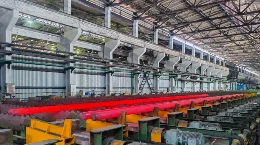
processing
Steelmaking: Refine molten iron to meet the required carbon and manganese content, while strictly controlling and minimizing impurities (such as sulfur and phosphorus) to ensure the material's basic performance.
Slab Casting: Cast the refined molten steel into slabs through continuous casting or ingot casting processes, which serve as the raw material for subsequent rolling.
Hot Rolling: Heat the slabs to a controlled high temperature and perform rolling operations to form steel plates of the desired thickness. This process helps optimize the material's grain structure and enhance its mechanical properties.
Heat Treatment (Normalizing): Conduct normalizing heat treatment on the rolled steel plates (especially thick plates). Heat the material to an appropriate temperature, hold it for a certain period, and then cool it in air to improve toughness, structural uniformity and dimensional stability.
Quality Inspection: Perform strict non-destructive testing (such as ultrasonic testing) and mechanical property testing on the steel plates to ensure they fully comply with ASTM A515 Grade 65 standards, eliminating defects like internal cracks or inclusions.
Cutting & Forming: Cut the qualified steel plates into specific sizes according to actual application needs, and carry out forming processes (such as bending, pressing) to make semi-finished products matching the shape of components.
Welding: Weld the semi-finished products into final components (e.g., boiler drums, pressure vessel shells) using common welding processes (SMAW, GMAW, etc.), leveraging the material's excellent weldability to ensure firm and leak-proof joints.
Final Finishing & Inspection: Conduct surface finishing (such as derusting, cleaning) on the welded components and perform a final overall inspection to confirm that the finished products meet the technical requirements of end-use scenarios.

Applications
Boiler manufacturing: Steam drums and other core pressure-bearing components
Petrochemical industry: Medium-pressure hydrogenation refining reactors, catalytic cracking regenerators, tube-and-shell heat exchanger shells, LPG/propylene storage tanks
Power generation industry: Steam pipelines and heat recovery system components (thermal power plants, nuclear power auxiliary equipment)
General pressure vessel fabrication: Separators, spherical tanks, gas storage tanks (chemical, metallurgical industries)
High-pressure pipeline manufacturing: Spiral welded pipes and straight seam welded pipes for medium-pressure steam transportation
Application Conditions
Temperature range: Typically -29°C to 345°C (long-term service under high temperature)
Pressure range: Suitable for medium to high pressure scenarios (3-8MPa, depending on specific equipment)
Medium compatibility: Resistant to high-temperature steam, LPG, propylene and other common industrial media
Welding requirement: Adaptable to common welding processes (SMAW, GMAW, etc.) without strict preheating in most cases
Service environment: Suitable for industrial sites such as power plants, petrochemical plants, and metallurgical factories
Full specification and details are available on request. The above information is provided for guidance purposes only. For specific design requirements please contact our technical sales staff.
What is the lead time for A515 Grade 65 plates?
Lead times for A515 Grade 65 plates vary depending on the producer, order size, and thickness. Standard thicknesses are often available from stock with short lead times, while custom sizes or thicker plates may require several weeks of production time. Factors such as heat treatment requirements, testing, and certification can also affect delivery schedules, so it is important to consult suppliers for specific lead time estimates.
What is the fatigue strength of A515 Grade 65?
The fatigue strength of A515 Grade 65 depends on factors such as surface finish, weld quality, and operating temperature. Generally, it has an endurance limit of around 20 to 25 ksi for reversed bending at room temperature. In pressure vessel applications, fatigue analysis is critical for components subjected to cyclic loading, such as heat exchangers or vessels with frequent start-up and shutdown cycles.
What is the melting point range of A515 Grade 65?
A515 Grade 65 has a melting point range similar to other carbon steels, typically between 2600°F and 2800°F (1425°C and 1540°C). The exact range depends on the chemical composition, particularly the carbon and alloy content. Understanding the melting point is important for welding and heat treatment processes, as it helps determine appropriate temperatures for heating, forging, and avoiding overheating or burning during fabrication.
What is the density of A515 Grade 65 steel?
The density of A515 Grade 65 is approximately 7.85 grams per cubic centimeter, similar to other carbon steels. This density is consistent across most carbon and low-alloy steels used in pressure vessel applications. Knowing the density is important for weight calculations in vessel design, transportation, and structural analysis, helping engineers optimize material usage and structural integrity.
What is the modulus of elasticity for A515 Grade 65?
A515 Grade 65 has a modulus of elasticity of about 29 million psi (200 GPa) at room temperature, typical of carbon steels. This value is used in structural and pressure vessel design to calculate deflection, stress distribution, and thermal expansion effects. The modulus remains relatively constant over a range of temperatures, although it decreases slightly at higher temperatures, affecting design considerations for high-temperature service.
What is ASTM A515 Grade 65 steel used for?
ASTM A515 Grade 65 is a carbon steel plate primarily intended for pressure vessel applications. It is designed to operate at moderate to elevated temperatures, offering good strength and weldability. This grade is commonly used in boilers, heat exchangers, and storage tanks where reliable performance under pressure is required. Its chemical composition and mechanical properties make it suitable for fabrication by standard welding and forming processes.
What are the key mechanical properties of A515 Grade 65?
A515 Grade 65 typically has a minimum tensile strength between 65 ksi and 85 ksi, with a minimum yield strength of 35 ksi. It exhibits good ductility, with a minimum elongation of around 18 to 20 percent. The steel also has adequate toughness for pressure vessel service, especially in thicker sections. These properties are achieved through controlled carbon and manganese content, ensuring strength and weldability balance.
What are the common forms of A515 Grade 65 supplied?
A515 Grade 65 is most commonly supplied as hot-rolled steel plates in various thicknesses and widths. Plates may be cut to size, beveled for welding, or processed further into vessel components. Some producers also offer normalized or quenched and tempered plates, depending on customer specifications. The material is rarely supplied as bars or shapes, as its primary application is pressure vessel plates.
Can A515 Grade 65 be formed into complex shapes?
Yes, A515 Grade 65 can be formed into various shapes using standard fabrication methods such as rolling, bending, and press forming. Its ductility and moderate strength allow it to be shaped without excessive cracking or springback. Thicker plates may require higher forming forces and preheating to reduce residual stresses and improve formability. Proper forming practices help maintain the material's mechanical properties and structural integrity.
What are the cost considerations for A515 Grade 65?
A515 Grade 65 is generally more cost-effective than alloy steels or stainless steels, making it a popular choice for pressure vessels. Prices depend on factors such as plate thickness, quantity, heat treatment, and testing requirements. Thicker plates and those requiring additional processing, such as quenching and tempering or ultrasonic testing, tend to cost more. Bulk orders may qualify for volume discounts from suppliers.