


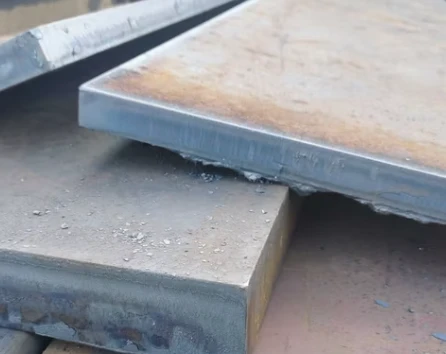
 SPV490 is a high-strength pressure vessel steel grade developed for use in boilers, pressure vessels, and other equipment that must withstand high temperatures and pressures. It belongs to the category of quenched and tempered steels, which are processed to achieve a fine-grained microstructure that provides excellent toughness, good weldability, and reliable strength at elevated temperatures. The material is designed to maintain its mechanical properties under long-term exposure to thermal cycling and various corrosive environments, making it suitable for applications in the petrochemical, power generation, and heavy machinery industries. Its chemical composition and heat treatment are carefully controlled to ensure high purity, low impurity levels, and a balanced combination of strength and ductility. SPV490 is typically supplied in the quenched and tempered condition, which enhances its ability to resist brittle fracture and ensures stable performance under demanding operating conditions.
Chemical Composition and Mechanical Property
| Grade | C% | SI% | Mn% | P% | S% |
| SPV490 | 0.2 | 0.8 | 1.7 | 0.02 | 0.01 |
| ≤0.18 | ≤0.75 | ≤0.16 | ≤0.030 | ≤0.030 |
| Steel Grade | Yield Strength, for product in mm, Mpa, min | Tensile Strength, Mpa | Elongation, %, min | ||||
| SPV490 | 6<T≤50 | 50<T≤100 | 100<T≤200 | ≤16 | 16<T≤40 | >40 | |
| 490 | 470 | 450 | 610-740 | 18 | 25 | 19 | |
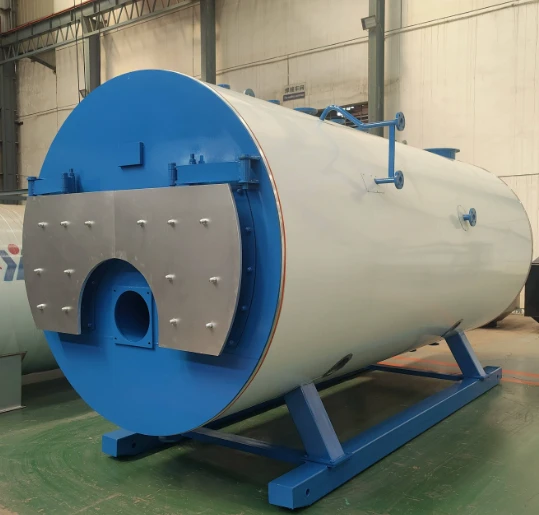 Applications
1. Boiler and Pressure Vessel Manufacturing
SPV490 is widely used in manufacturing boilers and pressure vessels, including industrial boilers, power plant boilers, and pressure vessels for petrochemical and chemical industries. It is mainly applied to key components such as boiler drums, header pipes, and pressure vessel shells that bear high temperature and pressure.
2. Petrochemical and Chemical Equipment
In the petrochemical sector, SPV490 is used to produce reactors, separators, storage tanks, and pipelines for processing crude oil, natural gas, and chemical intermediates.
3. Power Generation Equipment
It is an important material for thermal power plants, nuclear power auxiliary equipment, and renewable energy power generation systems. Specific applications include coal-fired boiler heating surfaces, steam pipelines, and pressure components of gas turbine power generation units.
4. Heavy Machinery and Construction Machinery
SPV490 is used in the manufacturing of pressure-bearing structural parts of heavy machinery, such as hydraulic cylinders, pressure tanks of engineering machinery, and load-bearing components of mining equipment.
Application Conditions
1. For Boiler and Pressure Vessel Manufacturing
It operates in environments with working temperatures ranging from -20℃ to 450℃ and working pressures of 1.6MPa to 10MPa. The material must resist thermal cycling fatigue, corrosion from mediums such as steam and organic solvents, and maintain structural integrity under long-term high-pressure operation. It is suitable for neutral or weakly corrosive media and requires strict control of sulfur and phosphorus content to avoid brittle fracture.
2. For Petrochemical and Chemical Equipment
It adapts to harsh working environments involving high temperature, high pressure, and corrosive media (such as hydrogen sulfide, naphthenic acid, and amine solutions). The working temperature is usually between -10℃ and 400℃, and the pressure can reach up to 15MPa. It requires excellent hydrogen sulfide corrosion resistance (HIC/SCC resistance) and good weldability to ensure the tightness and safety of equipment joints. It is not suitable for strong acid or strong alkali environments without anti-corrosion treatment.
3. For Power Generation Equipment
It works under high-temperature steam conditions (250℃ to 450℃) and high pressure (6MPa to 12MPa), requiring excellent high-temperature strength, oxidation resistance, and creep resistance. It must withstand frequent start-stop cycles of power equipment without deformation or cracking. For nuclear power auxiliary equipment, it also needs to meet radiation resistance requirements and strict quality inspection standards.
4. For Heavy Machinery and Construction Machinery
It operates in complex working conditions involving dynamic loads, vibration, and occasional impact. The working temperature ranges from -30℃ to 300℃, and it requires good toughness (especially low-temperature toughness) and wear resistance. It must have excellent forming performance to adapt to various stamping and bending processes in structural part manufacturing, and the welds must withstand dynamic load impacts without failure.
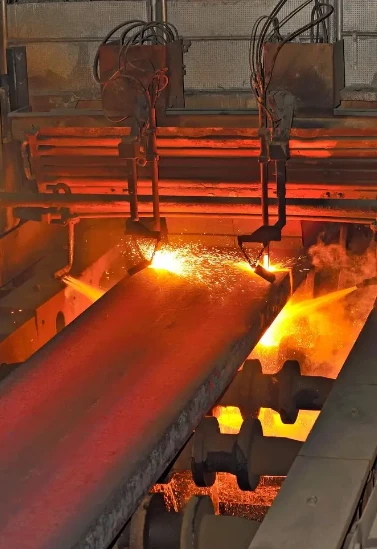 Processing Flow of SPV490 Steel Plate
Raw Material Preparation and Charging
The process begins with selecting high-quality iron ore, scrap steel, and alloying elements such as manganese, silicon, and small additions of niobium or vanadium. These materials are carefully proportioned according to the chemical composition requirements of SPV490 and then charged into a converter or electric arc furnace.
Smelting and Primary Refining
Inside the furnace, the raw materials are melted at high temperatures. Oxygen is blown into the molten steel to reduce carbon content and remove impurities through oxidation. During this stage, the chemical composition is continuously monitored and adjusted to meet the specified standards for SPV490.
Secondary Refining and Vacuum Treatment
After primary refining, the molten steel is transferred to a ladle furnace for secondary refining. Here, further deoxidation and desulfurization are carried out, and precise amounts of alloying elements are added to achieve the desired strength and toughness. Vacuum degassing (VD or VOD) is then applied to reduce hydrogen, nitrogen, and other harmful gases, significantly improving the steel's purity and internal quality.
Continuous Casting
The refined molten steel is cast into slabs using a continuous casting machine. The slabs are cooled and solidified under controlled conditions to ensure a uniform microstructure and minimize segregation. The cast slabs are then inspected for surface defects before proceeding to the next stage.
Heating and Controlled Rolling
The slabs are reheated to a temperature of around 1150–1200℃ to ensure complete austenitization. They are then subjected to controlled rolling, which involves multiple passes at different temperature ranges. This process refines the grain size, improves the mechanical properties, and imparts the required strength and toughness to SPV490.
Quenching and Tempering
After rolling, the steel plates are rapidly cooled by quenching to form a hard, fine-grained microstructure. They are then tempered at a moderate temperature to relieve internal stresses, improve ductility, and achieve the final balance of high strength and good toughness characteristic of SPV490.
Finishing and Inspection
The tempered plates are straightened, cut to the required dimensions, and subjected to various inspections, including ultrasonic testing, tensile testing, and impact testing. Only plates that meet the strict quality criteria are approved for delivery.
Request a professional quotation for SPV490 from GNEE Steel.
What is the difference between SPV490 and SPV410?
The main difference lies in strength: SPV490 has higher tensile and yield strength than SPV410. SPV410 is for general marine structures, while SPV490 is used in high-load parts like pressure vessels and thick hull sections.
Can SPV490 be welded easily?
Yes, SPV490 has good weldability. It can be welded using common methods (arc welding, gas shielded welding) with appropriate welding materials and parameters. Preheating and post-weld heat treatment may be needed for thick plates.
What welding materials are suitable for SPV490?
Suitable welding materials for SPV490 include E50 series electrodes (e.g., E5015) for manual arc welding, and ER50-6 welding wire for gas shielded welding. These materials match its strength and toughness.
What is the delivery state of SPV490 steel plates?
SPV490 is usually delivered in the normalized state (N). Some manufacturers can also provide tempered or quenched-tempered states according to customer requirements, but normalizing is the standard delivery condition.
What is the density of SPV490?
The density of SPV490 is the same as that of ordinary carbon steel, about 7.85 g/cm³. This value is crucial for calculating the weight of steel plates during ship design and construction.
Can SPV490 be used in low-temperature marine environments?
Yes, SPV490 has good low-temperature toughness. It can withstand low temperatures down to -20℃ (depending on thickness) without brittle fracture, making it suitable for cold marine areas like the North Sea.
What is the elongation rate of SPV490?
The minimum elongation rate of SPV490 is 22% (based on JIS G 3115). This high elongation ensures the steel can deform plastically under external forces, avoiding sudden structural failure.
How to store SPV490 steel plates properly?
Store SPV490 in a dry, well-ventilated warehouse to avoid moisture and rust. Place plates on wooden supports to separate from the ground, and cover with waterproof cloth if stored outdoors for a long time.
What is the hardness range of SPV490?
The Brinell hardness (HB) of SPV490 is usually between 137-187. This hardness range balances strength and machinability, making it easy to cut, drill and shape during manufacturing.
Is SPV490 suitable for pressure vessel manufacturing?
Yes, SPV490 is specially designed for marine pressure vessels (e.g., fuel tanks, water tanks). Its high strength and good pressure resistance meet the strict requirements of pressure vessel safety standards.