


ASME SA387 Grade 11 Class 1 is a low-alloy ferritic steel plate specifically engineered for high-temperature pressure vessel applications, primarily composed of carbon (0.15-0.20%) and chromium (0.80-1.10%) along with trace amounts of manganese, silicon, and other alloying elements. These components work together to endow it with excellent high-temperature strength, moderate oxidation resistance, and reliable structural stability, making it a preferred choice in petrochemical, refinery, and thermal power industries for fabricating high-temperature pressure equipment like reactors and heat exchangers.
Equivalents
| BS | EN | ASTM/ASME | DIN |
| 621 B | ––– | SA387-11-1 | ––– |
Specifications for ASME SA387 Grade 11 Alloy Steel Plates
| Designation | Nominal Chromium Content (%) |
Nominal Molybdenum Content (%) |
| SA387 Grade 11 | 1.25% | 0.50% |
Tensile Requirements for ASME SA387 Grade 11 Alloy Steel Plates Class 1 Plates
| Designation: | Requirement: | Grade 11 |
| SA387 Grade 11 | Tensile strength, ksi [MPa] | 75 to 100 [515 to 690] |
| Yield strength, min, ksi [MPa]/(0.2% offset) | 43 [310] | |
| Elongation in 8 in. [200mm], min % | 18 | |
| Elongation in 2 in. [50mm], min, % | 22 | |
| Reduction of area, min % | ––– |
Chemical Requirements for ASME SA387 Grade 11 Alloy Steel Plates
| Element | Chemical Composition (%) | |
| SA387 Grade 11 | ||
| Carbon: | Heat Analysis: | 0.05 - 0.17 |
| Product Analysis: | 0.04 - 0.17 | |
| Manganese: | Heat Analysis: | 0.40 - 0.65 |
| Product Analysis: | 0.35 - 0.73 | |
| Phosphorus: | Heat Analysis: | 0.035 |
| Product Analysis: | 0.035 | |
| Sulphur (max): | Heat Analysis: | 0.035 |
| Product Analysis: | 0.035 | |
| Silicon: | Heat Analysis: | 0.50 - 0.80 |
| Product Analysis: | 0.44 - 0.86 | |
| Chromium: | Heat Analysis: | 1.00 - 1.50 |
| Product Analysis: | 0.94 - 1.56 | |
| Molybdenum: | Heat Analysis: | 0.45 - 0.65 |
| Product Analysis: | 0.45 - 0.70 |
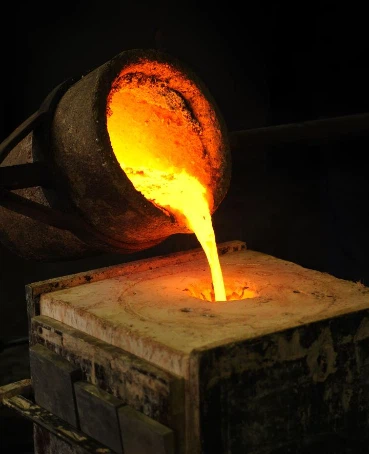 Technical Processing
1. Heat Treatment (The Foundation of Properties)
As per ASME specifications, Class 1 material must undergo specific thermal cycles to balance strength and ductility:
Normalizing: Heating the steel to a range of 1650°F - 1750°F (900°C - 955°C) followed by air cooling to refine the grain structure.
Tempering: Mandatory after normalizing. The minimum tempering temperature is 1150°F (620°C). This step ensures the material achieves its Class 1 tensile properties (60–85 ksi) while improving toughness.
Accelerated Cooling: For thick sections, liquid quenching or forced air cooling may be used, followed by immediate tempering to maintain uniform properties through the thickness.
2. Thermal Cutting and Forming
Preheated Cutting: Before oxy-fuel or plasma cutting, the plate should be preheated to approximately 250°F - 300°F (120°C - 150°C) to prevent edge cracking in the Heat Affected Zone (HAZ).
Cold Forming: Suitable for minor curvature. If the fiber elongation exceeds 5% during cold work, a stress-relief heat treatment is generally required.
Hot Forming: Performed at 1650°F - 1925°F (900°C - 1050°C). Crucial: If hot forming is performed, the plate must undergo a full re-normalization and tempering cycle to restore its certified mechanical properties.
3. Welding Process (P-Number 4)
Grade 11 steel is susceptible to hydrogen cracking and hardening, requiring strict weld procedure specifications (WPS):
Preheating: Mandatory preheat between 300°F and 500°F (150°C - 260°C) depending on the thickness and welding method.
Interpass Temperature: Must be monitored and typically kept below 600°F (315°C) to prevent excessive grain growth.
Consumables: Low-hydrogen electrodes (e.g., E8018-B2) or matching Cr-Mo filler wires must be used.
4. Post-Weld Heat Treatment (PWHT)
PWHT is a vital processing step for all SA387 Gr. 11 fabrications:
Temperature Range: Usually performed between 1200°F and 1300°F (650°C - 705°C).
Function: It reduces residual stresses from welding and improves the ductility of the weld joint and HAZ.
Control: Heating and cooling rates are strictly controlled (e.g., not exceeding 200°C/hr) to avoid secondary thermal stresses.
5. Surface and Inspection Processing
De-scaling: Sandblasting or pickling is used to remove the oxide scale formed during heat treatment.
Non-Destructive Testing (NDT):
Ultrasonic Testing (UT): To detect internal laminations or defects.
Magnetic Particle Testing (MT): Performed after PWHT to check for surface or delayed cracking in the welds.
 applications
1. Oil & Gas and Petrochemical Industry
Pressure Vessels: Used for the main shells and heads of vessels operating at temperatures up to 595°C (1100°F).
Hydrocracking & Catalytic Reformers: Essential for vessels where hydrogen and hydrocarbons are processed at high heat.
Separators & Desulfurization Units: Utilized in components that remove sulfur and impurities from crude oil.
2. Power Generation
Grade 11 Class 1 is a standard choice for steam-handling equipment:
Industrial Boilers & Steam Drums: Used in the welded construction of drums that hold high-pressure steam.
Heat Exchangers: Specifically for the shells and tubes where thermal exchange occurs between high-temperature gases or fluids.
Superheater Components: Often used in piping and headers that transport superheated steam to turbines.
3. Chemical Processing
The material's balance of corrosion resistance and strength makes it ideal for:
Storage Tanks: For hot chemical media that would oxidize or weaken standard carbon steel.
Reactors: High-pressure chemical reactors that require specific ductility (provided by Class 1) to handle thermal cycling.
4. Piping and Infrastructure
High-Temperature Piping: Used in power plants and refineries for the transport of hot gases and steam.
Forged Components: Frequently processed into flanges, valves, and fittings to ensure the entire pressure system has consistent thermal expansion properties.
advantages
1. High-Temperature Creep Resistance
The addition of Molybdenum significantly increases the material's "creep strength." This allows the steel to resist slow, permanent deformation (creeping) when subjected to high mechanical stress at constant elevated temperatures (up to 1100°F / 595°C).
2. Oxidation and Corrosion Resistance
The Chromium content provides a protective oxide layer on the surface. This makes the material highly resistant to:
Oxidation: Preventing the scaling and thinning of vessel walls at high heat.
Hydrogen Attack: It resists hydrogen-induced cracking (HIC) and decarburization, which is critical in refinery and "sour gas" (𝐻2𝑆) services.
3. Superior Ductility and Formability (Class 1 Specific)
Unlike Class 2 (which is stronger but more brittle), Class 1 is processed to have a lower tensile strength (60–85 ksi) but higher elongation (min 22%). This provides:
Ease of Fabrication: It is easier to bend and shape into complex pressure vessel heads or small-radius pipes.
Thermal Fatigue Resistance: Better ductility allows the material to better absorb the stresses of repeated thermal expansion and contraction cycles.
4. Excellent Weldability
Grade 11 is considered the most "welder-friendly" of the P-Number 4 alloy steels.
It has a lower risk of cracking compared to higher chromium alloys (like Grade 22 or 91).
It maintains consistent mechanical properties across the weld joint after standard Post-Weld Heat Treatment (PWHT).
5. Cost-to-Performance Ratio
It is more durable than standard Carbon Steel (like SA516) for high-heat applications.
It is significantly less expensive than Stainless Steel or high-nickel alloys while still meeting the safety codes for most industrial pressure vessels.
Contact us at beam@gneesteelgroup.com for pricing, technical support, or customized solutions. We are always ready to support your project.
Can this steel grade be welded with stainless steel?
Yes, but it needs compatible welding consumables (e.g., E410NiMo) and proper PWHT to avoid intergranular corrosion and ensure weld joint strength.
What is the storage requirement for this steel plate?
Store in a dry, well-ventilated area, avoid moisture and contact with corrosive substances, and cover with waterproof cloth to prevent rusting.
What is the impact toughness of SA387 Grade 11 Class 1?
Its Charpy V-notch impact energy is ≥27 J at room temperature, ensuring good toughness to resist sudden impact loads in service.
What is the maximum carbon content allowed in this steel grade?
The maximum carbon content is 0.20%. Exceeding this will reduce weldability and toughness, increasing the risk of cracks during processing.
What are the alternatives to SA387 Grade 11 Class 1?
Alternatives include SA387 Grade 12 Class 1 (lower Cr content) and SA387 Grade 22 Class 1 (higher Cr-Mo content), chosen based on service conditions.
How to identify SA387 Grade 11 Class 1 plates?
It can be identified by material certificates, chemical composition analysis, hardness testing and microstructure inspection to confirm compliance with standards.
What is the effect of chromium in this steel grade?
Chromium improves high-temperature strength, oxidation resistance and corrosion resistance, forming a protective oxide film on the surface to resist harsh environments.
Is this steel grade used in nuclear power plants?
Rarely, as nuclear power requires stricter material standards. It is mainly used in conventional thermal power and petrochemical fields instead.
What is the heat treatment process before delivery?
Typical delivery heat treatment is normalizing + tempering. Normalizing refines grains, while tempering reduces brittleness and adjusts mechanical properties.
How does temperature affect the strength of this steel?
Strength decreases with increasing temperature. Below 593°C, it maintains stable strength; beyond that, the decline accelerates, affecting service safety.