


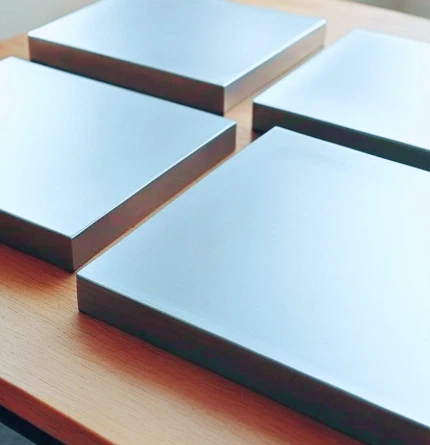
A662GrB is a premium low-carbon, high-strength pressure vessel steel grade formally specified by the American Society for Testing and Materials (ASTM) standards. It is primarily engineered and utilized for manufacturing low-temperature pressure vessels, storage tanks, and critical structural components in industries where cold-resistant performance is paramount, featuring excellent low-temperature toughness, reliable weldability, and stable mechanical properties even when operating in harsh low-temperature environments.
specification
Standard & Grade: Complies with ASTM A662/A662M. Low-alloy carbon steel with main components C, Mn, Si; P≤0.035%, S≤0.035% (toughness guarantee).
Mechanical Properties: Tensile strength 415-585 MPa, yield strength ≥240 MPa, elongation ≥25%, Charpy V-notch impact toughness ≥27 J (-45℃), anti-low-temperature brittle fracture.
Dimensions: Common thickness 6-150mm; width/length customizable, dimensional tolerance meets ASTM A662/A662M.
Heat Treatment: Normally supplied in normalized state (890-950℃, air-cooled) for stable performance; Q&T available for high-strength needs.
Inspection & Certification: Mandatory ultrasonic flaw detection (ASTM A435/A435M/A609/A609M); MTC (EN 10204 3.1/3.2) provided.
|
A662GrB Chemical Composition |
|||||
|
Grade |
The Element Max (%) |
||||
|
C |
Mn |
P |
S |
Si |
|
|
A662GrB |
0.22 |
0.79-1.62 |
0.035 |
0.035 |
0.13-0.45 |
|
Grade |
A662GrB Mechanical Property |
|||
|
Thickness |
Yield |
Tensile |
Elongation |
|
|
A662GrB |
mm |
Min Mpa |
Mpa |
Min % |
|
200 |
275 |
450-585 |
20 |
|
|
50 |
23 |
|||
 processing
Heating and Rolling:
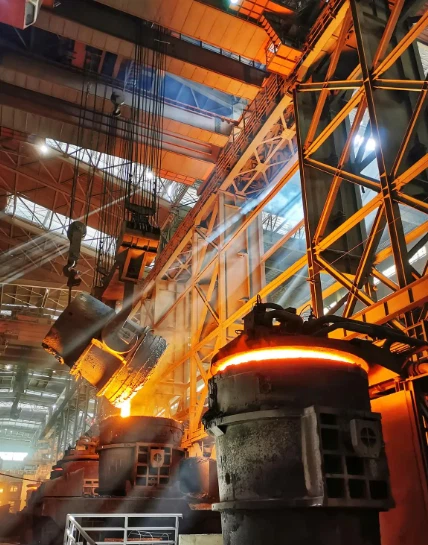
The steel is heated to a suitable temperature range for hot rolling to achieve uniform microstructure and mechanical properties. Controlled rolling practices help refine the grain size, which contributes to improved toughness, especially at lower temperatures.
Normalization:
A662 GrB is often normalized to enhance strength and toughness. Normalization involves heating the steel to the appropriate temperature, holding it for a sufficient time to ensure uniformity, and then cooling it in air. This process refines the ferrite‑pearlite structure and improves dimensional stability.
Quenching and Tempering (Q&T):
While A662 GrB is commonly supplied in the normalized condition, some applications may use quenched and tempered material for higher strength. Q&T involves rapid cooling after heating followed by tempering to balance strength and toughness, ensuring good performance under demanding pressure and temperature conditions.
Welding Conditions:
A662 GrB exhibits excellent weldability, allowing use with common welding processes such as SMAW, GMAW, FCAW, and SAW. Preheating may be required for thicker plates or in cold environments to prevent hydrogen‑induced cracking, and post‑weld heat treatment (PWHT) is often applied to reduce residual stresses and improve toughness in welded joints.
Forming and Machining:
The material can be readily formed using standard hot or cold forming techniques. Machinability is good, though appropriate cutting tools and speeds are recommended to maintain surface quality and dimensional accuracy in pressure vessel components.

applications
Petrochemical Industry:
As a core material, it is used to manufacture key equipment such as reactors, heat exchangers and separators, adapting to working conditions like crude oil processing and chemical synthesis. It can resist corrosion and pressure impact from medium and low temperature media, ensuring continuous production. It is also used in storage and transportation equipment such as liquefied petroleum gas cylinders and oil-gas storage tanks to meet the low-temperature storage needs of media.
Power Station and Boiler Field:
It is used to manufacture core components such as boiler drums, nuclear power plant pressure vessels and high-pressure water pipes of hydropower stations. Adapting to complex working conditions such as high temperature, high pressure and low temperature pressure bearing in power stations, it can resist fatigue damage caused by frequent temperature fluctuations and ensure the safe and stable operation of the power system.
Cryogenic and Low-Temperature Equipment Field:
Adapting to low-temperature working conditions such as -60℃, it is used in LNG secondary storage tanks, cryogenic separation equipment, ethylene cracking units, etc. It can still maintain good structural stability and toughness in low-temperature environments, avoiding the risk of low-temperature brittle fracture.
Other Pressure-Bearing Equipment:
It is used to manufacture various medium and low temperature pressure-bearing equipment such as turbine volutes and liquefied oil cylinders, covering auxiliary production systems in multiple industries including energy, chemical industry and metallurgy, and adapting to pressure-bearing needs in different scenarios.
advantages
Good low-temperature toughness: A662 GrB maintains reliable impact resistance at low temperatures (typically down to around −45°C), reducing the risk of brittle fracture in cold-service pressure vessels and storage equipment.
Excellent weldability: It is readily weldable using common processes (SMAW, GMAW, FCAW, SAW) with minimal preheating requirements for many thicknesses, supporting efficient fabrication of large vessels and complex structures.
Balanced strength and ductility: With moderate strength and good elongation, it provides stable performance under internal pressure and cyclic loading, suitable for boilers, heat exchangers, and process equipment.
Favorable formability and machinability: The material can be easily formed, bent, and machined, allowing cost-effective production of various pressure vessel components with tight dimensional control.
Cost-effectiveness: As a carbon-manganese-silicon steel, it offers a good balance of performance and material cost, making it an economical choice for medium and low-temperature pressure vessel applications.
Full specification and details are available on request. The above information is provided for guidance purposes only. For specific design requirements please contact our technical sales staff.
What is the minimum service temperature of A662GrB?
The minimum recommended service temperature of A662GrB is -29°C (-20°F), based on its Charpy V-notch impact test requirements. Using it below this temperature may compromise toughness.
What welding consumables are suitable for A662GrB?
Suitable welding consumables for A662GrB include E7018 electrodes (SMAW), ER70S-6 wires (GMAW), and H48K2C-Mn wires with F7A2 fluxes (SAW), ensuring matching strength and toughness.
Does A662GrB have good ductility?
Yes, A662GrB has good ductility, with a minimum elongation of 21% (in 200 mm gauge length) as specified in the standard. This ductility allows it to withstand plastic deformation without fracture.
What is the fatigue strength of A662GrB?
The fatigue strength of A662GrB is approximately 170-200 MPa (24.7-29.0 ksi) for 10⁷ cycles at room temperature, depending on surface condition and stress concentration factors.
Can A662GrB be heat-treated to improve properties?
A662GrB can be subjected to annealing, normalizing, or tempering to adjust its properties. Normalizing improves toughness and uniformity, while tempering relieves stresses and enhances ductility.
What quality control tests are required for A662GrB?
Required quality control tests include chemical composition analysis, tensile testing, yield strength testing, elongation testing, Charpy V-notch impact testing, and ultrasonic testing for internal defects.
What is the maximum carbon content in A662GrB?
The maximum carbon content in A662GrB is 0.20%, as specified in ASTM A662/A662M. Controlling carbon content ensures good weldability and low-temperature toughness.
Is A662GrB suitable for high-pressure applications?
A662GrB is suitable for medium to high-pressure applications, provided it meets the design pressure and temperature requirements. Its high tensile and yield strengths ensure it can withstand pressure loads safely.
What is the difference between A662GrB and A516Gr70?
A516Gr70 is a pressure vessel steel for higher temperatures, while A662GrB is optimized for low temperatures. A516Gr70 has higher strength, but A662GrB has better low-temperature toughness.
How to properly store A662GrB plates to avoid damage?
To prevent damage, A662GrB plates should be stored on wooden supports to avoid direct contact with the ground, kept in a dry and well-ventilated area, and covered with waterproof cloths to protect against moisture and contaminants.