


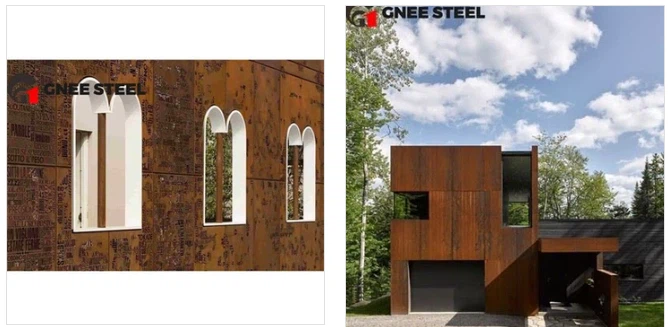
A588 Grade A is a high-strength, low-alloy (HSLA) structural steel known as "weathering steel" (often called Corten), prized for its excellent atmospheric corrosion resistance, developing a stable, protective rust-like patina, making it ideal for unpainted applications like bridges, buildings, and rail cars where reduced maintenance is desired, offering superior corrosion resistance compared to regular carbon steel. It has a minimum yield strength of 50 ksi (345 MPa) and is used in welded, bolted, or riveted constructions where durability and aesthetics are important.
Key Characteristics
Corrosion Resistance: Forms a protective oxide layer, slowing further corrosion; four times more resistant than untreated carbon steel.
High Strength: Minimum yield strength of 50 ksi (345 MPa), allowing for lighter designs.
Appearance: Develops a unique, aesthetically pleasing rust-like finish when exposed to the elements.
Applications: Bridges, buildings, rail cars, highway structures, tanks, and architectural features.
Grades: Available in Grades A, B, C, and K, with Grade A typically having specific compositional ranges for elements like Manganese, Chromium, and Copper.
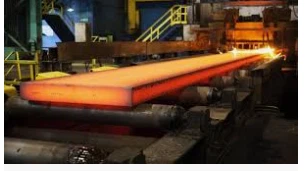
What is the yield strength of A588 Grade A?
The minimum yield strength of ASTM A588 Grade A steel is 50 ksi (345 MPa) for structural shapes and plates with a thickness up to 4 inches (100 mm).
For thicker material, the specified yield strength decreases as follows:
| Product Thickness / Section Size | Minimum Yield Strength (0.2% Offset) |
|---|---|
| Up to 4.0 in. (100 mm) thick | 50 ksi (345 MPa) |
| Over 4.0 in. to 5.0 in. (100 to 125 mm) | 46 ksi (315 MPa) |
| Over 5.0 in. to 8.0 in. (125 to 200 mm) | 42 ksi (290 MPa) |
Important Context for A588 Grade A:
Material Type: It is a high-strength low-alloy (HSLA) weathering steel, designed to form a protective rust patina when exposed to the atmosphere, eliminating the need for painting in many applications.
Tensile Strength: The minimum tensile strength is 70 ksi (485 MPa).
Key Distinction from A572 Grade 50: While both have a 50 ksi yield strength, the core difference lies in chemistry and corrosion performance. A588 Grade A contains alloying elements like copper, chromium, and nickel to achieve its weathering resistance, which also influences its weldability and cost.
Design Note: The 4-inch thickness rule is critical. For most standard structural sections (like W-shapes under 4" thick), the 50 ksi value applies. Always verify the exact thickness of the product being specified.
In summary, for the vast majority of structural applications (using material ≤ 4 inches thick), A588 Grade A has a 50 ksi minimum yield strength, coupled with its signature atmospheric corrosion resistance.
1. What is A588 Grade A steel used for?
A588 Grade A is primarily used for structural applications like bridges, buildings, and outdoor construction where its atmospheric corrosion resistance (weathering steel) is valuable.
2. What is the yield strength of A588 Grade A?
The minimum yield strength of A588 Grade A is 50 ksi (345 MPa) for sections up to 4 inches (100 mm) thick.
3. How does A588 Grade A differ from A572 Grade 50?
The key difference is corrosion resistance: A588 Grade A is a weathering steel that forms a protective patina, while A572 Grade 50 is a standard high-strength low-alloy (HSLA) steel requiring paint or coating for corrosion protection.
4. Is A588 Grade A weldable?
Yes, it is readily weldable using common processes like SMAW, GMAW, and FCAW, though it requires proper low-hydrogen practices and may need specific filler metals to match the weathering properties.
5. What is the corrosion resistance of A588 Grade A?
It offers approximately 4-6 times better atmospheric corrosion resistance than plain carbon steel due to its alloying elements (like Cu, Cr, Ni), which form a stable, adherent rust patina.
6. Does A588 Grade A steel require painting?
No, painting is not required for corrosion protection; it is designed to be used bare (unpainted) to form a protective patina. Paint may be used for aesthetic purposes.
7. What is the chemical composition of A588 Grade A?
It contains alloying elements like copper (Cu), chromium (Cr), and nickel (Ni) for weathering resistance. Key limits: Carbon max 0.19%, Phosphorus max 0.04%, Copper 0.25-0.40%.
8. What is the European equivalent of A588 Grade A?
The closest European weathering steel equivalent is S355J0W or S355J2W according to EN 10025-5, which offers similar corrosion resistance and strength.
9. Can A588 Grade A be used in coastal environments?
It can be used, but performance may be reduced in severe coastal (salt-rich) or highly industrial atmospheres. Specific grades like A588 Grade C or more resistant alloys are often recommended for such conditions.
10. What are the disadvantages of A588 Grade A?
Potential disadvantages include: higher initial cost than standard steel, possible runoff staining on surrounding surfaces during patina formation, and reduced corrosion resistance in constantly wet or highly saline environments.
Full specification and details are available on request. The above information is provided for guidance purposes only. For specific design requirements please contact our technical sales staff.
