


The effective use of S460Q high-strength steel in construction is highly specialized and targeted. It is not used in general building frames or typical bridges. Instead, it is deployed in specific, weight-critical, high-performance structural components where its extreme strength-to-weight ratio justifies its high cost and fabrication complexity.
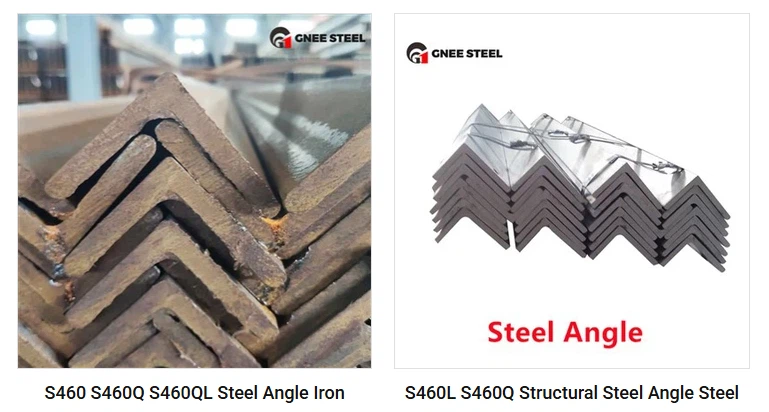
Here are the effective, targeted applications of S460Q in construction and heavy civil engineering:
1. Primary Guiding Principle
S460Q is used where reducing mass is a primary design driver, either to:
Increase payload or capacity.
Enable transportation or erection of larger components.
Reduce foundation loads.
Achieve longer spans or more ambitious designs that lower-grade steels cannot support.
2. Targeted Applications in Construction & Heavy Civil Engineering
A. Movable & Heavy Lifting Structures
This is the most common and effective use.
Mobile Crane Booms and Jibs:
Use: The main telescoping booms of high-capacity mobile cranes.
Why S460Q? The high strength allows the boom to be lighter, which increases the crane's lifting capacity for a given counterweight and enables longer reach. The steel's toughness is critical for handling dynamic loads.
Tower Crane Jibs and Mast Sections:
Use: Critical components of high-rise construction tower cranes.
Why S460Q? Allows cranes to be taller and have longer reaches without becoming prohibitively heavy, simplifying assembly and increasing load charts.
Bridge Launching Girders and Heavy Launching Noses:
Use: Temporary structures used to incrementally launch prefabricated bridge segments into place.
Why S460Q? Minimizes the dead weight of the launching equipment itself, allowing it to support heavier bridge segments. This is a classic weight-saving = direct performance gain application.
B. Specialized Bridge Components
For specific, highly stressed elements in advanced bridge designs.
Hybrid Bridge Girders:
Use: Using S460Q for the top and bottom flanges of plate girders in the mid-span region (where bending moments are highest), while using S355 for the web and other parts.
Why S460Q? This "hybrid" design optimizes material use, placing the highest strength steel only where it is most needed, leading to significant weight savings in long-span bridges.
Articulated Connection Elements in Cable-Stayed & Suspension Bridges:
Use: Anchorages, cable clamps, and stiffening girder connections.
Why S460Q? Handles extremely high localized stresses in a compact form factor. Its high toughness ensures safety under fatigue loading from wind and traffic.
Movable Bridge Components (Bascule, Lift, Swing Bridges):
Use: The counterweight trusses, lifting arms, and pivot mechanisms.
Why S460Q? Reducing the weight of moving parts decreases the required motor power and energy consumption, making operation more efficient.
C. Critical Components in High-Rise & Special Structures
Mega-Bracing and Outrigger Systems in Skyscrapers:
Use: Diagonal braces or outrigger trusses that connect the core to perimeter columns to resist lateral wind loads.
Why S460Q? Allows these crucial stiffness elements to be stronger yet more slender, freeing up valuable floor space and architectural flexibility.
Long-Span Transfer Trusses:
Use: Beams that must support multiple columns from above (e.g., creating column-free spaces at ground level).
Why S460Q? The reduced depth and weight of the transfer truss are often architecturally and structurally critical.
D. Advanced Modular & Prefabricated Construction
Modular Units for Remote or Rapid Deployment:
Use: Prefabricated bridge systems (like Bailey bridge variants), emergency shelters, and rapidly deployable military structures.
Why S460Q? Maximizes strength while minimizing module weight, which is crucial for airlift, transport, and manual handling in the field.
3. Key Advantages Realized in These Uses
Mass Reduction: 20-30% weight savings compared to S355 steel for the same load capacity.
Improved Fatigue Performance: The clean, quenched & tempered microstructure offers excellent resistance to crack initiation under cyclic loading (vital for cranes and bridges).
Low-Temperature Reliability: The "QL" toughness (-40°C) ensures integrity in cold climates for exposed structures.
Space Efficiency: Enables stronger, slimmer structural members, a key benefit in architectural design.
4. Critical Constraints & Why It's NOT Used Everywhere
The "effective" use is tempered by significant challenges:
Very High Cost: S460Q is 2-3 times more expensive than S355JR.
Complex Fabrication: Requires specialized welding procedures (mandatory pre-heat, strict interpass temperature control, low-hydrogen processes, often post-weld heat treatment). Not every fabricator is qualified.
Limited Availability: Typically supplied as plate. Not readily available in standard rolled sections (I-beams, angles).
Diminishing Returns: For most static building frames, the cost and complexity far outweigh the benefit of weight savings. S355 or S420 are more economical.
Brittle Fracture Risk: If not fabricated correctly, the high strength can come at the cost of reduced ductility.
Comparison: When to Choose S460Q vs. Other Steels
| Scenario | Recommended Steel | Reason |
|---|---|---|
| Standard office building frame | S355 | Fully adequate, cost-effective. |
| Heavy industrial plant with thick plates | S355N or S420M | Better toughness/strength, easier to weld than S460Q. |
| Long-span bridge girder (hybrid design) | S460Q (flanges) + S355 (web) | Optimal material use where stresses are highest. |
| Mobile crane boom | S460Q/QL or S690Q | Mandatory. Weight savings directly increase revenue (lifting capacity). |
| Critical welded connection in Arctic bridge | S460QL1 | Needed for combined high strength and -60°C toughness. |
| Architecturally exposed slender bracing | S460Q | Allows for minimal, elegant cross-sections. |
Conclusion: The Effective Niche
S460Q is not a general construction material. Its effective use is as a "strategic alloy" in engineered systems where mass is the primary constraint. It shines in the moving parts of construction equipment (cranes), specialized bridge elements, and advanced architectural applications where its premium cost is offset by unmatched performance gains in strength, weight, and fatigue life. Its deployment always requires close collaboration between designer, steel producer, and a highly skilled fabricator.