


SA387 Grade 11 Class 1 is a low-alloy steel plate specifically designed for pressure vessels, primarily composed of carbon and chromium with trace alloying elements. It boasts excellent high-temperature strength and moderate corrosion resistance, making it widely applied in petrochemical, refinery and related high-temperature pressure equipment.
|
SA387 Gr.11 CL.1 Chemical Composition |
|||||||
|
Grade |
The Element Max (%) |
||||||
|
C |
Si |
Mn |
P |
S |
Cr |
Mo |
|
|
SA387 Gr.11 Cl.1 |
0.04-0.17 |
0.44-0.86 |
0.35-0.73 |
0.035 |
0.035 |
0.94-1.56 |
0.40-0.70 |
|
Grade |
SA387 Gr.11 CL.1 Mechanical Property |
|||
|
Thickness |
Yield |
Tensile |
Elongation |
|
|
SA387 Gr.11 Cl.1 |
mm |
Min Mpa |
Mpa |
Min % |
|
t≦50 |
240 |
415-585 |
22 |
|
|
50<t≦200 |
240 |
415-585 |
19 |
|
 Technical Processing
1. Heat Treatment (The Foundation of Properties)
As per ASME specifications, Class 1 material must undergo specific thermal cycles to balance strength and ductility:
Normalizing: Heating the steel to a range of 1650°F - 1750°F (900°C - 955°C) followed by air cooling to refine the grain structure.
Tempering: Mandatory after normalizing. The minimum tempering temperature is 1150°F (620°C). This step ensures the material achieves its Class 1 tensile properties (60–85 ksi) while improving toughness.
Accelerated Cooling: For thick sections, liquid quenching or forced air cooling may be used, followed by immediate tempering to maintain uniform properties through the thickness.
2. Thermal Cutting and Forming
Preheated Cutting: Before oxy-fuel or plasma cutting, the plate should be preheated to approximately 250°F - 300°F (120°C - 150°C) to prevent edge cracking in the Heat Affected Zone (HAZ).
Cold Forming: Suitable for minor curvature. If the fiber elongation exceeds 5% during cold work, a stress-relief heat treatment is generally required.
Hot Forming: Performed at 1650°F - 1925°F (900°C - 1050°C). Crucial: If hot forming is performed, the plate must undergo a full re-normalization and tempering cycle to restore its certified mechanical properties.
3. Welding Process (P-Number 4)
Grade 11 steel is susceptible to hydrogen cracking and hardening, requiring strict weld procedure specifications (WPS):
Preheating: Mandatory preheat between 300°F and 500°F (150°C - 260°C) depending on the thickness and welding method.
Interpass Temperature: Must be monitored and typically kept below 600°F (315°C) to prevent excessive grain growth.
Consumables: Low-hydrogen electrodes (e.g., E8018-B2) or matching Cr-Mo filler wires must be used.
4. Post-Weld Heat Treatment (PWHT)
PWHT is a vital processing step for all SA387 Gr. 11 fabrications:
Temperature Range: Usually performed between 1200°F and 1300°F (650°C - 705°C).
Function: It reduces residual stresses from welding and improves the ductility of the weld joint and HAZ.
Control: Heating and cooling rates are strictly controlled (e.g., not exceeding 200°C/hr) to avoid secondary thermal stresses.
5. Surface and Inspection Processing
De-scaling: Sandblasting or pickling is used to remove the oxide scale formed during heat treatment.
Non-Destructive Testing (NDT):
Ultrasonic Testing (UT): To detect internal laminations or defects.
Magnetic Particle Testing (MT): Performed after PWHT to check for surface or delayed cracking in the welds.
Key Advantages
The primary advantages of Grade 11 Class 1 stem from its specific chemical and mechanical balance:
Superior Thermal Stability: Molybdenum enhances high-temperature strength and creep resistance, ensuring the material does not deform under prolonged thermal stress.
Enhanced Oxidation & Corrosion Resistance: Chromium content provides critical protection against oxidation and acidic media, specifically making it resistant to sour gas (𝐻2𝑆) applications.
Optimal Ductility (Class 1 Specific): While Class 2 offers higher strength, Class 1 provides superior elongation (min. 22%), making it more suitable for complex forming and fabrication without sacrificing high-temperature integrity.
Cost-Effective Durability: Compared to stainless steel, it is more economical for high-temperature pressure service while providing significantly better performance than standard carbon steels.
Excellent Fabricability: It maintains good weldability and can be easily cut and drilled when proper preheating and PWHT procedures are followed.
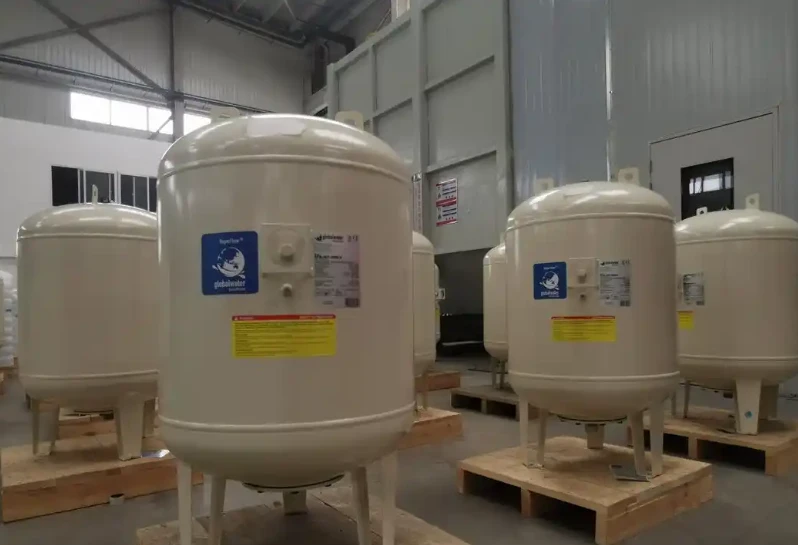
Primary Applications
| Industry | Common Equipment / Components |
|---|---|
| Oil & Gas / Refineries | Pressure vessels, reactors, separators, and storage tanks for hot media. |
| Petrochemical | Heat exchanger shells, tubing, and process vessels for acidic/sour environments. |
| Power Generation | Welded boilers, steam drums, furnace components, and high-temperature ducting. |
| Energy Engineering | High-pressure steam piping systems, flanges, valves, and pipe clamps. |
Why Choose Us :
You can get the perfect material according to your requirement at the least possible price.
We also offer Reworks, FOB, CFR, CIF, and door to door delivery prices. We suggest you to do deal for shipping which will be quite economical.
The materials we provide are completely verifiable, right from raw material test certificate to the final dimensional statement.(Reports will show on requirement)
We guarantee to give a response within 24hours(usually in the same hour)
You can get stock alternatives, mill deliveries with minimizing manufacturing time.
We are fully dedicated to our customers. If it will not possible to meet your requirements after examining all options, we will not mislead you by making false promises which will create good customer relations.
If you want to learn more about (SA387 Gr.11 Cl.1)GNEE's products, you can send an email to beam@gneesteelgroup.com. We are more than happy to assist you.
Can this steel grade be used in cryogenic environments?
No, it is not suitable. Its toughness decreases sharply at low temperatures, making it prone to brittle fracture. Cryogenic applications need specialized steels.
What post-weld heat treatment (PWHT) is required for this steel?
Common PWHT is tempering at 620-675°C, held for a certain time to relieve welding stress, improve toughness and stabilize mechanical properties.
What is the hardness range of SA387 Grade 11 Class 1?
After heat treatment, its Brinell hardness (HB) is usually between 137-187, balancing strength and machinability for industrial processing.
Can SA387 Grade 11 Class 1 be machined easily?
It has moderate machinability. Using high-speed steel or carbide tools with proper cutting parameters ensures smooth machining without excessive tool wear.
What is the elongation rate of this steel grade?
The minimum elongation rate is 22% (in 50mm). This indicates good ductility, allowing slight deformation without fracture under external force.
What is the application of this steel in power plants?
It is used to make boiler tubes, steam headers and pressure vessels in thermal power plants, enduring high-temperature and high-pressure steam conditions.
How to identify SA387 Grade 11 Class 1 plates?
It can be identified by material certificates, chemical composition analysis, hardness testing and microstructure inspection to confirm compliance with standards.
How to prevent corrosion of this steel grade in service?
Regular inspection, anti-corrosion coatings and controlling service environment (avoiding strong acids/bases) can effectively prevent corrosion and extend service life.
What is the typical thickness range of SA387 Grade 11 Class 1 plates?
It is commonly produced in thicknesses from 6mm to 200mm, suitable for various pressure vessel structures, from thin-walled to thick-walled components.
Is this steel grade suitable for high-pressure applications?
Yes, it is. With excellent high-temperature strength and pressure resistance, it meets the requirements of high-pressure equipment in refineries and power plants.
What is the microstructure of SA387 Grade 11 Class 1 after heat treatment?
After normalizing and tempering, its microstructure is tempered bainite or ferrite-pearlite, which provides good strength and toughness.