


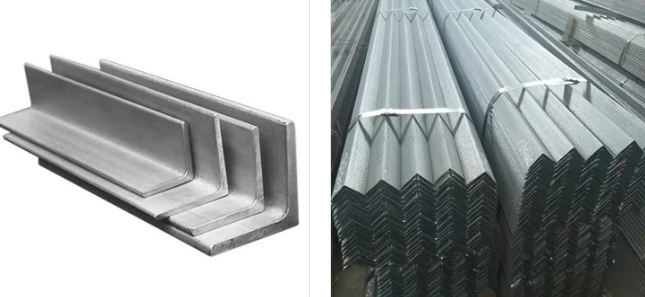
S275JR is a non-alloy, low-carbon structural steel grade defined under the European standard EN 10025-2. It is one of the most widely used steel grades in construction and engineering due to its balanced mechanical properties and cost-effectiveness.
Key Specifications
The designation "S275JR" provides a technical summary of the material's properties:
S: Indicates it is a Structural steel.
275: Specifies a minimum yield strength of 275 MPa (for thicknesses ≤ 16mm).
JR: Indicates a Charpy V-notch impact test requirement of at least 27 Joules at room temperature (+20°C).
Applications
S275JR is primarily used for manufacturing long and flat products for welded or riveted structures. Common uses include:
Construction: Beams, columns, and plates for buildings and bridges.
Engineering: Low-load machine parts like bushings, shafts, and axles.
Industry: Storage tanks, oil and gas platforms, and rail industry components.
Key Advantages
Weldability: Its low carbon content makes it exceptionally easy to weld using standard methods.
Machinability: Offers good machining performance similar to other mild steels.
Formability: Can be easily curved, folded, or cold-formed for various structural shapes.

S275JR is primarily used in general structural applications where higher strength than S235 grades is required, without the need for low-temperature impact toughness. Its balanced properties make it a versatile and widely used steel grade.
Typical Applications Include:
Building Construction: Structural frames, columns, beams, and roof trusses for industrial halls, commercial buildings, and multi-story structures.
Bridges & Infrastructure: Components for road bridges, pedestrian bridges, and support structures where strength and weldability are key.
Heavy Machinery & Equipment: Bases, frames, booms, and supporting parts for cranes, agricultural machinery, and mining equipment.
Transportation: Chassis components for trailers, truck frames, and rail car undercarriages.
General Fabrication & Engineering: Platforms, walkways, staircases, guardrails, storage racks, and a wide variety of custom-fabricated parts.
Why Choose S275JR Over Other Grades?
Higher Strength than S235JR: Its 275 MPa minimum yield strength offers approximately 17% higher load-bearing capacity than S235JR, allowing for potential weight savings or increased safety margins.
Good Weldability & Formability: Like other common structural steels, it is easily welded, cut, and formed using standard methods.
Cost-Effective: It provides a good balance between increased strength and material cost, making it an economical choice for many projects.
Standardized & Readily Available: As a fundamental EN 10025-2 grade, it is widely produced and stocked internationally.
Key Limitation: S275JR is impact-tested only at +20°C. Therefore, it is not recommended for primary structural components exposed to sustained temperatures below 0°C, where grades like S275J0 or S275J2 should be specified. For outdoor use, corrosion protection (painting, galvanizing) is required.
1. What is S275JR steel?
S275JR is a non-alloy structural steel grade per EN 10025-2, with a minimum yield strength of 275 MPa and guaranteed impact toughness at room temperature (+20°C).
2. What is the yield strength of S275JR?
The minimum yield strength of S275JR is 275 MPa for material thickness up to 16 mm, decreasing slightly for thicker sections as per the standard.
3. What is the difference between S235JR and S275JR?
S275JR has a higher minimum yield strength (275 MPa vs. 235 MPa), providing greater load-bearing capacity for similar dimensions and applications.
4. What does the 'JR' mean in S275JR?
The 'JR' indicates that the steel is Charpy V-notch impact tested at +20°C with a minimum absorbed energy of 27 Joules, ensuring room temperature toughness.
5. Is S275JR equivalent to ASTM A36?
While close in strength, S275JR (275 MPa yield) is slightly stronger than standard A36 (250 MPa yield) and includes a mandatory impact test, so they are not direct equivalents.
6. What is S275JR used for?
It is widely used in general construction, structural frames, machinery components, bridges, and industrial applications requiring higher strength than S235 grades.
7. Can S275JR be welded?
Yes, S275JR offers good weldability using common methods like SMAW, MAG, or TIG, without requiring pre-heating under normal conditions and moderate thicknesses.
8. What is the chemical composition of S275JR?
Its composition typically includes max 0.21% C, max 1.50% Mn, and controlled limits for phosphorus and sulfur (e.g., P ≤ 0.035%, S ≤ 0.035%).
9. Is S275JR corrosion resistant?
No, S275JR is not corrosion-resistant. Like other carbon structural steels, it requires protective coatings such as painting or galvanizing for outdoor use.
10. What are the mechanical properties of S275JR?
Key properties include a yield strength ≥275 MPa (for t≤16mm), tensile strength of 410-560 MPa, and minimum elongation of 22-23% depending on thickness.
Full specification and details are available on request. The above information is provided for guidance purposes only. For specific design requirements please contact our technical sales staff.
