


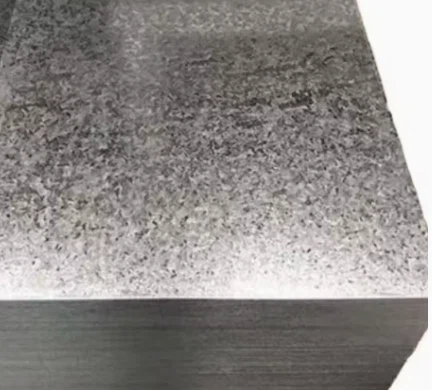
Q460E is a high-strength low-alloy structural steel under China's GB/T 1591 - 2018 standard. It stands out in the Q460 steel series for its excellent low-temperature toughness, being specifically designed for ultra-low-temperature environments down to -40°C. It is widely used in extreme cold and heavy-load engineering scenarios.
Grade Interpretation and Core Positioning
The naming of Q460E directly reflects its key performance indicators and application orientation:
- Q: The abbreviation of "Quxiangqiangdu" (yield strength) in Chinese, indicating that the steel grade is classified based on the yield strength index.
- 460: It means the minimum yield strength of the steel plate with a thickness ≤50mm is 460MPa. As the thickness increases, the yield strength decreases slightly, such as 440MPa for 50 - 100mm thick plates and 400MPa for 100 - 150mm thick plates.
- E: Represents the top quality grade in the Q460 series. It requires passing the Charpy V-notch impact test at -40°C, with the impact absorption energy not less than 40J. This is what distinguishes it from Q460D (impact test at -20°C) and lower-grade Q460 series steels, making it the preferred material for extremely cold environments.
Key Chemical Composition (wt%)
The chemical composition of Q460E is precisely adjusted to balance high strength and low-temperature toughness, with strict control over harmful impurities. The specific components are as follows:
| Element | Content Range | Core Function |
|---|---|---|
| Carbon (C) | ≤0.20% | Guarantees the steel's weldability while providing a foundation for strength, avoiding excessive brittleness caused by high carbon content. |
| Manganese (Mn) | ≤1.80% | Strengthens the solid solution of the steel, effectively improving its strength and toughness. |
| Silicon (Si) | ≤0.55% | Plays a role in deoxidation during smelting and enhances the steel's hardness and strength. |
| Phosphorus (P) / Sulfur (S) | ≤0.025% / ≤0.025% | These harmful elements are strictly limited to prevent low-temperature embrittlement and hot cracking during processing. |
| Niobium (Nb)/Vanadium (V)/Titanium (Ti) | Added in appropriate amounts | Refine the grain structure of the steel through precipitation strengthening, thereby improving its overall toughness and strength. |
Outstanding Mechanical Properties
Q460E maintains stable and reliable mechanical properties even in ultra-low-temperature environments, and its main indicators are as follows:
- Tensile strength: Maintained at 550 - 720MPa, which can meet the load-bearing requirements of heavy-duty structural parts.
- Elongation: ≥17%, ensuring a certain degree of ductility, facilitating forming processes such as bending and stamping.
- Impact toughness: At -40°C, the impact absorption energy is not less than 40J. This excellent low-temperature toughness can effectively prevent brittle fracture accidents in extremely cold conditions.
- Z-direction performance: It can be customized into Z15, Z25, Z35 grades according to needs, which is suitable for thick-plate components that need to resist layered tearing in welding projects.
Typical Application Scenarios
Relying on its excellent ultra-low-temperature performance and high strength, Q460E is widely used in multiple fields involving extremely cold regions and heavy loads:
- Construction and infrastructure in cold regions: It is used for the steel structure framework of high-rise buildings, bridge piers and main girders in northern China, Siberia and other regions, as well as the support structures of wind power towers in alpine areas.
- Engineering machinery and special vehicles: It serves as the arm structure of cranes, the chassis of excavators, and the frame of mining trucks operating in extremely cold mines. It is also applied to the body frame of polar expedition vehicles.
- Energy and marine equipment: It is used for high-pressure transmission pipelines in cold areas, auxiliary structures of offshore drilling platforms, and the shell of low-temperature storage tanks for oil and gas.
- Special construction projects: It is used for the modular building frame of polar research stations, which can maintain structural stability even in environments as low as -50°C.
What are the main differences between Q460E and Q460D, and in which cases must Q460E be used instead of Q460D?
The core difference lies in the impact test temperature and toughness. Q460E is tested at -40°C, while Q460D is tested at -20°C. When the project is located in areas where the winter temperature is often below -20°C, such as northern Heilongjiang in China or polar regions, Q460E must be used. For example, when manufacturing crane arms used in polar expeditions, Q460D's toughness will decline sharply in -40°C environments, increasing the risk of structural fracture, while Q460E can remain stable.
What special measures are needed for the welding of thick Q460E plates (≥80mm) to ensure welding quality?
Three key measures should be taken. First, preheat the base metal to 100 - 120°C before welding to reduce the temperature difference between the weld and the base metal and avoid cold cracks. Second, select low-hydrogen welding materials, because excessive hydrogen in the weld will damage the low-temperature toughness of Q460E. Finally, perform post-weld heat treatment at 550 - 600°C after welding to eliminate residual stress. This can prevent the weld from becoming brittle and ensure that the joint area also has good toughness at -40°C.
Can Q460E be used in offshore deep-sea equipment that is both in low-temperature environments and corroded by seawater?
Q460E can adapt to the low-temperature environment of offshore areas, but it cannot resist the corrosion of seawater alone. Seawater contains a large amount of salt, which will cause severe corrosion to the steel. If it is to be used for offshore deep-sea equipment, surface anti-corrosion treatment must be carried out. For example, hot-dip galvanizing or applying a heavy-duty anti-corrosion coating with epoxy zinc-rich primer and polyurethane topcoat. Alternatively, it can be used in combination with corrosion-resistant alloy materials to achieve both low-temperature resistance and corrosion resistance.
What are the approximate equivalent grades of Q460E in international standards, and what should be noted during substitution?
In the European standard, Q460E is roughly equivalent to S460NL (EN 10025 - 3), which has similar yield strength and low-temperature impact performance. In the American standard, it is comparable to ASTM A572 Grade 65, but there are differences in chemical composition and impact test standards. When substituting in cross-border projects, it is necessary to focus on verifying whether the impact test temperature and impact energy of the alternative grade meet the project requirements. At the same time, welding process parameters should be adjusted according to the differences in chemical composition to ensure the consistency of structural performance.