


What are the properties and applications of SA387 Grade 11 Class 1?
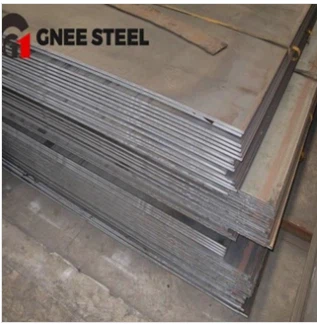
As a pressure vessel grade steel for use in elevated temperature service, is used in a variety of industries and is highly effective, particularly in the oil, gas and petrochemical industry, where liquids and gases are often stored at higher temperatures.The higher levels of chromium also provide excellent corrosion and oxidation resistance, which is a must in sour gas applications.
Properties of SA387 Grade 11 Class 1
SA387 Grade 11 Class 1 is a chromium-molybdenum alloy steel plate supplied in the annealed condition. Its properties are defined by both its chemical composition and this specific heat treatment.
1. Chemical Composition
Chromium (Cr): 1.00 - 1.50% – Provides oxidation and corrosion resistance at elevated temperatures.
Molybdenum (Mo): 0.45 - 0.65% – Enhances high-temperature strength and creep resistance, and reduces susceptibility to temper embrittlement.
Carbon (C): 0.10 - 0.20%
Other Elements: Manganese, Silicon, Phosphorus, and Sulfur within specified limits.
Key Note: The composition is identical to Grade 11 Class 2. The difference lies solely in the heat treatment.
2. Mechanical Properties (Annealed Condition)
Tensile Strength: 415 - 585 MPa (60 - 85 ksi)
Yield Strength (min): 205 MPa (30 ksi)
Elongation (min): 22% (in 50 mm / 2 in.)
Hardness: Typically ≤ 163 HBW (Brinell). The annealed state results in a soft, ductile microstructure (ferrite and pearlite).
Key Characteristic: Lower strength but significantly higher ductility and formability compared to Class 2 (N&T).
3. Fabrication Properties
Formability: Excellent. The annealed, softened state makes it the preferred choice for severe cold forming operations (e.g., rolling, dishing of heads, deep shells) where Class 2 material might risk cracking.
Weldability: Good, but requires strict procedure controls:
Mandatory Preheating: 150-205°C (300-400°F) to prevent hydrogen-induced cracking.
Mandatory Post-Weld Heat Treatment (PWHT): Required for all weldments to relieve stresses, temper the heat-affected zone (HAZ), and restore corrosion resistance. The final vessel PWHT often serves as the tempering cycle for the entire component.
4. High-Temperature Performance
Service Temperature: Suitable for continuous service typically up to ~595°C (1100°F).
Oxidation & Creep Resistance: The Cr-Mo composition provides good resistance to scaling (oxidation) and creep deformation under stress at elevated temperatures.
Primary Applications of SA387 Grade 11 Class 1
This material is specified when the fabrication process demands maximum formability prior to the final heat treatment of the completed vessel. Its applications overlap with Class 2 but are chosen for specific manufacturing reasons.
Typical Uses Include:
Pressure Vessels Requiring Complex Forming:
Dished and Hemispherical Heads that require deep drawing or severe cold forming.
Cylindrical shells with tight radii or complex geometries.
Heat Exchanger Components like channel covers and formed tubesheets.
Industries:
Petrochemical & Refining: Reactors, separators, and columns in hydrotreating and hydrocracking units, especially where components are heavily formed before the final vessel PWHT.
Power Generation: Certain boiler components and high-temperature pressure vessels.
Chemical Processing: Vessels exposed to corrosive processes at elevated temperatures.
Why Choose Class 1 Over Class 2?
The decision is an engineering trade-off:
Choose Class 1 when fabricability and ease of severe forming are the primary concerns during manufacturing. The designer knows the final strength will be developed during the vessel's final PWHT.
Choose Class 2 when higher as-supplied strength is needed for design calculations, allowing for potential weight savings, and where only moderate forming is required.
In summary:
SA387 Grade 11 Class 1 is the preferred formable version of the common 1.25Cr-0.5Mo alloy, selected specifically to facilitate complex manufacturing processes in the construction of high-temperature pressure vessels, with the understanding that its final mechanical properties will be established during post-fabrication heat treatment.
1. What is the key mechanical property difference between SA387 Grade 11 Class 1 and Class 2?
SA387 Grade 11 Class 1 is supplied in the annealed condition, offering lower strength but higher ductility and better formability, while Class 2 is normalized and tempered for higher yield and tensile strength, making Class 1 preferable for severe cold forming applications where stress relief will follow fabrication.
2. What are the primary high-temperature applications for SA387 Grade 11 Class 1 plates?
SA387 Grade 11 Class 1 is commonly used in petrochemical and power generation industries for components like hydrogen reformers, catalytic reactors, and high-temperature heat exchangers that operate up to about 595°C (1100°F), where its 1.25% chromium and 0.5% molybdenum content provide good oxidation and creep resistance.
3. Why is post-weld heat treatment (PWHT) critical for SA387 Grade 11 Class 1 weldments?
PWHT is mandatory for SA387 Grade 11 Class 1 after welding to relieve residual stresses, prevent hydrogen-induced cracking, and restore the microstructure in the heat-affected zone, typically performed at 620–690°C (1150–1275°F) to ensure long-term integrity in high-temperature service.
Full specification and details are available on request. The above information is provided for guidance purposes only. For specific design requirements please contact our technical sales staff.
