


S275J2 is a European standard (EN 10025-2) non-alloy structural steel known for its good weldability, formability, and toughness, especially at low temperatures, indicated by the "J2" (27 joules impact energy at -20°C). It offers a minimum yield strength of 275 MPa, making it a versatile, high-tensile steel used in bridges, power plants, and wind towers, often supplied normalized or control rolled.
Key Characteristics:
S275: Indicates a minimum yield strength of 275 MPa (N/mm²).
J2: Signifies a Charpy V-notch impact test at -20°C, requiring at least 27 Joules of energy.
Low Carbon: A low-carbon, high-tensile steel that is easily weldable.
Properties:
Yield Strength: Minimum 275 MPa.
Tensile Strength: 430-580 MPa.
Elongation: Around 23%.
Hardness: Typically 130-180 HB (Brinell).
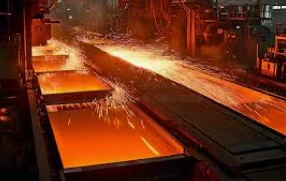
S275J2 is primarily used in structural applications where components are exposed to sub-zero temperatures, requiring guaranteed impact toughness at -20°C to prevent brittle fracture. Its combination of moderate strength and certified low-temperature performance makes it a key material for cold-climate engineering.
Typical Applications Include:
Cold-Climate Infrastructure: Bridges, overpasses, pedestrian walkways, and transmission towers in regions with harsh winters (e.g., Scandinavia, Northern Europe, Canada, mountainous areas).
Offshore & Coastal Structures: Fixed platforms, wind turbine towers, harbor facilities, and jetties exposed to freezing sea spray and low air temperatures.
Industrial & Energy Facilities: Unheated warehouses, storage tanks, chemical plants, and pipeline supports in cold regions.
Heavy Machinery & Transportation: Chassis and frames for mining, forestry, and agricultural equipment operating in freezing conditions; components for rail and heavy transport in cold climates.
Specialized Construction: High-rise building frames, sports stadium roofs, and large-span structures in zones subject to extreme winter temperatures.
Why Choose S275J2 Over Other Grades?
Versus S275JR: S275J2 provides mandatory toughness at -20°C, while S275JR is only certified for +20°C. This makes S275J2 essential for safety in freezing environments.
Versus S355J2: S275J2 offers sufficient strength for many applications at a lower cost than the higher-strength S355J2, where the extra strength is not required by design.
Code Compliance: It is specified in international codes (e.g., Eurocodes) for primary structural elements in "low-temperature zones" where the minimum design temperature reaches -20°C or below.
Important Note: S275J2 is not corrosion-resistant and requires protective coatings (e.g., hot-dip galvanizing, specialized painting systems) for long-term outdoor exposure. For even colder environments (below -20°C), grades with lower temperature ratings (e.g., S275J2H, S355K2) or arctic-grade steels may be required.
Chemical composition % of steel S275J2 (1.0145): EN 10025-2-2004
| Nominal thickness =< 40(mm) CEV max = 0.40 |
| C | Mn | P | S | Cu | CEV |
| max 0.18 | max 1.5 | max 0.03 | max 0.03 | max 0.55 | max 0.42 |
Equivalent grades of steel S275J2 (1.0145)
Warning! Only for reference
| EU EN |
England BS |
European old EN |
Belgium NBN |
China GB |
Sweden SS |
India IS |
|||||||
| S275J2 |
|
|
|
|
|
|
1. What is S275J2 steel?
S275J2 is a non-alloy structural steel grade per EN 10025-2, with a minimum yield strength of 275 MPa and guaranteed impact toughness at -20°C.
2. What does the 'J2' in S275J2 mean?
The 'J2' indicates Charpy V-notch impact testing at -20°C, ensuring a minimum absorbed energy of 27 Joules for use in cold environments.
3. What are the main applications of S275J2?
It is used in structural components exposed to cold climates, such as bridges, offshore platforms, transmission towers, and industrial buildings in regions with harsh winters.
4. What is the difference between S275JR and S275J2?
S275JR is impact tested at +20°C, while S275J2 is tested at -20°C, making J2 suitable for applications where temperatures drop well below freezing.
5. What is the yield strength of S275J2?
The minimum yield strength is 275 MPa for thicknesses up to 16 mm, with decreasing values for thicker sections as per the standard.
6. Can S275J2 be welded?
Yes, S275J2 has good weldability. However, proper procedures-including potential preheating and use of suitable filler metals-are essential, especially for thick sections or welding in cold conditions.
7. What is the chemical composition of S275J2?
It typically contains max 0.20% Carbon, max 1.50% Manganese, and controlled levels of phosphorus and sulfur (e.g., P ≤ 0.035%, S ≤ 0.035%).
8. Is S275J2 equivalent to ASTM A572 Grade 50?
No, S275J2 has lower yield strength (275 MPa vs. 345 MPa) and includes mandatory -20°C impact testing, while A572 Grade 50 generally has no mandatory toughness requirement.
9. What is the difference between S275J2 and S355J2?
S355J2 has a higher minimum yield strength (355 MPa) but similar impact toughness at -20°C, making it stronger for cold-weather applications.
10. Is S275J2 corrosion resistant?
No, S275J2 is not corrosion-resistant. Like other carbon structural steels, it requires protective coatings such as painting or galvanizing for outdoor use.
Full specification and details are available on request. The above information is provided for guidance purposes only. For specific design requirements please contact our technical sales staff.
