


P460M is a high-strength, thermomechanical rolled structural steel grade specified in the EN 10225 standard. It is commonly used in the fabrication of offshore and marine structures, such as platforms, jackets, and ship hulls, where good toughness and weldability are required at low temperatures.
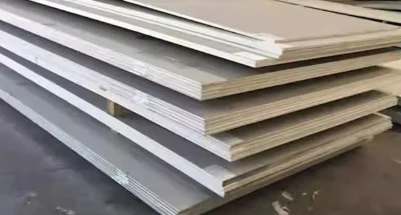
Product Specification
| Category | Details |
| Quality Standard | EN 10028-5 |
| Certifications | ISO 9001, CE, AD 2000-W0, PED, ASME Section II, LR, DNV, BV, SGS |
| Thickness | 6-100mm |
| Width | 900-4800mm |
| Length | 3000-25000mm |
| Weight | Depends on length and width |
| Tolerances | Thickness: ±0.3mm to ±0.5mm, Width: ±10mm, Length: ±15mm |
| Technology | Thermomechanical Rolling, |
| Processing Service | Bending, Welding, Decoiling, Cutting, Punching |
| Shapes | Pressure Vessel Steel Plate, Pressure Vessel Steel Sheet, Pipes, Profiles |
| MOQ (Minimum Order Quantity) | 5 tons (according to the actual tonnage) |
| Lead Time | Typically 7-20 days |
| Price Terms & Payment | Based on customer requirements, T/T, L/C |
| Ports | Qingdao, Lianyungang, Dalian |
| Export Countries | Southeast Asia, Central Asia, Europe, Russia, South America, Middle East, etc. |
| Shipping Method | Offers Sea, Air and Customized Shipping |
Chemical Compositions
| Element | P460M (%) | P460ML1 (%) | P460ML2 (%) |
|---|
| Carbon, C | ≤ 0.20 | ≤ 0.18 | ≤ 0.18 |
| Manganese, Mn | 1.10-1.70 | 1.10-1.70 | 1.10-1.70 |
| Silicon, Si | ≤ 0.50 | ≤ 0.50 | ≤ 0.50 |
| Phosphorus, P | ≤ 0.025 | ≤ 0.025 | ≤ 0.025 |
| Sulfur, S | ≤ 0.015 | ≤ 0.015 | ≤ 0.015 |
| Chromium, Cr | ≤ 0.30 | ≤ 0.30 | ≤ 0.30 |
| Nickel, Ni | ≤ 0.80 | ≤ 0.80 | ≤ 0.80 |
| Copper, Cu | ≤ 0.30 | ≤ 0.30 | ≤ 0.30 |
| Molybdenum, Mo | ≤ 0.08 | ≤ 0.08 | ≤ 0.08 |
| Vanadium, V | ≤ 0.06 | ≤ 0.06 | ≤ 0.06 |
| Niobium, Nb | ≤ 0.05 | ≤ 0.05 | ≤ 0.05 |
| Titanium, Ti | ≤ 0.03 | ≤ 0.03 | ≤ 0.03 |
Mechanical Properties
| Property | P460M | P460ML1 | P460ML2 |
|---|
| Tensile Strength (MPa / psi) | 580-730 MPa / 84,122-105,846 psi | 570-720 MPa / 82,663-104,427 psi | 570-720 MPa / 82,663-104,427 psi |
| Yield Strength (MPa / psi) | ≥ 460 MPa / 66,717 psi | ≥ 460 MPa / 66,717 psi | ≥ 460 MPa / 66,717 psi |
| Brinell Hardness (HB) | 130-175 HB | 130-175 HB | 130-175 HB |
| Rockwell Hardness (HRB) | 70-85 HRB | 70-85 HRB | 70-85 HRB |
| Vickers Hardness (HV) | 130-175 HV | 130-175 HV | 130-175 HV |
| Elongation (%) | ≥ 17% | ≥ 19% | ≥ 19% |
| Elastic Modulus (GPa / psi) | 210 GPa / 30.5 x 10^6 psi | 210 GPa / 30.5 x 10^6 psi | 210 GPa / 30.5 x 10^6 psi |
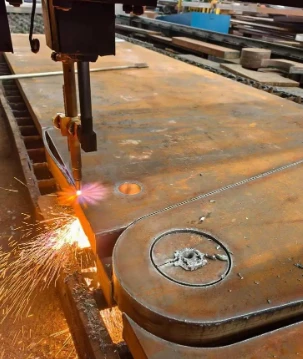 processing
Thermomechanical Rolling: P460M is produced using thermomechanical rolling, which involves controlled heating and cooling during the rolling process. This refines the microstructure, resulting in a fine-grained ferrite-pearlite or bainitic structure that provides high strength and good toughness.
Welding: P460M has excellent weldability and can be joined using common methods such as SMAW, GMAW, FCAW, and SAW. Preheating is generally not required for thinner sections, but may be necessary for thicker plates to prevent hydrogen-induced cracking. Proper heat input control ensures good weld quality and mechanical properties.
Cutting and Forming: The steel can be easily cut using flame cutting, plasma cutting, or laser cutting. It also exhibits good formability, allowing it to be bent, rolled, and shaped into complex structural components without significant loss of strength.
Heat Treatment: While P460M is typically used in the as-rolled or normalized condition, it can undergo further heat treatment such as quenching and tempering to achieve higher strength levels or improved toughness, depending on specific application requirements.
Surface Treatment and Coating: To enhance corrosion resistance, P460M is often subjected to surface treatments such as shot blasting and priming. Protective coatings, including epoxy, polyurethane, or zinc-rich paints, are commonly applied to extend service life in marine and offshore environments.
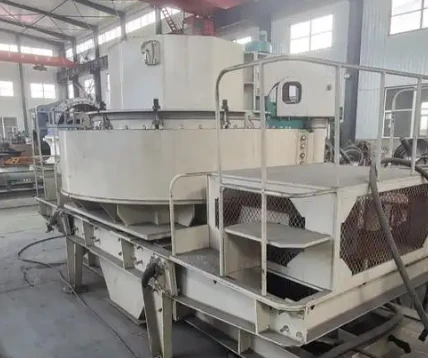 applications
Offshore Platforms: P460M is widely used in the construction of fixed offshore platforms, including jackets, decks, and support structures. Its high strength and good toughness make it ideal for withstanding harsh marine conditions, strong winds, and wave loads.
Marine Vessels: The steel is employed in the fabrication of ship hulls, bulkheads, and other structural components of various marine vessels. Its excellent weldability and low-temperature toughness ensure structural reliability in cold oceans and during long voyages.
Subsea Structures: P460M is used for subsea pipelines, risers, and equipment frames that require high strength and resistance to hydrostatic pressure. Its consistent mechanical properties make it suitable for deepwater applications.
Offshore Wind Turbine Foundations: With the growth of offshore wind energy, P460M has become a preferred material for monopiles, jackets, and transition pieces. Its strength-to-weight ratio helps reduce foundation size and installation costs.
Heavy-Duty Construction Equipment: The steel is also used in the manufacturing of cranes, lifting equipment, and other heavy machinery that demands high load-bearing capacity and durability under dynamic stress.

Why Choose Us :
You can get the perfect material according to your requirement at the least possible price.
We also offer Reworks, FOB, CFR, CIF, and door to door delivery prices. We suggest you to do deal for shipping which will be quite economical.
The materials we provide are completely verifiable, right from raw material test certificate to the final dimensional statement.(Reports will show on requirement)
We guarantee to give a response within 24hours(usually in the same hour)
You can get stock alternatives, mill deliveries with minimizing manufacturing time.
We are fully dedicated to our customers. If it will not possible to meet your requirements after examining all options, we will not mislead you by making false promises which will create good customer relations.
Full specification and details are available on request. The above information is provided for guidance purposes only. For specific design requirements please contact our technical sales staff.
How to perform heat treatment on P460M?
P460M is usually produced by thermomechanical rolling, so additional heat treatment is rarely needed. If required, annealing or tempering can be done to adjust hardness and toughness, but process parameters must be strictly controlled.
What is the density of P460M steel?
The density of P460M is approximately 7.85 g/cm³, the same as ordinary carbon structural steel. This density value is crucial for calculating the weight of structural components during engineering design.
Can P460M be used to make bridge girders?
Yes, P460M is widely used in bridge girder manufacturing. Its high yield strength and tensile strength can reduce the cross-sectional size of girders, saving material costs while ensuring structural stability.
What are the surface quality requirements for P460M?
P460M's surface should be free of cracks, folds, scars, and other defects that affect structural performance. Minor surface imperfections can be repaired by grinding, provided they meet the standard's depth limits.
How to test the mechanical properties of P460M?
Mechanical property tests for P460M include tensile tests (to measure yield and tensile strength), impact tests (to assess toughness), and hardness tests, all conducted in accordance with EN 10025-4 standard requirements.
Is P460M resistant to corrosion?
P460M has basic corrosion resistance in atmospheric environments, but it is not stainless steel. For harsh environments (e.g., marine, chemical), surface treatments like galvanizing or painting are needed to enhance corrosion resistance.
What is the maximum thickness of P460M plates?
The maximum thickness of P460M plates can reach 150 mm or more, depending on the manufacturer's production capacity. Thicker plates may require special rolling processes to ensure uniform mechanical properties throughout the thickness.
Can P460M be used in pressure vessel manufacturing?
Yes, P460M can be used for pressure vessels operating under moderate pressure. It meets the strength and toughness requirements for pressure vessel materials, but must pass strict quality inspections before application.
What is the elongation rate of P460M?
The minimum elongation rate of P460M is 21% (measured in tensile tests). This high elongation ensures the steel has good ductility, allowing it to deform plastically before breaking, which is essential for structural safety.
How to store P460M steel plates?
P460M steel plates should be stored in a dry, well-ventilated warehouse to avoid moisture and rust. They should be placed on wooden supports to prevent contact with the ground and covered with waterproof cloth.