


Important Considerations for SA387 Grade 5 Class 2 Procurement from China
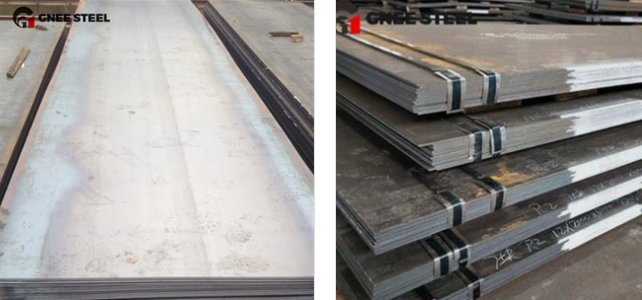
SA387 Grade 5 Class 2 is a chrome-molybdenum alloy steel plate (ASME SA387/ASTM A387) designed for high-temperature, high-pressure applications like boilers and pressure vessels, offering excellent strength and corrosion resistance due to its chromium (Cr) and molybdenum (Mo) content, with Class 2 indicating specific tensile strength properties. It's a weldable steel, ideal for industries needing robust material for extreme conditions, with key elements including ~4-6% Chromium and ~0.4-0.7% Molybdenum, plus strict limits on Carbon, Manganese, Phosphorus, and Sulfur.
In China, SA387 Grade 5 Class 2 is manufactured by a select group of large, advanced steel mills with the capability to produce high-alloy, heat-treated pressure vessel steels for critical applications.
1. Certification & Quality Validation
ASME Certification: Confirm the mill holds a valid ASME Section II "S" Stamp authorization to produce SA-387 material. Not all Chinese mills are ASME-certified for this specific grade.
Testing & Documentation: Require full Mill Test Reports (MTRs) with traceable heat numbers, and verify supplementary tests (e.g., impact tests, UT, HIC/SSC if needed). Chinese mills may follow GB standards (e.g., 14Cr1MoR is a similar grade), but chemical/mechanical ranges can differ slightly from ASTM.
Third-Party Inspection: Use internationally recognized inspectors (e.g., SGS, BV, TÜV) to verify quality and testing at the mill.
2. Market Context
Primary Market: Chinese-produced Grade 5 Class 2 is often used in domestic projects (refineries, coal chemical plants) or exported to price-sensitive markets in Asia, Africa, or the Middle East.
International Project Acceptance: For critical applications in Western markets (e.g., EU, North America), materials from Chinese mills may face additional scrutiny or require specific client/engineering approval due to historical variability in quality consistency.
Export Restrictions: Some high-grade alloy steels may be subject to export controls or quotas.
3. Equivalent Chinese Standard
The closest GB (Chinese) equivalent is 14Cr1MoR , designed for similar high-temperature hydrogen service. However, it is not an exact match-chemical composition and heat treatment requirements differ. For exact SA387 Gr 5 Cl 2, the mill must produce to the ASTM specification.
Procurement Recommendations
Specify Clearly: In purchase orders, explicitly state "SA387 Grade 5 Class 2 per ASTM/ASME SA-387" and list all required tests (e.g., Charpy impact at temperature, UT, HIC).
Verify Certifications: Request proof of the mill's ASME certification and experience producing this specific grade.
Engage Early: Involve your engineering or inspection team to audit the mill's production and testing processes.
Consider Logistics: Lead times may be shorter than European/Japanese mills, but factor in shipping, import duties, and potential delays in customs/documentation.
Summary
While China has the technical capability to manufacture SA387 Grade 5 Class 2, its acceptance in critical international projects depends heavily on mill reputation, valid ASME certification, and rigorous third-party verification. Buyers should prioritize mills like Baosteel or Wuyang Steel with proven export experience and be prepared to invest in extensive quality assurance. For mission-critical applications (e.g., offshore, high-pressure H₂ service), many engineering firms still prefer sourcing from established EU or Japanese mills.
1.What is SA387 Grade 5 Class 2?
Answer: SA387 Grade 5 Class 2 is a chromium-molybdenum alloy steel plate specification for pressure vessels, specifically supplied in the normalized and tempered heat treatment condition for improved properties.
2.What is the chemical composition of SA387 Gr5 Cl 2?
Answer: Its composition includes Chromium (4.00-6.00%), Molybdenum (0.45-0.65%), with maximum limits for Carbon (0.15%), Manganese (0.30-0.60%), Silicon (0.50%), Phosphorus, and Sulfur.
3.How does SA387 Grade 5 Class 2 differ from Class 1?
Answer: The key difference is mandatory heat treatment. Grade 5 Class 2 must be supplied in the normalized and tempered condition, ensuring a specific microstructure and consistent mechanical properties, while Class 1 has more flexible heat treatment options.
4.What are the mechanical properties of SA387 Grade 5 Class 2?
Answer: It has a minimum tensile strength of 515-690 MPa (75-100 ksi) and a minimum yield strength of 310 MPa (45 ksi). The normalized and tempered condition generally provides better toughness.
5.What is SA387 Grade 5 Class 2 used for?
Answer: It is primarily used in high-temperature hydrogen service in petroleum refineries, such as in hydroprocessing reactors, hydrocrackers, and other pressure vessels exposed to sulfidic corrosion.
6.What is the required heat treatment for SA387 Gr5 Cl 2 material?
Answer: According to the specification, SA387 Grade 5 Class 2 plates must be normalized (heated to a suitable temperature above the transformation range) and then tempered (reheated to a specific temperature below the transformation range).
7.What is the post-weld heat treatment (PWHT) for SA387 Grade 5 Class 2?
Answer: Welded fabrications almost always require PWHT, typically performed in the temperature range of 1250-1350°F (677-732°C), to relieve stresses and temper the heat-affected zone.
8.What filler metal is used to weld SA387 Grade 5 Class 2?
Answer: Welding typically uses AWS E502-XX or E505-XX class electrodes (e.g., E502-16) for matching composition, with strict control of preheat (often 300-400°F / 149-204°C) and interpass temperature.
9.What is the maximum service temperature for SA387 Grade 5 Class 2?
Answer: It is commonly used for continuous service at metal temperatures up to approximately 1200°F (649°C) in refinery environments involving hydrogen and sulfur.
10.Why is SA387 Grade 5 Class 2 preferred for certain vessels?
Answer: Class 2 is preferred when the design requires guaranteed, consistent mechanical properties and enhanced toughness from the normalized and tempered microstructure, especially for critical, thick-section pressure vessels.
Full specification and details are available on request. The above information is provided for guidance purposes only. For specific design requirements please contact our technical sales staff.
