


Q620D and Q620E are categorized as high-strength low-alloy structural steels in line with China's national standards. While they share identical minimum yield strength of 620 MPa, along with commendable weldability and formability, their varied low-temperature impact toughness specifications stand as the primary differentiator, resulting in notable differences in chemical makeup, production techniques, and end-use applications.
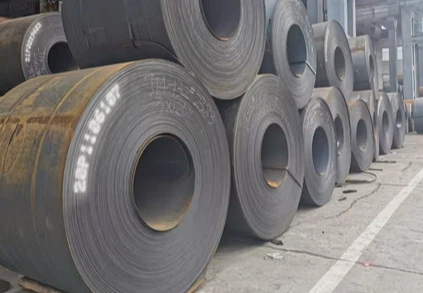
Primary Variation: Low-temperature Impact Toughness Specifications
The suffixes "D" and "E" signify different quality grades, with the core variance lying in the temperature parameters and toughness thresholds for impact testing-a decisive factor that defines their respective fields of application.
| Steel Grade | Impact Test Temperature | Impact Energy Requirement |
|---|---|---|
| Q620D | -20℃ | Adequate impact energy must be retained to avert brittle fracture at this temperature, rendering it suitable for moderately cold working conditions |
| Q620E | -40℃ | The Charpy V-notch impact energy is mandated to be ≥27 J, with actual on-site test data frequently exceeding 47 J. It is engineered to endure harsh ultra-low temperature environments and prevent structural breakdown in extreme cold |
Subtle Modifications in Chemical Composition
The two steel grades have comparable base chemical compositions, with carbon and manganese serving as the primary strengthening elements, and microalloying elements such as niobium, vanadium, and titanium incorporated to refine grain structure. That said, Q620E adheres to more stringent composition control to fulfill toughness requirements at lower temperatures.
- Q620D: The concentrations of detrimental elements like phosphorus and sulfur are managed in accordance with regular industry standards, merely satisfying the purity criteria for standard high-strength steels. No specialized alloy ratio adjustments are required for ultra-low temperature service scenarios.
- Q620E: In addition to restricting phosphorus and sulfur to ultra-low levels, the proportion of alloying elements including chromium, molybdenum, and nickel is optimized. Concurrently, carbon equivalent (Ceq ≤ 0.48%) is precisely regulated to guarantee high strength while enhancing toughness at -40℃, thereby preventing low-temperature embrittlement.
Distinct Production ProcessesBoth grades undergo standard manufacturing steps including smelting, rolling, and heat treatment, but Q620E demands more meticulous process control to meet its low-temperature performance benchmarks.
- Q620D: It is predominantly manufactured using hot rolling or conventional quenching and tempering processes. The priority is placed on controlling rolling temperature and deformation degree to achieve a uniform internal microstructure, which only needs to meet the basic toughness standard at -20℃.
- Q620E: It is typically produced adopting the Thermo-Mechanical Control Process (TMCP). Post-rolling, Accelerated Cooling Control (ACC) is utilized to precisely modulate the cooling rate. In certain instances, an extra normalizing treatment at 900–950℃ is necessary to eliminate residual stress. These measures facilitate the formation of a dual-phase microstructure composed of fine-grained ferrite and bainite, ensuring stable performance in extremely cold environments.
Tailored Application ScenariosGiven their divergent low-temperature performance characteristics, the two steels are deployed in distinct application scenarios: Q620E is tailored for extreme cold conditions, whereas Q620D is suitable for moderately cold or ambient temperature environments.
- Q620D: It is extensively utilized in oil and gas transmission pipelines, general power plant boiler components, construction machinery structural parts, as well as load-bearing elements of bridges and industrial buildings in temperate and subtropical zones. It can accommodate routine low-temperature conditions but is not intended for extreme cold environments.
- Q620E: It is applicable to ultra-low temperature settings such as high-latitude frigid regions and deep-sea areas. Typical applications cover the -45℃ section of the China-Russia Eastern Route Natural Gas Pipeline, polar LNG storage tanks, low-temperature associated pipelines of ultra-supercritical power plants, and jacket structures of deep-sea drilling platforms. It can maintain long-term structural integrity in harsh cold conditions.
Cost and Testing Requirements
- Cost: Thanks to its optimized alloy formula and intricate manufacturing process, Q620E entails higher production costs and generally commands a premium market price relative to Q620D.
- Testing: Q620E requires supplementary -40℃ low-temperature impact tests, and in some projects, more rigorous non-destructive testing methods such as ultrasonic flaw detection are mandatory to ensure the absence of internal defects that could compromise low-temperature performance. On the contrary, Q620D only needs to pass the -20℃ impact test and routine quality inspection.
What do the letters "D" and "E" in Q620D and Q620E stand for, and what is their key impact on the steels' performance?
Both letters represent the quality grades of the steels under the Chinese national standard GB/T 1591-2018. "D" indicates that the steel must meet the impact toughness requirement at -20℃, which prevents brittle fracture in moderately cold environments. "E" requires the steel to achieve qualified impact toughness at -40℃, enabling it to resist structural failure in ultra-low-temperature scenarios such as polar regions or deep seas. This core difference dictates their suitability for distinct temperature-based working conditions.
Are there significant differences in the welding processes of Q620D and Q620E?
The differences are minor but targeted, mainly stemming from Q620E's stricter low-temperature toughness requirements. Q620D has a carbon equivalent below 0.45%, so no complex preheating is needed during welding when the plate thickness is ≤20mm. For Q620E, to avoid low-temperature embrittlement and welding cracks, a low-hydrogen welding process is mandatory. The recommended heat input should be controlled at 15–25kJ/cm, the preheating temperature set at 120–150℃, and a 580–620℃ hydrogen removal treatment required post-welding. Both steels need to be paired with matching high-strength welding materials to ensure the weld joint strength matches that of the base metal.
In terms of manufacturing cost, which one is higher between Q620D and Q620E, and what are the main reasons?
Q620E has a notably higher manufacturing cost, for three primary reasons. First, in terms of chemical composition, Q620E not only limits phosphorus and sulfur to ultra-low levels but also optimizes the proportion of alloying elements like chromium, molybdenum, and nickel, which raises raw material costs. Second, its production adopts the Thermo-Mechanical Control Process (TMCP) and Accelerated Cooling Control (ACC) after rolling; in some cases, an additional normalizing treatment at 900–950℃ is required, making the process more complex than Q620D's conventional hot rolling or quenching and tempering processes. Finally, Q620E requires more rigorous non-destructive testing and low-temperature impact testing during quality inspection, adding extra testing costs.