


SA 387 Grade 5 Class 1 is a chromium-molybdenum alloy steel plate under the ASME Boiler and Pressure Vessel Code, intended for welded pressure vessels and boiler parts operating at high temperatures. It offers good high-temperature strength, creep resistance, toughness, and weldability. The Class 1 designation reflects specific mechanical properties and heat treatment, usually normalizing and tempering, to balance strength and ductility. It is widely used in refineries, petrochemical plants, and power generation systems where reliable performance under thermal stress is required.

ASME SA387 GR.5 CL.1 Specification:
| India Price : | Min- 450 INR / Max- 600 INR |
|---|---|
| USD Price : | Min- 65 USD / Max- 6.85 USD |
| Grade : | ASME SA387 Grade 5 Class 1 |
| Material : | Chrome Moly Alloy Steel |
| Thickness : | 6mm to 120mm |
| Width : | 1000mm to 3000mm |
| Length : | Up to 12000mm |
| Yield Strength : | ≥ 240 MPa |
| Tensile Strength : | 415 – 585 MPa |
| Chromium Content : | Approx. 5% |
| Molybdenum Content : | Approx. 0.5% |
Chemical Requirements for ASME SA387 Grade 5 Alloy Steel Plates
| Element | Chemical Composition (%) | |
| SA 387 Grade 5 | ||
| Carbon: | Heat Analysis: | 0.15 max |
| Product Analysis: | 0.15 max | |
| Manganese: | Heat Analysis: | 0.30 - 0.60 |
| Product Analysis: | 0.25 - 0.66 | |
| Phosphorus: | Heat Analysis: | 0.035 |
| Product Analysis: | 0.035 | |
| Sulphur (max): | Heat Analysis: | 0.030 |
| Product Analysis: | 0.030 | |
| Silicon: | Heat Analysis: | 0.50 max |
| Product Analysis: | 0.55 max | |
| Chromium: | Heat Analysis: | 4.00 - 6.00 |
| Product Analysis: | 3.90 - 6.10 | |
| Molybdenum: | Heat Analysis: | 0.45 - 0.65 |
| Product Analysis: | 0.40 - 0.70 |
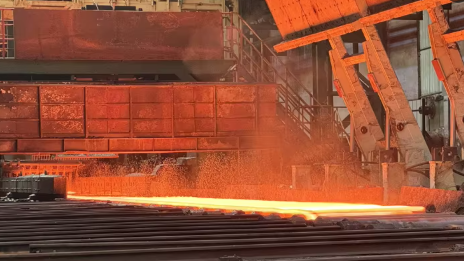
Key Processing Stages
Heat Treatment:
This grade typically undergoes normalization and tempering to achieve its specified mechanical properties. Annealing may also be used to meet Class 1 requirements, which effectively "softens" the steel for enhanced forming capabilities.
Forming Methods:
It can be processed through hot rolling, cold rolling, or cold drawing.
Fabrication Services:
Common value-added processing includes flame cutting, plasma cutting, shearing, grinding, and saw cutting to meet specific customer shapes and sizes.
Supplementary Processing:
Advanced processing options include vacuum degassing and simulated post-weld heat treatment (PWHT) to ensure stability during subsequent fabrication.
Core Advantages
Superior High-Temperature Performance: The addition of molybdenum allows the material to maintain its structural integrity and mechanical strength at temperatures exceeding 500°C (approx. 930°F).
Excellent Oxidation & Corrosion Resistance: The approximately 5% chromium content creates a passive oxide layer that protects against atmospheric corrosion, steam, and aggressive chemicals.
Enhanced Weldability & Toughness: As a Class 1 material, it is specifically designed for better weldability and higher impact toughness compared to Class 2, making it easier to fabricate into complex structures.
Resistance to Thermal Embrittlement: It is highly stable during prolonged periods of thermal cycling, which reduces the risk of stress corrosion cracking or failure from fatigue.
Long-Term Cost-Effectiveness: Although more expensive than standard carbon steel, its durability and reduced maintenance requirements lead to a longer service life and lower operational costs.

Key Applications
Due to its specialized properties, this grade is a standard choice in several critical sectors:
| Industry | Primary Applications |
|---|---|
| Petrochemical & Refining | Pressure vessels, reactors, distillation columns, and heat exchangers for sour service environments. |
| Power Generation | Industrial boilers, steam generators, and steam drums for both fossil fuel and nuclear power plants. |
| Oil & Gas | High-pressure pipelines, storage tanks for hot liquids/gases, and wellhead equipment. |
| Heavy Manufacturing | Large-scale weldable pressure vessels and industrial equipment components like machine shafts and furnace hardware. |
Why Choose Us :
You can get the perfect material according to your requirement at the least possible price.
We also offer Reworks, FOB, CFR, CIF, and door to door delivery prices. We suggest you to do deal for shipping which will be quite economical.
The materials we provide are completely verifiable, right from raw material test certificate to the final dimensional statement.(Reports will show on requirement)
We guarantee to give a response within 24hours(usually in the same hour)
You can get stock alternatives, mill deliveries with minimizing manufacturing time.
We are fully dedicated to our customers. If it will not possible to meet your requirements after examining all options, we will not mislead you by making false promises which will create good customer relations.
For more details about GNEE's steel products, contact us at beam@gneesteelgroup.com. We look forward to working with you.
Can SA 387 GRADE 5 Class 1 be used in low-temperature environments? Why?
It is not suitable for low-temperature environments. Its impact toughness decreases significantly at low temperatures, easily causing brittle fracture and failing to meet low-temperature service requirements.
What is the role of molybdenum in SA 387 GRADE 5 Class 1?
Molybdenum can improve the high-temperature strength, creep resistance and hardenability of the steel, and also enhance its corrosion resistance to some extent.
How to detect the quality of SA 387 GRADE 5 Class 1 after processing?
Common detection methods include ultrasonic testing, magnetic particle testing, chemical composition analysis and mechanical property testing to ensure no defects and meet standard requirements.
What is the carbon content range of SA 387 GRADE 5 Class 1 and its function?
Carbon content ranges from 0.15% to 0.25%. It improves the strength and hardness of the steel, but excessive carbon will reduce its toughness and weldability.
Can SA 387 GRADE 5 Class 1 be subjected to cold working? What limitations are there?
It can undergo limited cold working. Due to its high strength, cold working requires large force, and intermediate annealing is needed to avoid excessive deformation and cracking.
What is the creep resistance of SA 387 GRADE 5 Class 1?
It has excellent creep resistance. At high temperatures and long-term load, the creep deformation is small, which can ensure the structural stability of pressure equipment.
What is the difference between SA 387 GRADE 5 Class 1 and carbon steel in terms of high-temperature performance?
Compared with carbon steel, it has better high-temperature strength and creep resistance, not easy to oxidize and soften at high temperatures, suitable for more harsh high-temperature conditions.
What are the main defects to avoid in the production process of SA 387 GRADE 5 Class 1?
Main defects to avoid include segregation, porosity, cracks and inclusions. Strict control of smelting and heat treatment processes can effectively reduce these defects.
Can SA 387 GRADE 5 Class 1 be used for boiler water walls?
Yes, it can be used for boiler water walls in medium-high temperature boilers. Its heat resistance and pressure-bearing capacity can meet the working requirements of boiler water walls.
What is the thermal conductivity of SA 387 GRADE 5 Class 1 and how does it affect application?
Its thermal conductivity is about 40-45 W/(m·K) at room temperature, which is lower than carbon steel, requiring reasonable design in heat exchange equipment to ensure heat transfer efficiency.
What post-weld heat treatment methods are suitable for SA 387 GRADE 5 Class 1?
Suitable post-weld heat treatment methods include tempering and stress relief annealing, which can eliminate welding residual stress, improve joint toughness and prevent stress corrosion cracking.