


ASTM A387 Grade 22 Class 2 is a chromium-molybdenum alloy steel plate used for high-temperature, high-pressure applications like welded boilers and pressure vessels in the oil, gas, and chemical industries, known for its excellent corrosion/oxidation resistance and strength, supplied in normalized and tempered condition with higher tensile strength requirements than Class 1. Key elements are ~2.25% Chromium (Cr) and ~1.00% Molybdenum (Mo), with specific mechanical properties like 75-100 ksi tensile strength and 45 ksi yield strength.

Specifications for ASTM A387 Grade 22 Alloy Steel Plates
| Designation | Nominal Chromium Content (%) | Nominal Molybdenum Content (%) |
| A387 Grade 22 | 2.25% | 1.00% |
A387 Gr.22 CL.2 Chemical Composition | |||||||
Grade | The Element Max (%) | ||||||
C | Si | Mn | P | S | Cr | Mo | |
A387 Gr.22 Cl.2 | 0.04-0.15 | 0.50 | 0.30-0.60 | 0.035 | 0.035 | 1.88-2.62 | 0.85-1.15 |
Grade | A387 Gr.22 CL.2 Mechanical Property | |||
Thickness | Yield | Tensile | Elongation | |
A387 Gr.22 Cl.2 | mm | Min Mpa | Mpa | Min % |
t≦50 | 310 | 515-690 | 18 | |
50<t≦200 | - | - | - | |
Equivalents for ASTM A387 Grade 22 Alloy Steel Plates
| BS | EN | ASTM/ASME | DIN |
| 622-515B | 10 CRMO910 | A387-22-2 | 10 CRMO910 |
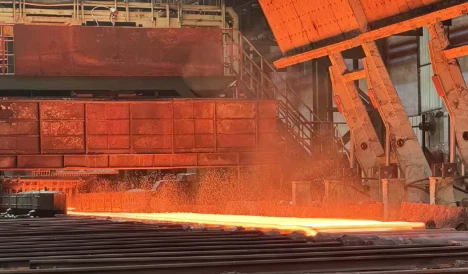 processing
1. Heat Treatment (Core Processing)
According to the ASTM A387 specification, Grade 22 Class 2 must be killed steel and requires specific heat treatments to achieve its mechanical properties:
Method: Typically processed via Normalizing and Tempering (N+T) or Quenching and Tempering (Q+T).
Tempering Temperature: The minimum tempering temperature must be at least 675°C (1250°F) to ensure structural stability.
Class 2 Strength: Unlike Class 1, Class 2 requires faster cooling (normalization or quenching) to achieve higher tensile strength.
2. Mechanical Property Requirements (Class 2)
Tensile Strength: 515 to 690 MPa (75 to 100 ksi).
Yield Strength: Minimum 310 MPa (45 ksi).
Elongation: Minimum 18% (in 2 inches).
3. Welding and PWHT (Post-Weld Heat Treatment)
Because of the high Cr and Mo content, this material is susceptible to air-hardening and cold cracking.
Preheating: Essential to prevent hydrogen-induced cracking. Preheating temperatures are determined by plate thickness.
PWHT: Mandatory after welding to relieve residual stresses and improve the ductility and toughness of the Weld Metal (WM) and Heat Affected Zone (HAZ).
Consumables: Typically welded using filler metals like E8018-B2 or ER80S-B3 to match the base metal chemistry.
4. Key Performance Features
Resistance to Hydrogen: The Cr-Mo combination provides excellent resistance to hydrogen attack and oxidation at high temperatures.
Applications: Primarily used in oil and gas refineries (hydrocracking units), power plant steam drums, and heat exchangers.
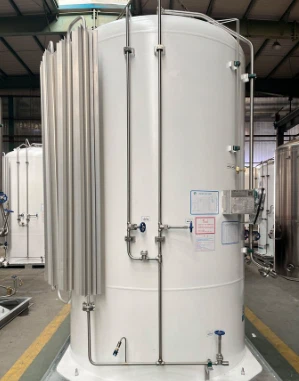 Key Applications:
Petrochemicals: Fabrication of hydroprocessing reactors (hydrocrackers), desulfurization units, and refining towers.
Power Generation: High-temperature steam piping, steam drums, and boiler headers.
Pressure Vessels: Heavy-duty vessels handling high-temperature, high-pressure, and acidic environments (sulfur/hydrogen).
Heat Exchange: Heat exchangers and reheaters operating in the range of 350°C to 600°C.
Why Choose Us :
You can get the perfect material according to your requirement at the least possible price.
We also offer Reworks, FOB, CFR, CIF, and door to door delivery prices. We suggest you to do deal for shipping which will be quite economical.
The materials we provide are completely verifiable, right from raw material test certificate to the final dimensional statement.(Reports will show on requirement)
We guarantee to give a response within 24hours(usually in the same hour)
You can get stock alternatives, mill deliveries with minimizing manufacturing time.
We are fully dedicated to our customers. If it will not possible to meet your requirements after examining all options, we will not mislead you by making false promises which will create good customer relations.
Request a professional quotation for ASTM A387 Grade 22 Class 2 from GNEE Steel.
Can A387 Grade 22 Class 2 be used in hydrogen-containing environments?
Yes, it is suitable for high-temperature and high-pressure hydrogen service. Its Cr-Mo composition can resist hydrogen embrittlement when properly heat treated, ensuring safe operation.
What is the typical hardness of A387 Grade 22 Class 2 after PWHT?
After proper PWHT, its hardness usually ranges from 180 to 220 HBW. This hardness level ensures good toughness and ductility for industrial applications.
How does the service temperature range of A387 Grade 22 Class 2 compare to 316L stainless steel?
Grade 22 Class 2 has a higher max service temperature (593°C vs 450°C of 316L). But 316L outperforms it in corrosion resistance against aggressive media like chlorides.
What is the recommended preheating temperature for welding A387 Grade 22 Class 2?
The recommended preheating temperature ranges from 150°C to 200°C (302°F to 392°F), which varies based on the material thickness and the specific welding process adopted to ensure welding quality.
What is the difference in material cost between A387 Grade 22 Class 2 and carbon steel (A516 Grade 70)?
Grade 22 Class 2 is more costly than A516 Grade 70 due to chromium and molybdenum. The cost premium is reasonable for its superior high-temperature performance in critical applications.
How does the impact toughness of A387 Grade 22 Class 2 compare to A387 Grade 5 Class 2 at low temperatures (-20°C)?
Their low-temperature impact toughness is similar, but Grade 22 Class 2 is slightly better due to heat-treated refined microstructure. Neither is suitable for service below -29°C.
What is the minimum tensile strength of A387 Grade 22 Class 2 as per ASTM standards?
According to ASTM A387, its minimum tensile strength is 415 MPa (60,000 psi), and the minimum yield strength reaches 205 MPa (30,000 psi), meeting the mechanical requirements for pressure vessel use.
What is the main advantage of A387 Grade 22 Class 2 over carbon steel in high-temperature environments?
Compared with carbon steel, it has better creep and oxidation resistance at elevated temperatures, avoiding deformation and degradation over long-term service, thus ensuring more stable performance in high-temperature scenarios.
Can A387 Grade 22 Class 2 be used in hydrogen-containing environments?
Yes, it is suitable for high-temperature and high-pressure hydrogen service. Its Cr-Mo composition can resist hydrogen embrittlement when properly heat treated, ensuring safe operation.
What is the typical hardness of A387 Grade 22 Class 2 after PWHT?
After proper PWHT, its hardness usually ranges from 180 to 220 HBW. This hardness level ensures good toughness and ductility for industrial applications.