


Our flagship NM400 wear resistant plate and AR400 steel plate are engineered to extend equipment life under extreme abrasion and impact conditions.
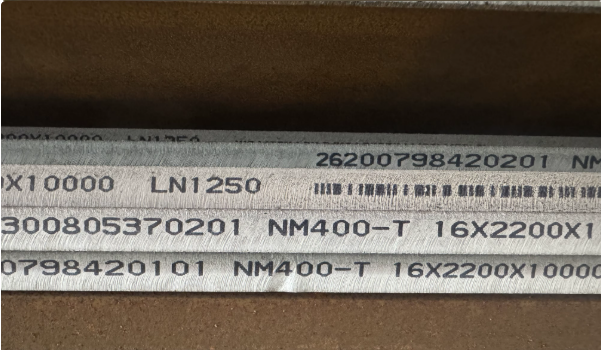
NM400 wear resistant plate
Understanding the technical differences between NM400 steel vs AR400 steel is essential for optimizing both performance and cost. This guide provides a detailed comparison to help you select the right material for your application.
Standard Specification of NM400 vs AR400
Although both grades target a hardness of around 400 HBW, they originate from different standards and market systems:
NM400 Steel Plate
- Chinese standard GB/T 24186 (NM series)
- Widely used in Asia and global export markets
- Defined grade with consistent specifications
AR400 Steel Plate
- Commercial designation (not a single ASTM grade)
- Common in North America
- Produced according to various mill specifications
NM400 steel is a standardized grade, while AR400 steel is a broader commercial category.
Chemical Composition Comparison of NM400 vs AR400
The alloy design directly impacts hardness, toughness, and weldability.
| Element | NM400 Steel (%) | AR400 Steel (%) |
|---|---|---|
| C | 0.12 – 0.25 | 0.10 – 0.20 |
| Mn | 0.8 – 1.6 | 0.4 – 1.2 |
| Si | 0.2 – 0.8 | 0.1 – 0.5 |
| P | ≤ 0.035 | ≤ 0.03 |
| S | ≤ 0.035 | ≤ 0.03 |
| Cr | ≤ 0.4 | ≤ 0.4 |
| Ni | ≤ 0.5 | ≤ 0.5 |
| Mo | ≤ 0.2 | ≤ 0.2 |
Key Differences
NM400 wear resistant plate often contains slightly higher Mn and alloying elements → better toughness
AR400 steel typically uses lower carbon → easier welding
Heat Treatment of NM400 vs AR400
Both NM400 steel plate and AR400 plate are produced using:
- Quenching & Tempering (Q&T)
- Microstructure: tempered martensite or bainite
NM400 Advantage
Many manufacturers apply TMCP (Thermo-Mechanical Controlled Processing) to NM400 wear resistant steel plate, resulting in:
- Finer grain structure
- Better low-temperature toughness
- Improved impact resistance
Mechanical Properties Comparison of NM400 vs AR400
| Property | NM400 Steel | AR400 Steel |
|---|---|---|
| Tensile Strength | 900 – 1200 MPa | 850 – 1150 MPa |
| Yield Strength | 700 – 1000 MPa | 650 – 950 MPa |
| Elongation | 8 – 18% | 8 – 16% |
| Hardness | 360 – 440 HBW | 360 – 440 HBW |
| Impact Toughness | Generally higher | Supplier-dependent |
NM400 wear resistant plate often provides better toughness under impact conditions.
Weldability and Fabrication of NM400 vs AR400
Weldability is governed by the Carbon Equivalent (CEV).
NM400: May have higher Mn/alloying for toughness, which can slightly increase preheat requirements.
AR400: Often features lower carbon for easier welding in standard shop conditions.
Neither NM400 nor AR400 are stainless steels. They require protective coatings (painting, powder coating, or galvanizing) for corrosive environments. Note: PREN (Pitting Resistance Equivalent Number) is not applicable to these carbon-alloy grades.
Applications of NM400 vs AR400
| NM400 Wear Resistant Plate | AR400 Steel Plate |
|---|---|
| Mining buckets & conveyors | Excavator buckets |
| High-impact hoppers & chutes | Crusher liners |
| Low-temperature environments | Recycling equipment |
| Heavy-duty industrial wear parts | Aggregate handling systems |
Which One Should You Choose?
Choose NM400 Wear Resistant Plate if:
- You need higher impact resistance and toughness
- Your application involves low-temperature environments
- You want better cost-performance ratio
- You are sourcing from China or global suppliers
Choose AR400 Steel Plate if:
- You are in the North American market
- You need easier welding and fabrication
- Your application focuses on moderate abrasion
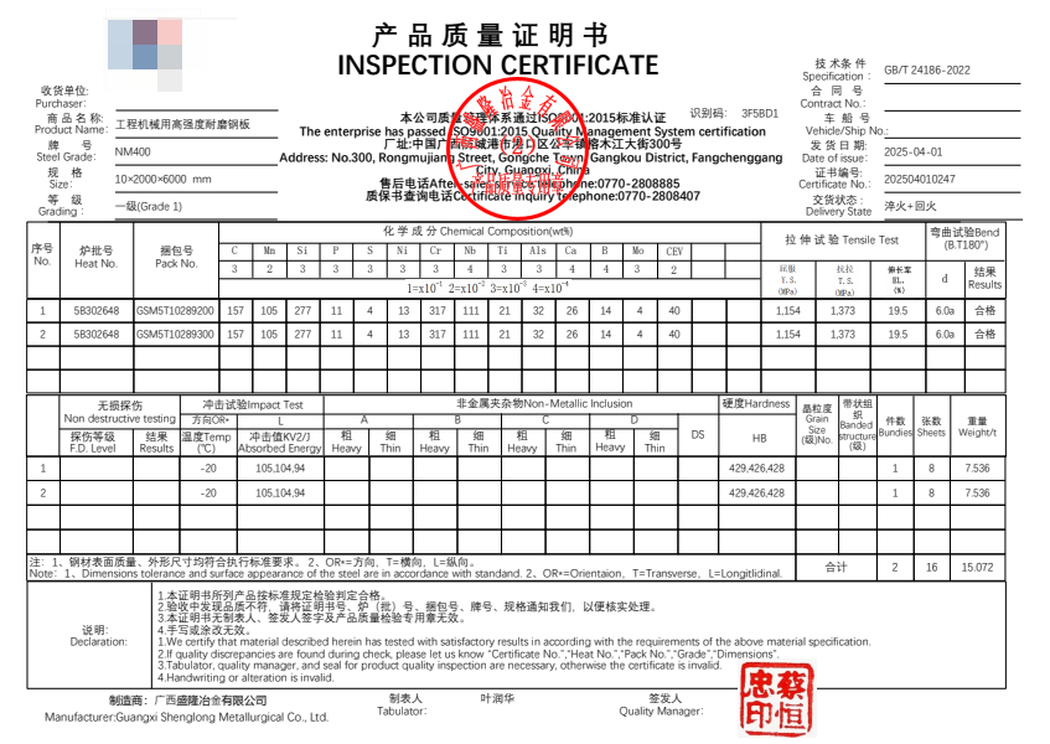
Do not assume these grades are identical based on the "400" label alone. Always verify the Mill Test Certificate (MTC) for chemical analysis and mechanical properties.
Whether you select our nm400 wear resistant plate or an AR-style equivalent, ensuring the right balance of hardness and toughness is the key to reducing your total life-cycle costs.
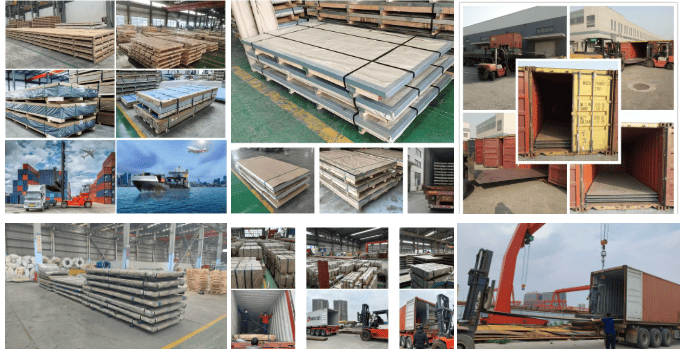
If you are evaluating NM400 vs AR400 steel, our team can help you select the most suitable material based on your working conditions and budget. We supply high-quality NM400 wear resistant plate with stable hardness, full certification, and global delivery support.
Contact us today for a fast quotation and technical consultation, and let us help you improve equipment performance while reducing long-term costs.
Contact now to get NM400 steel plate Quote
Is NM400 the same as Hardox 400?
No. they are comparable in nominal hardness band (~400 HBW) but Hardox® 400 is a branded product with controlled chemistry, guaranteed toughness and detailed mill documentation from SSAB. NM400 is a Chinese standard grade with similar hardness but variable mill-to-mill properties. Always specify required testing and acceptance criteria, not only grade name.
Can NM400 be welded to structural steels?
Yes with matched filler and appropriate preheat/thermal control. Avoid high heat input and verify consumables with the supplier's welding instructions.
How do I select between NM400 and a harder NM450 / NM500?
Choose by wear mode: for abrasive sliding wear NM400 often suffices; for extremely abrasive, long-life needs select NM450/NM500 but expect increased cost and reduced formability.
Is NM400 suitable for bucket liners and dump bodies?
Yes. widely used for these applications; ensure weldability and thickness suit the application.
Can NM400 be flame cut and drilled?
Yes; use standard industrial cutting methods but be mindful of hardened surface causing additional tool wear.
How should NM400 be stored and handled?
Store flat on timber, avoid edge damage, keep clean and protected to avoid contamination of welding surfaces.