


S355J0 is a European standard (EN 10025-2) non-alloy structural steel, known for its minimum yield strength of 355 MPa, good weldability, and toughness at 0°C, indicated by the 'J0' (0°C impact test). It's a low-carbon manganese steel, suitable for general construction, bridges, and machinery in mild climates, often supplied normalized or untreated, and is similar to ASTM A572 Grade 50.
Key Characteristics:
Strength: Minimum yield strength of 355 MPa.
Impact Resistance: Tested to provide at least 27 Joules at 0°C (indicated by 'J0').
Composition: Low carbon (max 0.20%) and manganese content, making it easily weldable.
Condition: Often supplied normalized or untreated for good machinability and formability.
Applications:
General construction and structural engineering.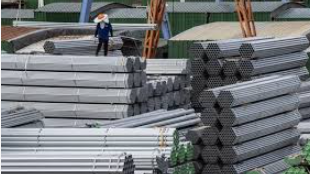
Bridges, ships, and power plant equipment.
Lifting and transport machinery.
Structures requiring good weldability and strength in mild (above 0°C) conditions.
Equivalents:
ASTM A572 Grade 50
DIN St52-3
JIS SM490

Can S355J0 be welded?
Yes, S355J0 steel can be welded very well. It is a commonly welded structural steel used in a wide range of construction and fabrication projects. However, as with all steels, successful welding requires following the correct procedures.
Here is a detailed breakdown of the factors that make S355J0 weldable and the key considerations for welding it properly:
Why S355J0 is Considered Weldable:
Carbon Equivalent (CEV): This is the most critical measure of weldability. EN 10025-2 specifies a maximum CEV for S355J0, which is calculated based on its chemical composition (C, Mn, Cr, Mo, V, Ni, Cu). The CEV for S355J0 is typically low enough (usually below 0.40-0.43 for common thicknesses) to indicate low risk of hydrogen-induced cold cracking when proper procedures are followed.
Controlled Chemical Composition: The standard places limits on elements like Carbon, Sulfur, and Phosphorus, which improves weldability and reduces the risk of defects.
Widespread Use: It is one of the most common structural steels in Europe, meaning there is extensive industry experience, proven procedures, and qualified welders for it.
Key Considerations and Best Practices for Welding S355J0:
While weldable, you cannot simply weld it "any old way." Adherence to standards and procedures is essential.
| Consideration | Why It Matters | Recommended Practice |
|---|---|---|
| 1. Preheating | Preheating slows the cooling rate after welding, allowing hydrogen to diffuse out and reducing the risk of hard, crack-sensitive microstructures in the Heat-Affected Zone (HAZ). | Preheating is often required, especially for thicker sections (>20-30mm, depending on codes) and in cold ambient temperatures. The exact preheat temperature (e.g., 50°C - 150°C) is determined by: • Material thickness • CEV (from the mill certificate) • Hydrogen level of the welding consumable • Joint restraint Follow WPS (Welding Procedure Specification) based on standards like ISO 15614-1 or EN 1011-2. |
| 2. Consumable Selection | Using the correct filler metal is crucial to match the base metal's strength and properties. | Select consumables classified under EN ISO 16834-A (for manual metal arc) or equivalent. A common choice is an electrode/wire classified for welding S355 steels, such as those with a strength designation E 42 4 B .. / E 49 4 B .. or G 42 4 M G3Si1. The exact choice depends on the welding process (SMAW, GMAW, FCAW, SAW). |
| 3. Heat Input Control | Too high heat input can weaken the HAZ; too low can cause excessive hardening. | Maintain the heat input range specified in the WPS. This is a balance between amperage, voltage, and travel speed. |
| 4. Post-Weld Heat Treatment (PWHT) | Not normally required for S355J0. | May be specified for very thick sections or highly restrained joints to relieve residual stresses. This is an engineering decision, not a routine requirement. |
The Role of Standards
All welding should be performed according to a qualified Welding Procedure Specification (WPS). Key standards governing this are:
ISO 15614-1: Specifies how to qualify welding procedures.
EN 1011-2: Provides comprehensive guidelines for welding ferritic steels, including recommendations for S355 grades.
Comparison to Other S355 Grades:
vs. S355J2+N / S355NL: These grades (normalized or with lower temperature toughness) often have a finer grain structure and slightly better HAZ toughness, making them even more forgiving for welding, especially in critical applications. For S355J0, strict adherence to the WPS is slightly more important.
1. What is S355J0 steel?
S355J0 is a non-alloy structural steel grade per EN 10025-2, with a minimum yield strength of 355 MPa and guaranteed impact toughness at 0°C.
2. What does the 'J0' in S355J0 mean?
The 'J0' indicates Charpy V-notch impact testing at 0°C, ensuring a minimum absorbed energy of 27 Joules for reliable performance in cold conditions.
3. What are the main applications of S355J0?
It is commonly used in bridges, offshore structures, building frames, and heavy machinery in temperate climates where temperatures may drop to freezing.
4. What is the difference between S355JR and S355J0?
S355JR is impact tested at +20°C, while S355J0 is tested at 0°C, making J0 suitable for applications exposed to near-freezing temperatures.
5. What is the yield strength of S355J0?
The minimum yield strength is 355 MPa for thicknesses up to 16 mm, with decreasing values for thicker sections per EN 10025-2.
6. Can S355J0 be welded?
Yes, S355J0 has good weldability, but proper procedures-including potential preheating for thick sections or cold environments-should be followed.
7. Is S355J0 equivalent to ASTM A572 Grade 50?
Not directly. While strength is similar, S355J0 includes mandatory impact toughness at 0°C, which is not required in standard A572 Grade 50.
8. What is the chemical composition of S355J0?
It typically contains max 0.24% Carbon, max 1.60% Manganese, and controlled phosphorus/sulfur (e.g., P ≤ 0.035%, S ≤ 0.035%).
9. Is S355J0 corrosion resistant?
No, it is not corrosion-resistant and requires protective coatings like painting or galvanizing for outdoor use.
10. How does S355J0 compare to S355J2?
S355J0 is impact tested at 0°C, while S355J2 is tested at -20°C, making J2 suitable for even colder (sub-zero) environments.
11. What are the mechanical properties of S355J0?
Key properties include yield strength ≥355 MPa (t≤16mm), tensile strength 470-630 MPa, elongation ≥20-22%, and 27J impact energy at 0°C.
12. Is S355J0 suitable for low-temperature service below 0°C?
No, S355J0 is certified only for 0°C. For sustained service below freezing, grades like S355J2 (-20°C) or S355K2 (-20°C with higher impact energy) should be used.
Full specification and details are available on request. The above information is provided for guidance purposes only. For specific design requirements please contact our technical sales staff.
