


The UB305×127×37 S355JR H-section steel is a 305 mm high, 127 mm wide-flange, 37 kg/m British standard H-beam with a yield strength of 355 MPa and 27 J impact toughness.
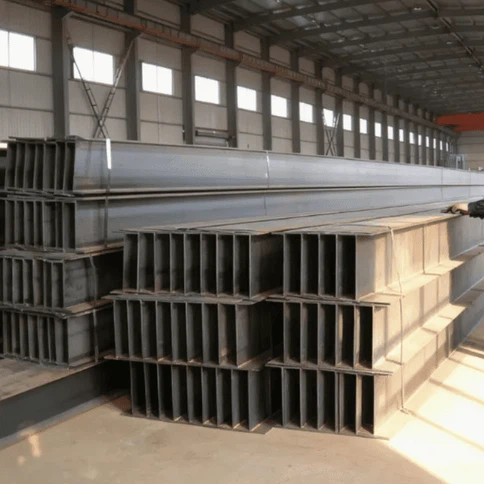
UB305×127×37 S355JR H-section steel
It serves as a strong and tough backbone for industrial buildings, balancing lightweight design with high stability, making it an ideal framework for factories, bridges, and modular structures.
Contact now to get a Hot Rolled S355JR H Beam Quote
Details of UB305×127×37 S355JR Structural Steel Beams
UB305×127×37 is a designation for an H-section steel beam following the British Standard (commonly referred to as "BS").
1. "UB" stands for "Universal Beam", meaning a general-purpose H-shaped steel beam. It is mainly used to resist bending loads and functions as a beam member. Its characteristic design features wide flanges (the horizontal top and bottom parts) and a tall web (the vertical middle part), providing significant bending strength.
2. "305" indicates the overall height of the beam's cross-section in millimeters, measured from the top surface of the upper flange to the bottom surface of the lower flange. This dimension directly affects the beam's moment of inertia and is a key parameter in determining its bending capacity.
3. "127" refers to the flange width in millimeters, i.e., the horizontal extent of each flange is 127 mm. Flange width influences the lateral stability of the beam and its local load-bearing capacity.
4. "37" represents the theoretical weight per meter of the beam, in kilograms. This means that one meter of this H-section steel weighs approximately 37 kg. This value is calculated based on the standard cross-sectional dimensions and steel density, aiding structural design and material estimation.
The UB305×127×37 specification gives a clear physical picture of an H-beam that is 305 mm high, has 127 mm wide flanges, and weighs about 37 kg per meter.
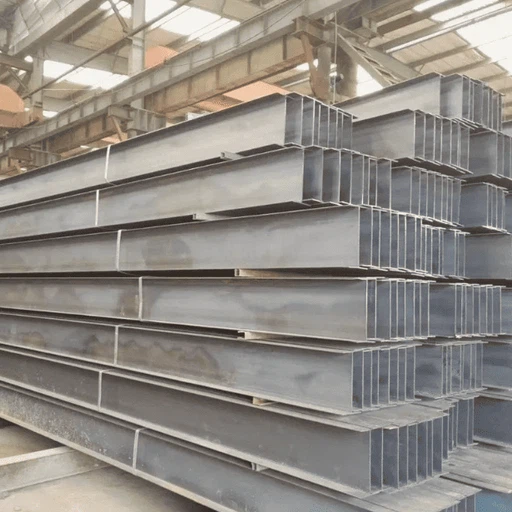
It is a medium-sized structural beam commonly used in industrial and residential buildings, often as primary or secondary floor beams, or as platform support beams.
Contact now to get a Hot Rolled S355JR H Beam Quote
S355JR is a grade of non-alloy structural steel defined under the European Standard EN 10025-2.
1. "S" stands for structural steel, indicating that the material is primarily intended for load-bearing applications.
2. "355" is the most critical parameter, representing the specified minimum yield strength of 355 MPa. Yield strength is the stress at which the material begins to undergo significant plastic deformation and serves as a fundamental design criterion in structural engineering. A yield strength of 355 MPa indicates excellent load-bearing capacity, allowing the steel to remain elastic under relatively high stress and ensuring structural safety.
3. "J" denotes the impact toughness requirement at room temperature (typically +20°C). Specifically, it requires the steel to achieve at least 27 Joules in the Charpy V-notch impact test. Impact toughness reflects the material's ability to resist sudden loads or brittle fracture, which is critical for structural safety, particularly under dynamic loads or low-temperature conditions.
4. "R" indicates that the steel is hot-rolled. Hot rolling is the process of shaping steel at high temperatures, which helps refine the grain structure and improve the mechanical properties of the material.
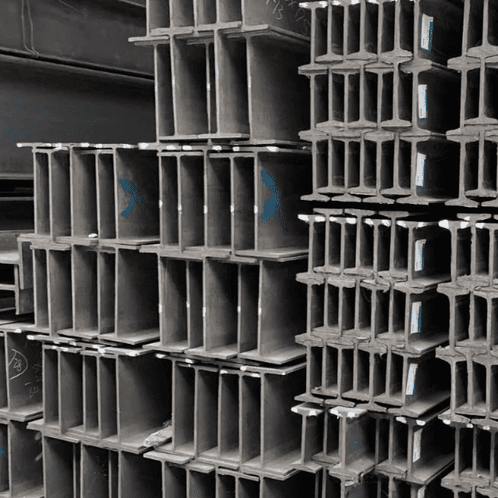
The S355JR UB305×127×37 H-beam combines high strength and excellent load-bearing capacity with sufficient toughness, making it capable of withstanding moderate dynamic loads and temperature variations. It meets the comprehensive mechanical performance requirements of most conventional building structures.
Key Features and Advantages UB305×127×37 S355JR metal steel beam
Based on its dimensions and material, the UB305×127×37 H-beam (S355JR) exhibits the following outstanding engineering characteristics:
Excellent Strength-to-Weight Ratio:
The H-section shape is optimised to distribute material away from the neutral axis, achieving a large moment of inertia and section modulus with relatively less steel. This makes the UB305×127×37 highly efficient in resisting bending, combining lightweight design with high strength, reducing structural self-weight, and saving material.
Good Overall Stability:
The wide flanges provide enhanced lateral support, improving the beam's resistance to lateral bending and torsional buckling. This is particularly important for beams, as it can reduce or simplify the need for additional lateral bracing.
Reliable Toughness and Ductility:
The "J" rating of S355JR ensures sufficient impact toughness at room temperature, allowing the steel to deform plastically under stress. In extreme situations, such as accidental overloading, the beam is more likely to undergo visible deformation rather than sudden brittle fracture, providing a valuable window for safety warnings and remedial measures.
Excellent Fabrication and Connection Performance:
Hot-rolled S355JR steel has good weldability and can be reliably joined using conventional welding techniques. It is also easy to drill, cut, or machine, allowing adjustments and installation on site, which increases construction adaptability.
Broad Standards Compliance:
Manufactured according to recognized British/European standards, the UB305×127×37 meets strict specifications for dimensional accuracy, chemical composition, and mechanical properties.
This provides a reliable basis for structural design, ensures consistency across different production batches, and facilitates design selection, detailed drawings, and project approval.
Contact now to get a Hot Rolled S355JR H Beam Quote
Application case of UB305×127×37 S355JR construction steel beams
In our single- or multi-story industrial building projects, UB305×127×37 S355JR construction steel beams are used for roof beams, crane beams (for small to medium-sized lifting equipment), work platform beams, and structural columns.
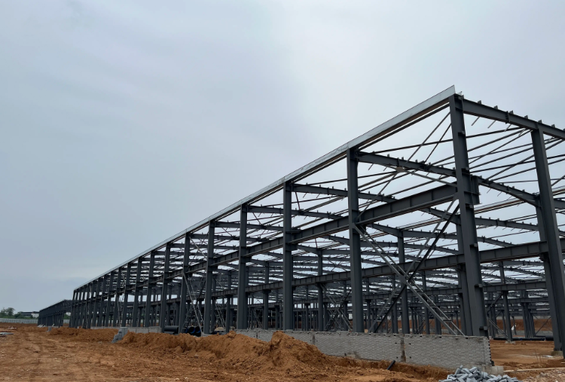
Their strength and stability are sufficient to support the various loads generated by internal equipment operation and material storage within the facility.
When selecting this type of steel for actual projects, multiple factors need to be considered:
Design Compatibility:
Structural engineers must perform precise calculations based on specific loading conditions (dead load, live load, wind load, snow load, etc.), span, support conditions, and relevant structural design codes.
Selection and precautions of UB305×127×37 S355JR H steel beams
This ensures that the cross-sectional properties of UB305×127×37 and the material strength of S355JR meet both safety and serviceability requirements.
Corrosion and Fire Protection:
Steel is susceptible to corrosion. In humid or chemically aggressive environments, appropriate corrosion protection measures should be applied, such as anti-corrosion coatings or hot-dip galvanizing.
For buildings with high fire-resistance requirements, fire protection layers must be applied according to regulations, such as fire-resistant coatings or cladding panels.
Quality Documentation:
When procuring, the supplier should provide material certificates that comply with S355JR H-section steel beam standards, ensuring that the steel's chemical composition, mechanical properties (especially yield strength, tensile strength, and impact toughness), and dimensional tolerances meet the required specifications.
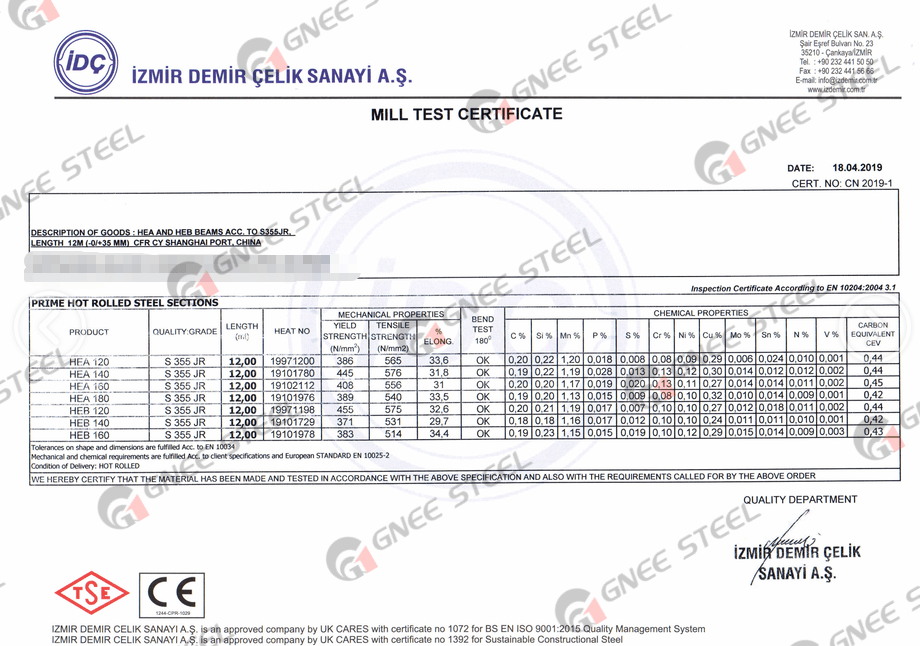
As a manufacturer of S355 H-beams, we offer all sizes and provide free quotes.
Contact now to get a Hot Rolled S355JR H Beam Quote
Is S355 equivalent to A36?
S355JR and A36 are not directly equivalent, as S355JR has higher strength (yield 355 MPa vs. A36's 250 MPa) and guaranteed impact toughness, making it closer to ASTM A572 Grade 50 than A36. A36 is often equivalent to S235JR (yield 235 MPa), a lower EN grade.
What is the American equivalent of S355 steel?
ASTM has identified A572-50 as an acceptable substitution for S355. Both grades have similar chemical compositions and are high-strength, low-alloy structural steels.
Can S355 be hardened?
S355 is not ideally suited to hardening, though it can be subjected to limited heat treatment process such as case hardening.
What is the difference between ASTM A572 and S355?
Applications: ASTM A572 Grade 50 is commonly used in heavier construction applications requiring higher strength, while S355JR is versatile and widely used in various structural applications across Europe.