


16Mo3 is a European standard (EN 10028/EN 10216-2) chrome-molybdenum (Cr-Mo) alloy steel used for high-temperature applications like pressure vessels, boilers, and piping, offering good strength, weldability, and resistance to creep and hydrogen attack at elevated temperatures, commonly found in oil, gas, and power generation industries. It's known for its heat resistance, durability, and toughness, making it ideal for harsh, high-pressure environments.
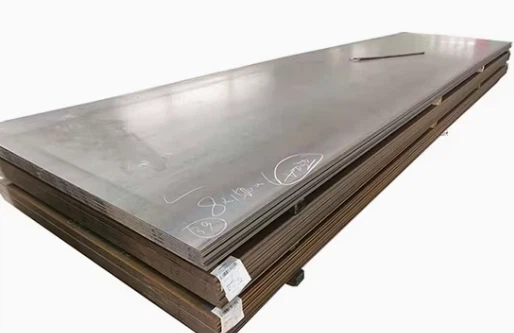
Chemical Composition
Element | Percentage % | Element | Percentage % |
C | 0.12/0.20 | Ni | 0.30 |
Si | 0.35 | Nb | - |
Mn | 0.40/0.90 | Ti | - |
P | 0.025 | V | - |
S | 0.010 | Al | - |
Cr | 0.030 | N | 0.012 |
Mo | 0.25/0.35 | Cu | 0.30 |
Mechanical Properties
| Grade | Thickness | Temperature (°C) | |||||||||
50 | 100 | 150 | 200 | 250 | 300 | 350 | 400 | 450 | 500 | ||
(mm) | MPa | MPa | MPa | MPa | MPa | MPa | MPa | MPa | MPa | MPa | |
| 16Mo3 | ≤16 | 273 | 264 | 250 | 233 | 213 | 194 | 175 | 159 | 147 | 141 |
| >16 ≤40 | 268 | 259 | 245 | 228 | 209 | 190 | 172 | 156 | 145 | 139 |
| >40 ≤60 | 258 | 250 | 236 | 220 | 202 | 183 | 165 | 150 | 139 | 134 |
| >60 ≤100 | 238 | 230 | 218 | 203 | 186 | 169 | 153 | 139 | 129 | 123 |
| >100 ≤150 | 218 | 211 | 200 | 186 | 171 | 155 | 140 | 127 | 118 | 113 |
| >150 ≤250 | 208 | 202 | 191 | 178 | 163 | 148 | 134 | 121 | 113 | 108 |
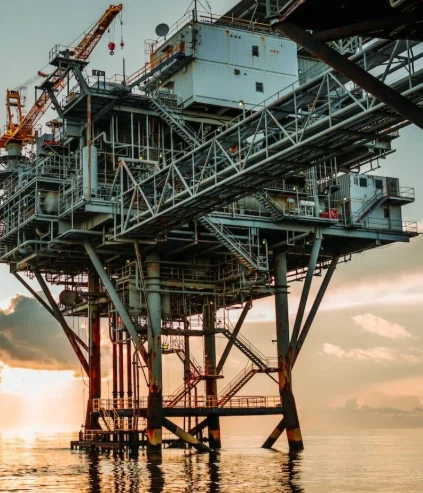 16Mo3 Application Scenarios
Boilers and steam generators:
Used to manufacture key components such as drums, headers, superheaters and reheaters, suitable for equipment working in high-temperature and high-pressure steam environments for a long time.
Pressure vessels:
Widely applied in reactors, towers and storage tanks in chemical, petrochemical and refinery plants, used to hold high-temperature and high-pressure gases or liquids.
Heat exchangers and condensers:
Used for shells, tube bundles and tube sheets of shell-and-tube heat exchangers, waste heat boilers and other equipment, adapting to heat transfer working conditions of hot process streams.
High-temperature piping systems:
Employed in pipelines transporting steam, hot water or high-temperature process fluids in power plants, district heating and industrial facilities.
Industrial furnace components:
Used to make furnace shells, ducts and thermal structural parts that need to withstand long-term thermal loads.
16Mo3 Key Benefits
Superior thermal stability:
Maintains excellent strength and creep resistance under long-term high-temperature exposure, avoiding deformation and ensuring stable operation of high-temperature equipment.
Balanced mechanical properties:
Possesses good toughness and hardness after standard heat treatment, reducing the risk of cracking and enhancing structural reliability under load.
Easy processability:
Adapts well to hot forming, machining and welding processes with standard operational control, lowering processing difficulty and production costs.
Durable corrosion resistance:
Resists oxidation and general corrosion in steam, hot gas and common industrial media, extending the service life of equipment and reducing maintenance costs.
High cost-effectiveness:
Meets critical industrial service requirements while having lower costs compared to high-alloy steels, offering optimal value for investment.
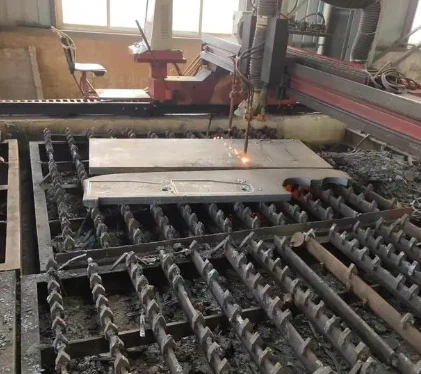 Processes Adopted for 16Mo3
Hot working process:
Raw materials are uniformly heated to 1050-1150℃ and held for a certain time, then subjected to forging, rolling or bending, followed by controlled cooling to avoid structural defects.
Heat treatment process:
Normalization (890-950℃ heating, holding and air cooling) is adopted to refine grains. Tempering (600-650℃ heating, holding and cooling) is optional to reduce internal stress and improve toughness.
Machining process:
Standard turning, milling and drilling tools are used, with proper cooling and lubrication measures to ensure surface quality and reduce tool wear.
Welding process:
Preheating (80-150℃) is performed before welding to prevent cold cracking, and post-weld heat treatment is carried out to ensure joint integrity.
Cleaning and inspection process:
Shot blasting or pickling is used to remove scale and oil, and non-destructive testing (ultrasonic, radiographic) is adopted to detect potential defects.
Full specification and details are available on request. The above information is provided for guidance purposes only. For specific design requirements please contact our technical sales staff.
What is the yield strength range of 16Mo3 steel?
The yield strength of 16Mo3 steel ranges from 245 MPa to 355 MPa, depending on the heat treatment state. This range ensures good ductility and load-bearing capacity in various working conditions.
Is 16Mo3 steel suitable for high-temperature environments?
Yes, 16Mo3 is ideal for high-temperature environments. It retains excellent mechanical properties at temperatures up to 530°C, resisting creep and oxidation, thus widely used in high-temperature boiler parts.
What standards does 16Mo3 steel comply with?
16Mo3 steel complies with European standard EN 10028-2. This standard specifies the technical requirements for pressure vessel steels, including chemical composition, mechanical properties, and heat treatment.
How to store 16Mo3 steel plates properly?
Store 16Mo3 plates in a dry, well-ventilated area, away from moisture and corrosive substances. Stack them with spacers to prevent deformation and rust, and cover with waterproof cloth if outdoors.
What is the elongation rate of 16Mo3 steel?
The minimum elongation rate of 16Mo3 steel is 22% (in 200mm gauge length). This high elongation ensures good ductility, allowing the steel to deform without breaking under load.
Can 16Mo3 steel be used in low-temperature environments?
16Mo3 is not ideal for low-temperature environments (below -20°C) as its toughness may decrease, increasing brittle fracture risk. It is mainly designed for high-temperature and normal-temperature applications.
What is the difference between 16Mo3 and 16Mn steel?
The key difference is molybdenum content: 16Mo3 contains 0.25-0.35% Mo, enhancing high-temperature strength, while 16Mn lacks molybdenum. Thus, 16Mo3 is better for high-temperature pressure equipment.
Is 16Mo3 steel corrosion-resistant?
16Mo3 has moderate corrosion resistance, especially in high-temperature steam and mild corrosive media. For harsh corrosive environments, additional anti-corrosion coatings or alloying are required.
What heat treatment processes is 16Mo3 steel usually subjected to?
16Mo3 is typically normalized or normalized and tempered. Normalization improves its microstructure uniformity, while tempering enhances toughness and reduces brittleness, ensuring stable performance.