


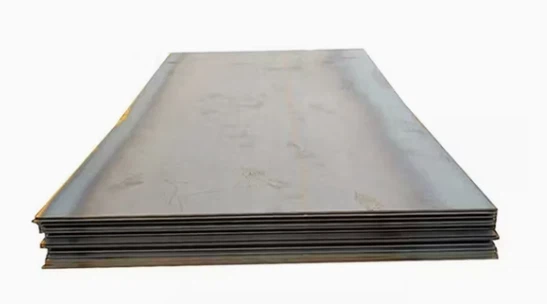
S890QL is a European standard (EN 10025-6) high-strength structural steel known for its exceptional strength (minimum 890 MPa yield strength), toughness, and good weldability, achieved through quenching and tempering. The 'S' denotes structural steel, '890' its yield strength, 'Q' its quenched & tempered condition, and 'L' indicates low-temperature notch toughness (typically -40°C). It's used in heavy machinery, cranes, bridges, and structural components where weight reduction and high performance are critical.
Chemical Composition – EN10025 S890QL.
| C | Si | Mn | P | S | B | Cr | Cu | Mo | N | Nb | Ni | Ti | V | Zr |
|---|---|---|---|---|---|---|---|---|---|---|---|---|---|---|
| 0.20 | 0.80 | 1.70 | 0.020 | 0.010 | 0.005 | 1.50 | 0.50 | 0.70 | 0.015 | 0.06 | 2.0 | 0.05 | 0.12 | 0.15 |
Mechanical properties – EN10025 S890QL.
| Plate thickness mm | Yield strength Reh (MPA) | Tensile strength Rm (MPA) | Elongation A5 % minimum | Impact strength J, minimum |
|---|---|---|---|---|
| 3mm to 50mm | 890 | 940 – 1000 | 11 | 30 @ -40º C |
| 50mm to 100mm | 830 | 880 – 1100 | 11 | 30 @ -40º C |
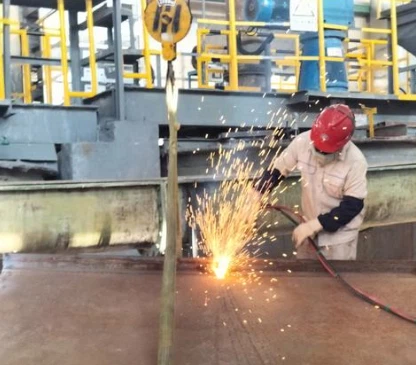 Key Processing Guidelines
Welding:
S890QL is considered weldable despite its high strength. It is compatible with arc welding processes like SMAW, GMAW, and SAW.
Preheating: Recommended for plate thicknesses exceeding 15–20 mm (typically around 130°C to 150°C) to prevent cold cracking.
Energy Input: Heat input should be strictly controlled (often capped at 15 kJ/mm) to avoid loss of toughness in the heat-affected zone (HAZ).
Post-Weld Heat Treatment (PWHT): Generally not recommended as it may degrade the mechanical properties gained during the original quenching and tempering.
Thermal Cutting:
Flame and laser cutting are possible. For thicknesses over 20 mm, preheating a 100 mm wide zone to 150°C before cutting is recommended to avoid edge cracking.
Cold Forming:
The material can be bent or shaped but requires high-power equipment due to its 890 MPa yield strength.
Minimum Bending Radius: Typically 2.5 to 3.5 times the plate thickness depending on the rolling direction.
Hot Forming:
Should be avoided at temperatures higher than 600°C to prevent altering the heat-treated properties.
Machining:
Can be machined using standard methods used for high-strength steels, provided the appropriate cooling and tool speeds are utilized.
Advantages
Weight Efficiency: Its 890 MPa minimum yield strength allows designers to use thinner plates, resulting in a "leaner build" that significantly reduces overall structure weight without sacrificing strength.
Increased Payload: In the transportation sector, lighter vehicle frames directly translate to higher carrying capacities for materials or cargo.
Extreme Temperature Resistance: The "L" in S890QL signifies high notch toughness at temperatures down to -40°C (and even lower for variants like QL1), making it suitable for Arctic or harsh environments.
Cost Savings: While the initial cost per ton is higher, it can reduce total project costs by requiring less total steel and reducing fabrication, transportation, and maintenance expenses.
Fabrication Ease: Despite its hardness, it remains relatively easy to weld and cold-form compared to other ultra-high-strength materials, provided correct preheating protocols are followed.
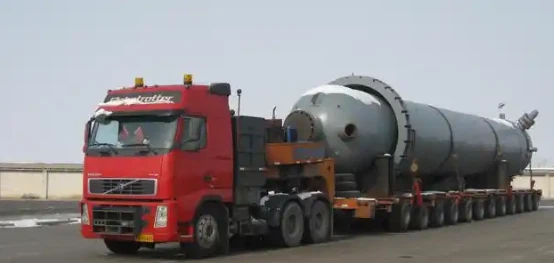
Key Applications
S890QL is primarily utilized in heavy-duty sectors where weight reduction and high load-bearing capacity are critical:
Lifting & Handling: Used extensively for crane booms (mobile and loader), offshore cranes, aerial platforms, and heavy-duty hydraulic systems.
Mining & Earthmoving: Critical for articulated dump trucks, bulldozer blades, excavator buckets, and quarry equipment (screens and crushers) that face severe abrasive conditions.
Infrastructure & Civil Engineering: Found in the construction of high-load bridges, sea-links, and modern skyscrapers where leaner builds must maintain high structural integrity.
Heavy Transport: Used for truck frames, trailers, and special containers to maximize payload capacity by reducing the vehicle's deadweight.
Energy & Industrial: Applied in oilfield fabrications, pressure vessels, and turbine scroll cases.
Contact us at beam@gneesteelgroup.com for pricing, technical support, or customized solutions. We are always ready to support your project.
What is S890QL?
S890QL is a high-strength quenched and tempered structural steel with excellent weldability and toughness, widely used in heavy-duty engineering machinery and load-bearing structures.
What is the minimum yield strength of S890QL?
The minimum yield strength of S890QL is 890 MPa, which ensures it can withstand high loads in harsh working environments like construction and mining equipment.
What standards does S890QL comply with?
S890QL complies with the EN 10025-6 standard, specifying requirements for high-strength structural steels for quenched and tempered conditions.
Is S890QL weldable?
Yes, S890QL has good weldability. Proper preheating and post-weld heat treatment are recommended to avoid cold cracking and ensure joint strength.
What is the typical application of S890QL?
It is commonly used in crane booms, excavator buckets, bridge components, offshore structures, and other heavy-load-bearing equipment requiring high strength.
What is the hardness range of S890QL?
The typical Brinell hardness of S890QL is 260-340 HBW, which balances strength and machinability for various engineering applications.
Can S890QL be heat treated?
S890QL is already quenched and tempered. Additional heat treatment should be controlled carefully to maintain its mechanical properties and avoid performance degradation.
What is the chemical composition of S890QL mainly composed of?
It mainly contains carbon, manganese, silicon, chromium, molybdenum, and nickel, which contribute to its high strength, toughness, and corrosion resistance.
What is the maximum thickness of S890QL available?
S890QL is available in thicknesses up to 200 mm, suitable for thick-walled structural parts that need to bear heavy loads and impact forces.
Does S890QL have good impact toughness?
Yes, it exhibits excellent impact toughness even at low temperatures (-20℃ or lower), meeting the requirements of cold-region engineering projects.